A building can stand in plain sight and still be surprisingly difficult to know. Who occupies it? How much room is available? What did the place down the street actually sell for? Xceligent built a business around those questions. The answer appeared on a screen. Producing it could require a drive, a property inspection and a telephone call.
- The product: researched commercial property data, sold by subscription.
- The customers: brokers, appraisers, investors and other property professionals.
- The turning point: disappointing New York revenue, an expensive legal fight and a funding limit.
- The outcome: operations ended in December 2017.
Someone has to knock on the door
Consider Charlotte. In February 2016, the local commercial REALTORS association described Xceligent researchers driving the market and physically inspecting more than 36,000 properties. They were collecting tax records, researching sales and checking tenants. Analysts would contact agents or firms monthly to keep listings current. This was the work beneath the search box.
For a broker, the difference mattered. An advertised vacancy answers one question. A researched building record can answer several: which tenants are there, what space might suit a client, and which transactions offer a useful comparison. Xceligent’s expertise lay in collecting those pieces and arranging them into something a professional could use.
Doug and Erin Curry founded the company in 1999. Its core subscription system, CDX, brought together property inventories, available space, tenant records, mapping and sales comparables. A broker could assemble a shortlist; an appraiser could investigate comparable sales; an investor could examine a market before making calls. The value was time saved and a better starting point for judgment.
A price tag with a postcode
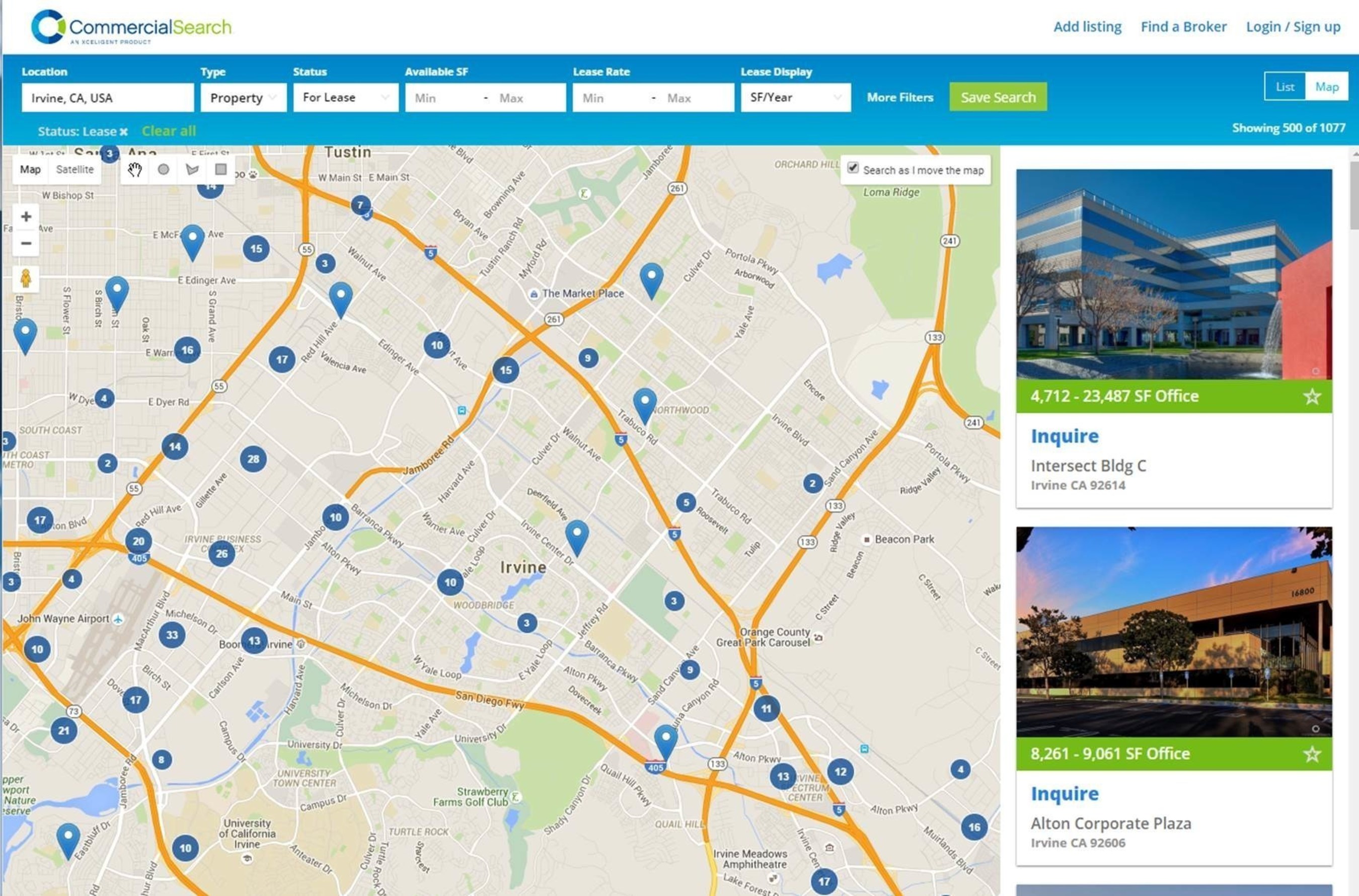
Xceligent offered two useful doors into that information. CDX served professionals paying for research. CommercialSearch was a free public marketplace for finding and marketing commercial properties. Its 2016 redesign included integrations with ClientLook, PropertyTourPro and CCIM’s SiteToDoBusiness. The intended advantage was practical: fewer disconnected tools between finding a building and serving a client.
That distinction also explains why a busy listings website does not automatically replace a research service. A property owner wants exposure; a broker preparing advice wants detail and context. Xceligent tried to serve both needs without making every visitor a paying subscriber. The commercial challenge was to turn enough professional demand into recurring revenue to support the information being offered.
The surrounding products followed the same logic. Spaceful packaged researched listings into digital tour books. Xceligent Direct supplied search and marketing functions for corporate websites. Market Direct made verified listings available through community organizations. The company wanted its information to travel into the places where property decisions happened.
What did access cost? The local offers are more revealing than a made-up national average. Charlotte association members were offered CDX Basic for $55 a month and Professional for $90 in 2016. In April 2017, a Houston-area management district’s proposal quoted standard CDX at $275 a month, with a $225 early-contract rate. Different agreements bought different access.
The challenger gets a runway
The market had an unusual feature: regulators had taken an interest in keeping Xceligent independent. When CoStar sought to acquire LoopNet for $860 million, LoopNet held an ownership interest in Xceligent. The Federal Trade Commission required that interest to be sold. Its 2012 conditions also addressed contracts and product bundling that could impede competitors.
Xceligent received strategic investment from dmg information, part of Daily Mail and General Trust. It acquired eProperty Data from a National Association of REALTORS subsidiary. The opening was clear: offer commercial property professionals another researched-data supplier alongside CoStar, with industry relationships helping establish a foothold.
In July 2013, CBRE, Colliers and JLL signed multi-year agreements. Xceligent reported operating in more than 40 markets, with a much larger rollout planned. Those agreements were meaningful endorsements. They were also agreements for access, rather than proof that every new market would generate enough revenue to pay for its research operation.

New York changes the arithmetic
New York launched in 2017. Revenue grew more slowly than DMGT expected. Its annual report connected that disappointment with the additional investment and time needed for national coverage. The group reduced Xceligent’s carrying value to zero, recording a £42 million impairment. That accounting charge measured a reassessment of the business; it was not a cash bill arriving that morning.
“Quite candidly the revenues were disappointing”Tim Collier, DMGT CFO / November 2017
Meanwhile, CoStar’s December 2016 lawsuit alleged copying of its photographs and data. Xceligent brought antitrust counterclaims. Doug Curry left the leadership in October 2017; Frank Anton became executive chairman and Jody Vanarsdale interim CEO. Litigation and expansion were consuming attention and money together. A simple tale of an innocent challenger crushed by size leaves out the subsequent legal record.
The board chose Chapter 7 liquidation after a strategic review conducted within DMGT’s funding limit. Operations stopped on December 14, 2017. Contemporary reporting described employees receiving only thirty minutes to collect their belongings. Whatever possibilities remained in the product, the people maintaining it suddenly had no jobs.
In December 2019, a federal court entered a $500 million judgment against Xceligent following an agreement reached through its bankruptcy trustee. CoStar’s lawyers reported a separate $10.75 million insurance contribution. The distinction matters: the headline judgment was not a half-billion-dollar cash payment, and it came two years after the company stopped operating.
Copy the discipline. Check the runway.
So what failed first? The public record does not establish one original mistake. It does show the national expansion’s economics failing to meet expectations before the final shutdown. New York changed the owner’s calculation about how much more time and money the plan required. The legal fight made an already demanding undertaking harder.
The useful lesson is an operating discipline: verify records, recruit local expertise, and connect data to work customers already do. Those practices need patient funding, lawful access to information and enough local demand to support repeated research. They become difficult to sustain when expansion outruns subscription revenue. Xceligent’s uncomfortable question survives its software: who pays for the next call that keeps the database true?
Explore the record
Historical company profiles, product coverage and a conversation about property data.