Company Profile / PropTech
The Appraisers Who Got Tired of Their Own Software Built a Better One
Four appraisal veterans spent six years quietly building the tool they wished existed, bootstrapped it to profit, then raised money only after the customers showed up. Here is how Valcre turned the industry's most tedious paperwork into software.
Ask a commercial real estate appraiser how they spend a Tuesday and the answer will not be glamorous. It is parcel numbers copied out of a county portal, comparable sales pasted into a spreadsheet, legal descriptions retyped into a Word template, and a finished report assembled by hand from a dozen open tabs. The analysis - the part that actually requires a licensed professional - often gets whatever hours are left. Valcre was built by four people who lived that Tuesday for years and decided the tooling was the problem.
The San Diego company makes cloud software for commercial real estate appraisal. In plain terms, it pulls the scattered pieces of an appraisal job - property data, comparables, mapping, client and job management, valuation models, and the final written report - into a single connected workflow. More than 300 firms now run their valuations on it, from solo shops to enterprise names like Avison Young, Kidder Mathews and Kroll. The pitch on the homepage is blunt about who made it: "Built for appraisers, by appraisers."
That origin is the whole story, and it is worth taking seriously because it is rarer than it sounds.
01The problem, from the inside
Lucas Rotter, Valcre's CEO and co-founder, did not arrive at appraisal software as an outsider looking for a market. He started as an appraisal trainee in Oregon in 2007, working across retail centers, self-storage and hotels. In 2010 he moved into the technology side and spent six years building the internal valuation platform at Colliers International's Valuation and Advisory Services group. By the time he left to start Valcre in 2016, he had effectively built appraisal software once already - inside someone else's company, under someone else's constraints.
He did not do it alone. Rotter co-founded Valcre with chief technology officer Kris Owens and two appraisal-industry veterans, Grant Norling and Joe Creech, both of whom carry the MAI designation - the field's most respected credential. That is an unusual founding table: not one appraiser and a room of engineers, but a team where the people defining the product had personally written the reports the software was meant to replace.
The problem they targeted is specific. A commercial appraisal is a research-heavy document, and most of the labor is not judgment - it is collection, formatting and re-entry. Firms had cobbled together their own systems out of Excel workbooks, Word macros and shared drives, each one fragile and personal to whoever built it. Valcre's bet was that a purpose-built platform could absorb all of that and hand the appraiser back their time.
Figures as reported by the company across its platform materials.
02What the software actually does
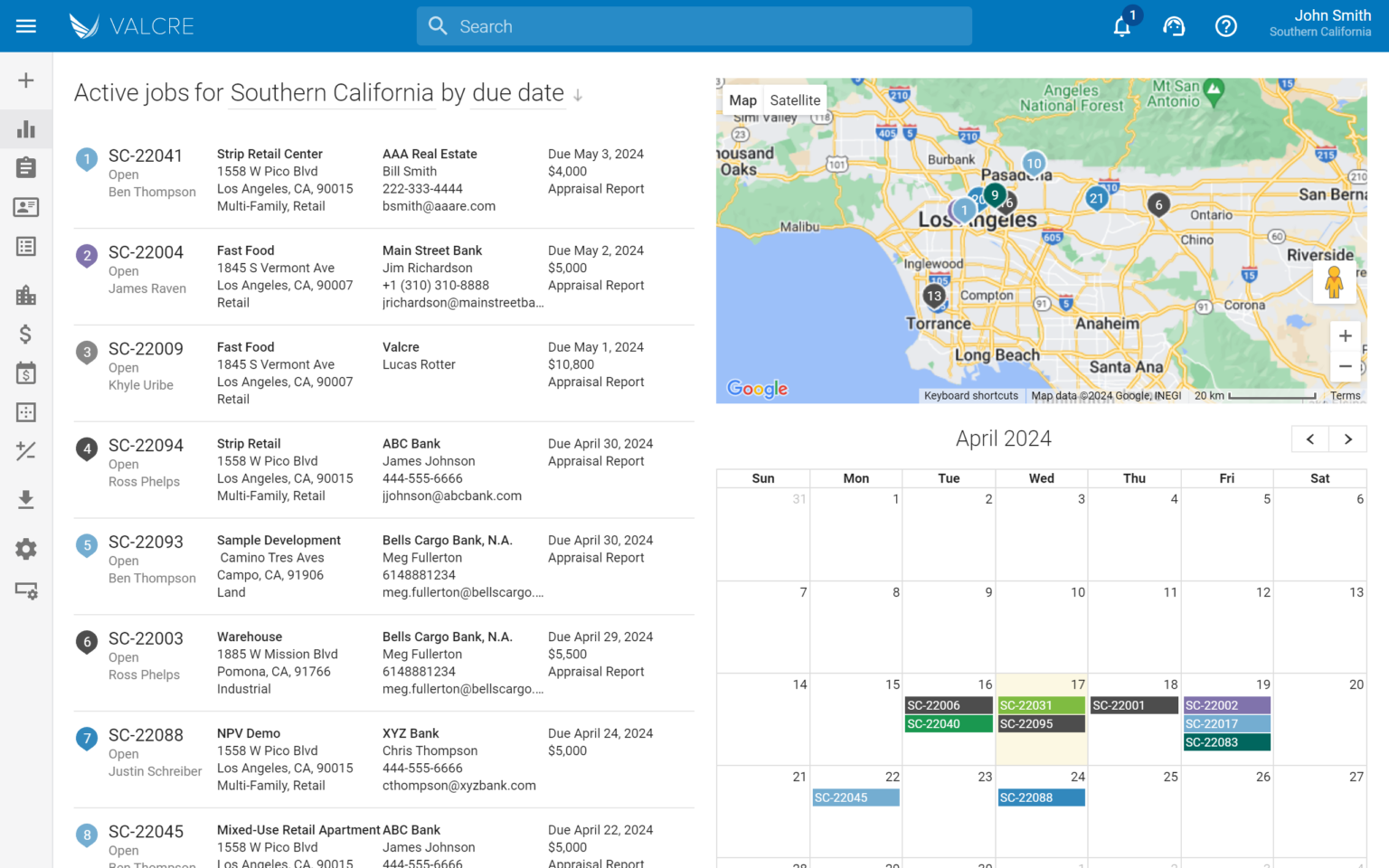
Open Valcre and the first screen is a dashboard of active jobs sorted by due date, each row carrying the property, the client, the fee and the report type, with a map of assignments and a calendar alongside. It reads less like a design showcase and more like a control tower for a busy shop - which is the point.
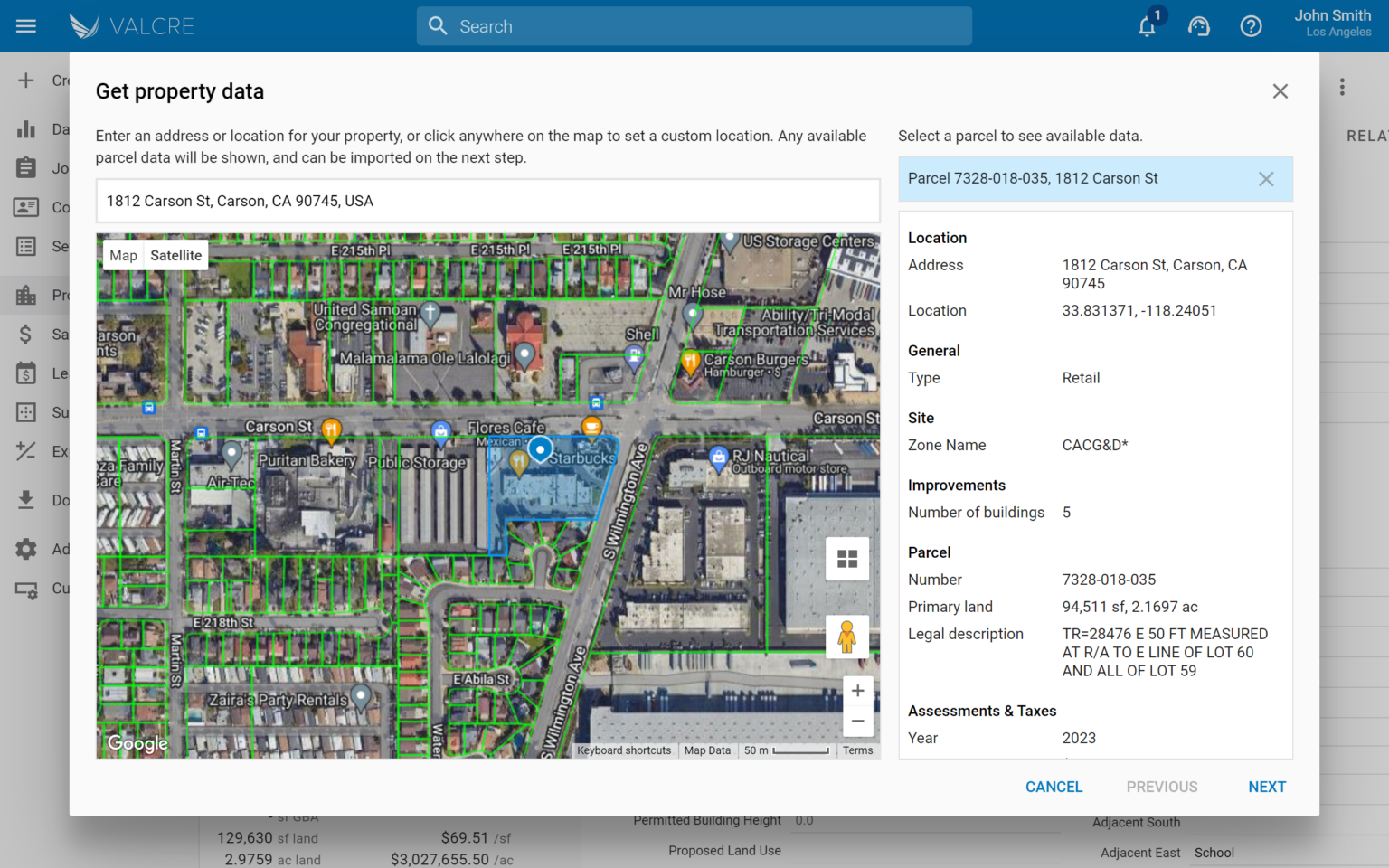
From there the platform handles the tedious middle of the job. A property-research step lets an appraiser drop a pin or type an address and pull available parcel data - zoning, land size, building count, assessments, the legal description - straight into the file instead of retyping it from a county site. Comparables live in a searchable store rather than a personal spreadsheet, so a firm's collective history compounds instead of walking out the door when someone leaves. Valuation models and report templates then generate the finished Word and Excel deliverables the client actually receives.
A companion mobile app extends the same system into the field, where inspections happen. Photos upload from a phone, data gets captured on site, and it syncs back to the desktop file - closing the gap where information used to get scribbled on paper and re-entered later. The through-line across every piece is the same: enter it once, use it everywhere.
The Valcre stack, in one glance
- Platform - jobs, clients, comps, property data, valuation models and report generation in one place.
- Mobile app - field inspections, photo uploads and data capture that sync to the desktop file.
- Valcre AI & Assist - comp selection, narrative drafting and document data extraction inside the tool.
- Market Insights - market data and analytics to give a valuation context.
- Dashboard - pipeline, billing and calendar so a firm can see the whole shop at once.
03The unfashionable growth story
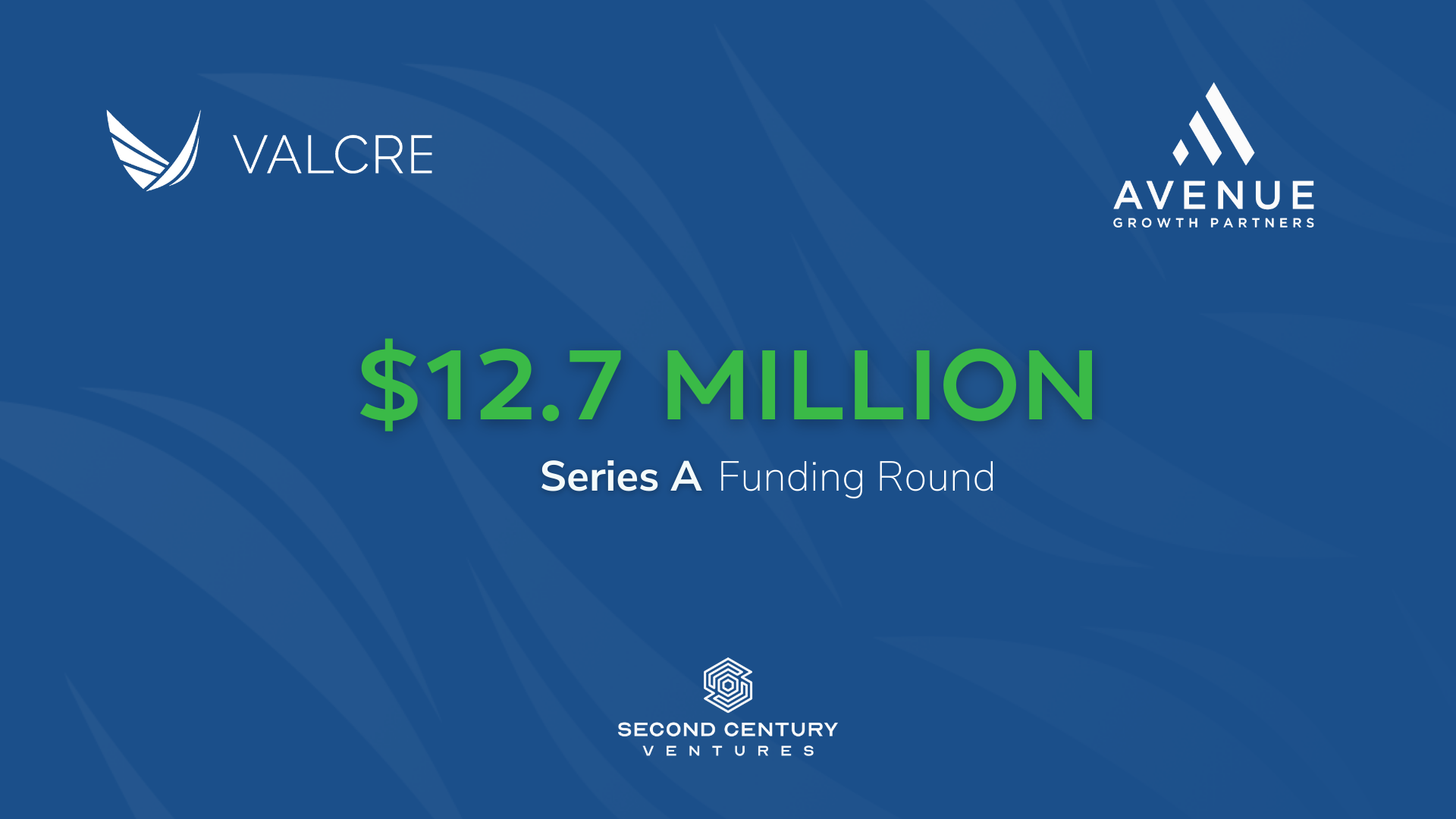
Here is the part that runs against the usual startup script. Valcre did not raise a large seed round and burn it chasing growth. It spent roughly six years building the platform, reaching profitability and signing what it describes as the industry's leading roster of clients before it took institutional money. Recurring revenue climbed nearly 300% off the pandemic peak. Only then, in November 2022, did it announce a $12.7 million Series A led by Avenue Growth Partners, with participation from Second Century Ventures.
Rotter has been open about treating that sequencing as a point of pride - growing the company organically rather than on a flood of venture capital. The framing matters for anyone studying the business: the money arrived as fuel for expansion, not as a bet on a product that had yet to prove it worked. In the announcement, Rotter put it simply: "the explosion of interest in our offering these past two years has proven that the need is greater than ever."
The bootstrapped-first path
A rough timeline of Valcre's build, from founding to a raise taken from strength.
04How it is different
Appraisal software is not a brand-new category. Firms have long had options, and the most common competitor is not another vendor at all - it is the do-it-yourself stack of spreadsheets and Word templates that most shops still limp along on. Against that backdrop, Valcre's edge is less about any single feature and more about founder-market fit. When the people who designed the workflow have written hundreds of appraisals themselves, the software tends to fit the actual job rather than an outsider's guess at it. That is a hard advantage for a competitor to copy on a roadmap.
The second differentiator is openness. Rather than wall off its data, Valcre has built integrations outward - connecting property data through Cherre's API, cash-flow modeling through Rockport VAL, and additional workflow links through partners like FUEL Enterprises. For a firm, that means the platform sits at the center of an existing toolset instead of demanding a rip-and-replace.
05The AI question, answered carefully
Every software category is now expected to have an AI answer, and appraisal - a field built on professional judgment and liability - is a nervous place to give one. Valcre's positioning is notably restrained. Its tagline for the AI work is "empowering expertise, not replacing it," and the features are scoped to the drudgery rather than the judgment: comp selection, narrative drafting and pulling data out of documents. In 2025 the company rolled these out as a full AI suite alongside a rebuilt, faster version of the platform and a revamped onboarding process.
Telling licensed professionals that a tool exists to make them faster, not to automate them away, is both good manners and good strategy in a market where the buyer and the potential casualty are the same person.
06Where it sits in the market
Commercial real estate appraisal is a large, fragmented, deeply unglamorous market - exactly the kind that rewards a company willing to solve one specific workflow completely. Valcre's clients now span the US, Canada and Australia, and the roster reads like a directory of valuation and advisory groups: Avison Young, Kidder Mathews, Kroll, RSM, CohnReznick, Baker Tilly, Withum and Bowery Valuation among them. The 2025 PropTech Breakthrough award for Property Valuation Tool of the Year is the industry putting a ribbon on a position the customer list had already established.
The business underneath is straightforward B2B SaaS: recurring subscriptions to appraisal firms, priced by seat and firm, with onboarding and training, and room to expand through AI add-ons and data integrations. It is not a story of a flashy consumer app or a winner-take-all land grab. It is a story about picking a boring, painful job and building software so well-fitted to it that firms stop shopping around. For founders eyeing an overlooked vertical, that is the copyable part - and the honest caveat is that it only works if you have genuinely done the work you are trying to automate.