Commercial real estate runs on consequential opinions expressed through remarkably ordinary tools. A hotel, a shopping center, or a self-storage facility may be worth millions, yet the argument for that value has traditionally traveled through a thicket of spreadsheets, comparable-property records, maps, and word-processing templates. Lucas Rotter entered that thicket in Oregon in 2007 as an appraisal trainee. He did not arrive with the founder's standard prop: a grand theory about disruption. He arrived with reports to finish.
The work taught him where judgment lives. An appraiser has to understand a property, test assumptions, compare unlike things with care, and defend a conclusion that lenders, owners, and public institutions may rely upon. It also taught him where judgment does not live: typing the same fact into several places, chasing a map, coaxing a table into behaving, and carrying data from one document to another like water in a leaky bucket.
Rotter appraised a broad assortment of property, including retail centers, self-storage facilities, and full-service hotels. The range mattered. Commercial property refuses to fit a single neat mold, which makes rigid software almost comic. A valuation platform needs consistency without pretending every assignment is the same. By 2010, Rotter had moved from producing appraisals to building the machinery around them. At Colliers International Valuation and Advisory Services, he spent six years helping construct a full valuation platform from the ground up.
The second build became the company
There is a pleasing symmetry in the sequence. First Rotter learned the craft. Then he built an internal system for a large organization. Only after that did he start a software company. Valcre, co-founded in 2016 with Kris Owens, Grant Norling, and Joe Creech, was not his first encounter with the problem. It was his chance to build the answer without the walls of one employer around it.
The founding group combined technical and appraisal experience. Owens became chief technology officer. Norling and Creech brought deep valuation credentials. Rotter sat at the seam between product and profession, able to translate the irritations of an appraisal desk into choices about workflow. The product gathered jobs, clients, property records, comparable data, mapping, analysis, and report generation into one system. It was designed to reduce manual repetition while leaving the opinion of value where it belonged: with the appraiser.
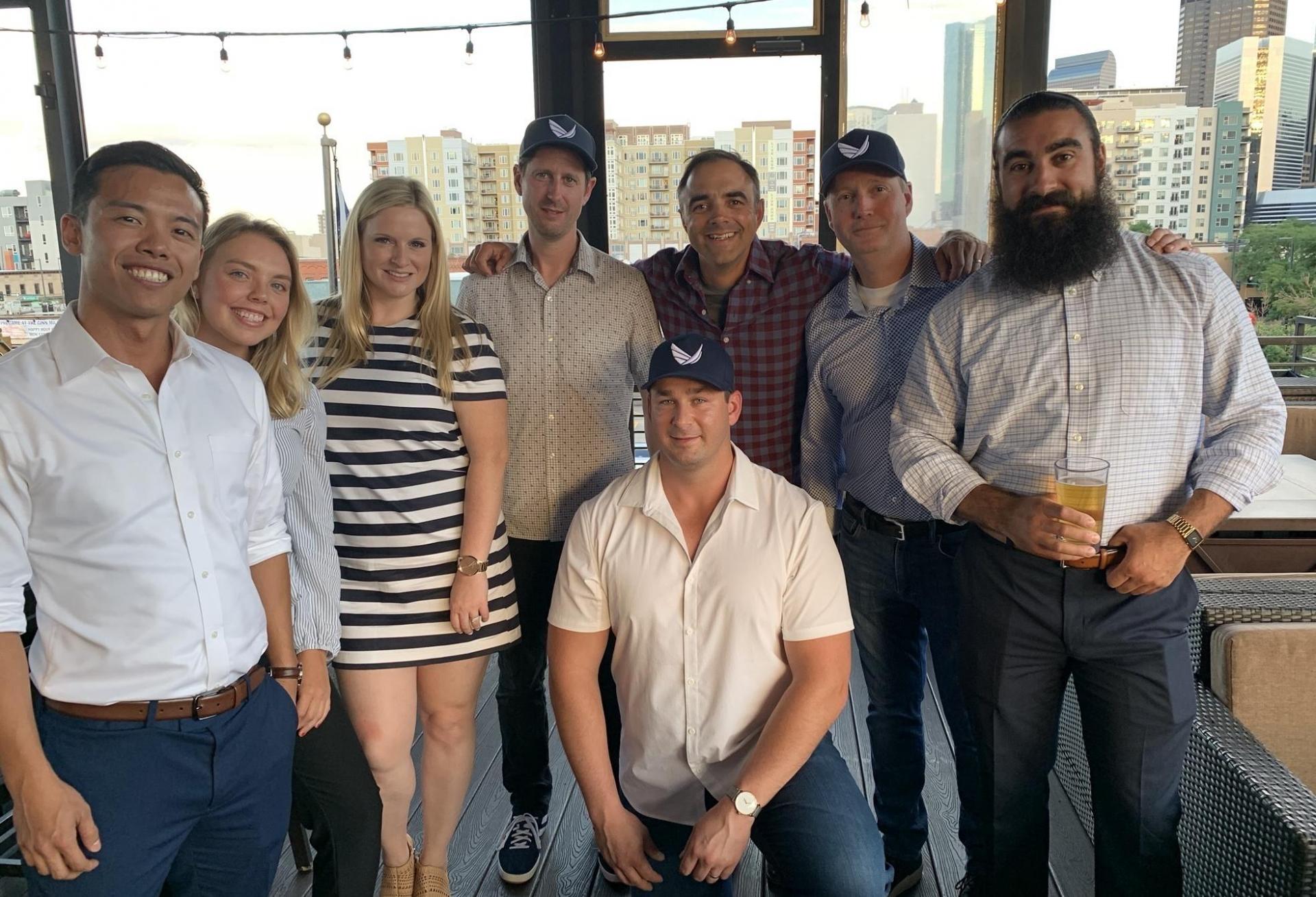
This was vertical SaaS in its least theatrical and most persuasive form. The customer did not need to be educated that paperwork was annoying. The customer needed proof that a new system would understand the odd corners of a familiar profession. Rotter has described early resistance from experienced appraisers accustomed to established methods. A demo could turn the argument. When the software visibly returned hours and reduced duplicate work, abstraction gave way to arithmetic.
Valcre then followed a route that looks almost eccentric beside the usual startup montage. It bootstrapped. For six years, the company built, sold, supported, and revised its product before announcing a $12.7 million Series A in November 2022. Avenue Growth Partners led the round, with participation from Second Century Ventures. The money was designated for growing the team and product, and for widening the company's effort to bring new talent into valuation.
The order matters more than any romance attached to bootstrapping. Six years without institutional capital forced thousands of small encounters between the product and the people expected to use it. Support calls became research. New templates exposed the variety of firms and assignments. Integrations revealed which data should move freely and which controls could not be compromised. By the time outside capital arrived, the company was no longer financing a hunch about whether appraisers wanted a modern platform. It was choosing how quickly to extend a pattern that customers had already validated. Funding could accelerate hiring and development because the underlying conversation with the market was well underway.
From appraisal desk to company scale
Software in service of judgment
Rotter's public defense of appraisers is sharper than a generic sales pitch. He argues that they are too often cast as impediments to a transaction when their independence is precisely the point. An appraiser is not there to cheer a deal across the line. The role carries an obligation to objectivity and public trust. Software can make the process faster and more consistent, but speed is useful only if it protects the care beneath the conclusion.
That distinction has become more important as artificial intelligence moves into real estate workflows. Rotter has spoken on AI and machine learning in valuation, and his view of technology remains practical. Digital tools can handle data, draft routine material, and expose patterns. The appraiser can spend more time on analysis, client questions, unusual assets, and the parts of a report that resist a template. Automation, in this framing, expands the professional's range instead of shrinking the profession.
Automate the transfer, the formatting, and the search. Keep the interpretation, accountability, and final judgment with the trained professional.
It is also a recruiting argument. A field burdened by clerical routines is harder to sell to a younger generation raised on responsive software. Modern tools can make the profession legible as analytical work rather than a lifelong negotiation with formatting. Rotter's aspiration has been consistent: improve appraisers' daily lives, help firms work more efficiently, and invite more people into a business that depends on accumulated expertise.
Directness without the lonely summit
A degree in rhetoric from Willamette University is an unexpected preface to a career in appraisal systems, but it makes a certain sense. A valuation report is evidence arranged into an argument. A product roadmap is another kind of argument. So is leadership: an ongoing attempt to make priorities clear enough that other people can act on them.
Rotter calls himself direct and no-nonsense. He values his time and other people's time, expects full effort, and has little affection for drift. Yet his description of leadership is explicitly communal. He has said he does not want to race to the top while leaving colleagues behind. His preferred company is one built on trust, integrity, transparency, and individual growth. Directness, in that design, is not theater. It is a way to remove ambiguity so people can do good work.
Valcre was remote from its beginning, well before distributed work became a global experiment. That choice demanded the very habits Rotter describes: clear expectations, trust, and room for people to make decisions without a chief executive hovering over each one. As the company grew, he shifted from solving product problems himself toward asking what tools the team needed to reach larger goals. The founder who knows the workflow intimately must eventually resist turning that intimacy into a veto.
His view of his own timing is less forgiving. Asked about his biggest mistake as a leader, Rotter said he should have founded Valcre three to five years earlier. He had waited for experience to make entrepreneurship safer, only to discover that a company supplies its own inexhaustible syllabus of grinding, struggling, and learning. The regret is revealing. Experience gave Valcre its edge, but no amount of experience could remove the leap.
The life outside the workflow
Rotter did not grow up planning to become a CEO. His parents worked blue-collar jobs, and he credits them with making hard work feel ordinary. Leadership became imaginable later, after he had seen how rarely companies met his expectations for treating employees well. If a better workplace remained elusive, he reasoned, he could take a chance on building one.
The same person who wants a workday stripped of wasted minutes also tries to shut the computer on weekends. He has described Saturdays spent with his wife, daughter, and friends, often going out to eat or playing golf. He prefers settling in for a movie with his wife to signing up for a television series. It is a small but fitting preference: one complete arc, a few hours, and an ending in sight.
Valcre's tenth anniversary arrived in 2026. By then, Rotter had been recognized with Connect CRE's National Next Generation Award and named to GlobeSt.'s CRE's Best Bosses list. The awards point to two halves of the same career: changing the tools and shaping the conditions under which people use them. Neither project is finished. Commercial real estate continues to change, AI keeps enlarging the software vocabulary, and every unusual property waits to embarrass an overly tidy model.
What endures is Rotter's original advantage. He remembers the desk. He knows which parts of the work ask for patience merely because the system is clumsy, and which parts ask for patience because judgment deserves time. Valcre was built in the distance between those two facts. A decade later, that distance is still where the useful work lives.