Sitting on top of a 330-million-square-foot problem
Right now, somewhere in a commercial real estate back office, someone is reading a 200-page lease and typing its contents into a spreadsheet. Cameron Steele knows this - and has spent six years building the machine that makes it stop.
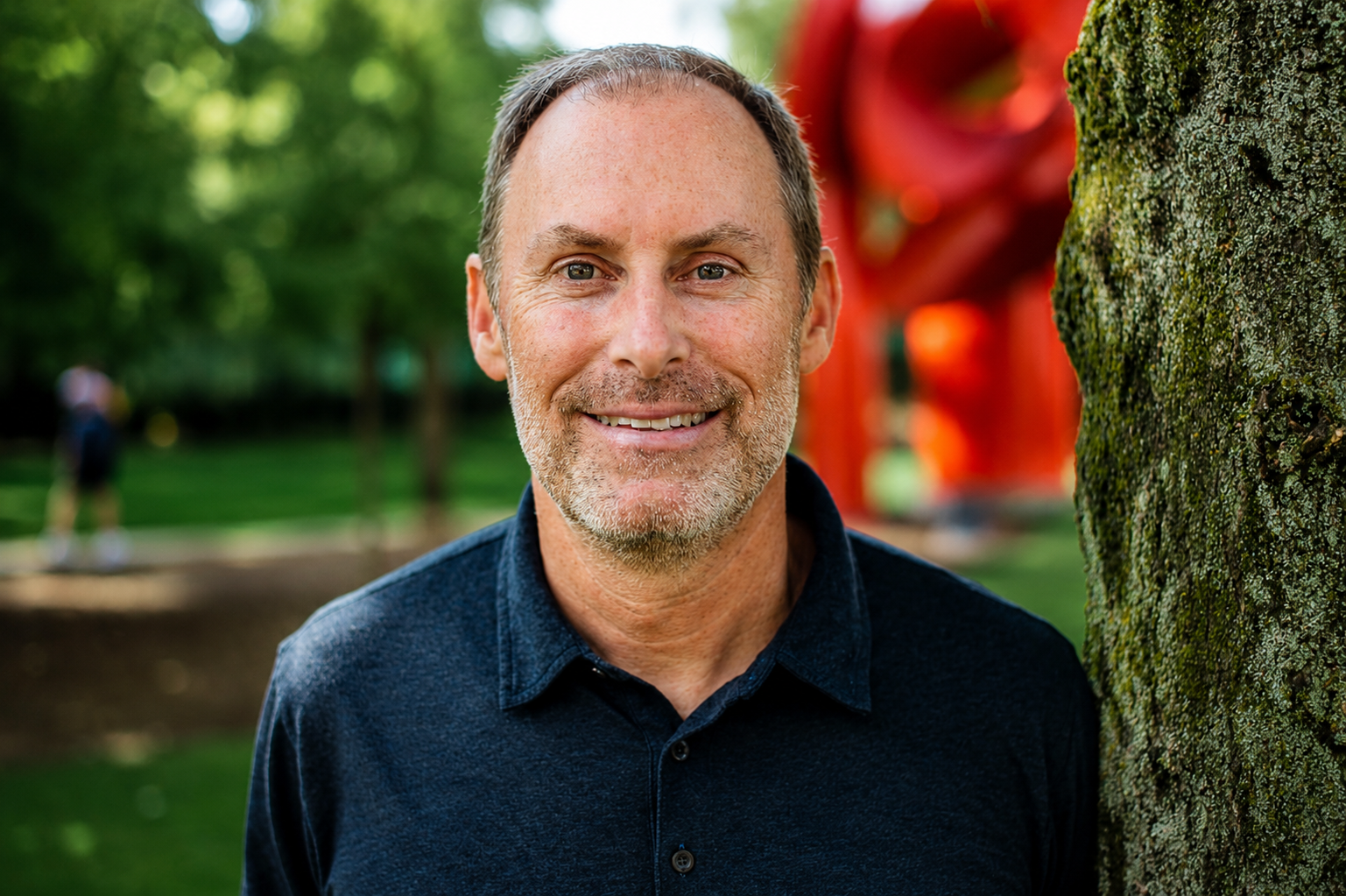
Steele is the Co-Founder and CEO of Prophia, an AI-powered data intelligence platform based in San Francisco that extracts, organizes, and verifies the contractual data buried inside commercial real estate leases. His platform currently manages more than 330 million square feet of CRE assets. For context: that's more rentable space than all of downtown Chicago.
The problem Prophia solves is deceptively fundamental. Commercial real estate is one of the world's largest asset classes - and its participants have historically managed their most critical contractual data by hand. Brokers. Spreadsheets. Call centers. "I can't believe this is still happening, but it is," Steele told a podcast interviewer. He didn't say it with contempt. He said it the way a geologist says it when they've found a vein nobody has touched yet.
"Commercial real estate is one of the world's largest and most competitive asset classes - but participants are still hindered with poor quality, opaque data and antiquated tools."- Cameron Steele, on launching Prophia's Series A
From Oracle's 90s mainframes to CRE's paper-trail problem
Steele's career reads like a master class in being in the right room before anyone else realizes it's the right room. He started at Oracle in the 1990s - trained early in what it means to have structured, centralized, actionable data. He then moved to Royal Bank of Canada, covering enterprise software as an equity research analyst during the dot-com boom.
He survived the crash, then spent the better part of a decade in growth equity and private equity, watching the 2008 financial crisis from the capital allocation side. By the time he joined buuteeq - a SaaS hospitality marketing startup - as its COO and founding executive, he had seen enough industries from enough angles to recognize a pattern: the biggest value unlocks happen when structured data replaces gut feel.
buuteeq was sold to Booking Holdings (then the Priceline Group) in 2014 for approximately $135 million. Steele stayed on, eventually becoming Head of Marketing and Commercial Innovations at BookingSuite and Head of Commercial Operations at Booking.com. He later moved to OpenTable as Head of Casual Dining and Strategic Initiatives. Hospitality. Travel. Enterprise SaaS. None of it was real estate - yet all of it was building the same muscle: find an industry running on bad data, and fix the infrastructure.
His father had spent decades in commercial real estate. That proximity was the final spark. When Steele looked at what institutional property owners were doing with their lease data in 2018, he saw exactly what he had seen at every prior stop - except bigger. "CoStar literally has a call center where they ask brokers for lease data," he noted in one interview. An industry managing trillions of dollars in assets was relying on people cold-calling other people to ask what their leases said.
"I can go and learn about industries, identify problems with industry experts, and build solutions."- Cameron Steele, on his cross-industry career philosophy
PowerPoint mockups, design partners, and one customer who never left
Steele co-founded what was then called Leaseable in 2018 alongside Chris Hsu, a Stanford computer science graduate. They launched their commercial product in November of that year. Their first paying customer arrived in February 2019 - and has not churned since.
They didn't build first and sell later. They ran a design partner program: pitch ideas via PowerPoint, find forward-thinking customers willing to bet on the vision, then build what those customers actually needed. It is a methodology that Steele credits explicitly for their near-perfect retention. "Retention is the most important metric," he has said - and the way he says it, you get the sense he means it in the existential sense, not the vanity-metric sense.
The timing looked disastrous on paper. They launched commercial operations in late 2018, months before COVID-19 hit - and commercial real estate was one of the hardest-hit sectors. Offices emptied. Markets froze. Deals collapsed. Rather than retreating, Steele doubled down: remote demos became normal. Electronic contracting accelerated. In a strange way, a global pandemic made his pitch easier - if you don't have clean lease data when assets are in flux, you are flying blind in the most expensive aircraft ever built.
Prophia's initial approach to AI was characteristically disciplined. In the early days, Steele deliberately downplayed the company's machine learning and NLP capabilities because customers were skeptical of AI claims. When ChatGPT went mainstream in late 2022 and shifted the cultural conversation around AI, Prophia was already years ahead - they simply stopped self-censoring.
"Lease summaries are very subjectively accurate because it's a person literally sitting down and typing things up. And I think that's going away in time."- Cameron Steele, San Francisco Business Times, November 2023
Leaseable becomes Prophia: property + the Greek word for wisdom
By April 2021, the company had outgrown its name. Leaseable became Prophia - a combination of "property" and the Ancient Greek word for wisdom. It was not a pivot. It was a graduation. The original focus on lease abstraction had expanded into something more comprehensive: a full portfolio intelligence platform covering the entire commercial real estate lifecycle from acquisition through disposition.
The Series A arrived in December 2022 - $10.2 million from SignalFire, Cercano Management, and Alumni Ventures. The announcement came with a data point that Steele had been sitting on: 250% annual recurring revenue growth. The company had doubled its customer base, hit 170 million square feet of hosted assets, and maintained 100% customer retention. At a moment when the broader VC market was pulling back, Prophia was growing fast enough to raise on its own terms.
Today, the client list includes names like Related Companies (the developer behind Hudson Yards, New York's 7-million-square-foot megaproject), Rudin Management (345 Park Avenue), and Kimco Realty. These are not scrappy startups experimenting with software. These are some of the most sophisticated institutional property owners in North America.
Steele's own data surfaces a number that stops people cold: 53% of rent rolls contain material financial errors. In an asset class where a single percentage-point difference in capitalization rate can mean millions of dollars in asset value, bad data is not an inconvenience. It is a liability. Prophia's pitch is simple: clean data is not a feature. It is the foundation.
Incremental progress, compounding trust, and the long game
Steele's operating philosophy is not built for the press release. He believes in "incremental progress every day" - the compounding effect of small, reliable improvements over time. He speaks about fundraising the same way: targeted outreach, not indiscriminate pitching. Investors who question market size probably don't understand the sector. Move on; find the ones who do.
His customer advisory program is not a checkbox. It is the feedback loop through which the product evolves. He talks about customers the way some founders talk about VCs - as valuable partners whose continued engagement is the ultimate validation. The fact that Prophia has lost exactly one customer (due to an acquisition, not dissatisfaction) is not a boast. It is an operating principle made visible.
"We are in the business of trust," Steele has said. Not the lease business. Not the AI business. The trust business. Everything else - the machine learning models, the NLP pipelines, the rent roll verification tools - is infrastructure serving that one word.
His long-term vision is for Prophia to become the single system of record for trusted CRE data across the entire industry. That includes eventually monetizing anonymized market intelligence - creating a data network effect where each new asset on the platform makes the whole more valuable. Thirty years in software tends to teach you that the most durable businesses are the ones that become load-bearing infrastructure. Steele is building exactly that - brick by lease by verified data point.