Andrew Sy has spent much of his career making computers respond quickly. At Scale AI, he worked on machine-learning inference infrastructure that handled more than 10 million calls a day. The number is impressive in the dry, industrial way that infrastructure numbers tend to be: a vast crowd compressed into a line of telemetry. His new question is smaller and stranger. What should software say to one person, on one channel, at one particular moment?
Sy is the co-founder and CEO of Polymorph, a San Francisco company in Y Combinator's Winter 2026 batch. Its product learns from the trail people leave inside an app - what they try, where they hesitate, whether they return - and uses those signals to adjust messages and experiences. The ambition is not to manufacture more notifications. The ambition is to make software less oblivious.
This is delicate territory. The growth industry has spent years acquiring buttons that are easy to press: send the email, fire the push alert, launch the campaign. Anyone who has cleared a lock screen crowded with reminders knows where that leads. Polymorph's early result, as Sy described it, sounds almost impolite to conventional marketing logic: one customer saw a 3.6-times lift in re-engagement while sending fewer messages on average.
A taste for hard problems
Long before he was thinking about the emotional weather of a push notification, Sy was solving problems with cleaner edges. As a student at Xavier School in the Philippines, he became a three-time national finalist in the Philippine Mathematical Olympiad. He earned a bronze medal at the 2013 China Southeastern Mathematical Olympiad, received honorable mentions in the Asia Pacific Mathematical Olympiad in 2013 and 2015, and recorded a perfect AMC 10 score.
Competition mathematics rewards a particular temperament. The conditions are fixed. The clock is visible. An elegant solution can turn a page of menace into three lines of relief. Product engineering is less courteous. Users change their minds. Companies change their plans. The data arrives late, or arrives in abundance, or measures the wrong thing with tremendous precision.
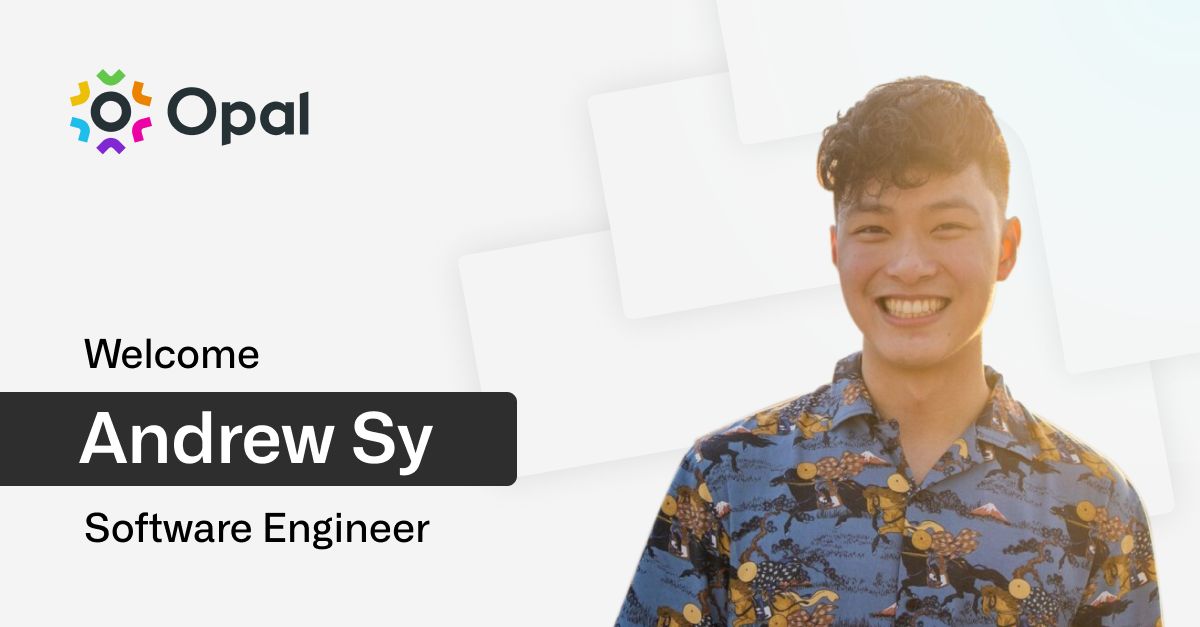
Sy's route through technology gave him several versions of that mess. His public biography lists Palantir and Meta before Scale AI, then Opal Security. At Meta, consumer systems operate at a scale where tiny decisions become the daily experience of billions. At Scale, the machinery of AI has to answer reliably and often. At Opal, the problem is access: who can reach which system, under what conditions, and how to make the responsible choice bearable enough that people will actually choose it.
When Sy announced an earlier direction for Polymorph, aimed at securing AI agents and Model Context Protocol usage, he summarized the design doctrine in one cheerful sentence: “Basically, make the secure way the easy way!” It is the kind of principle that travels well. Security fails when safety is a chore. Growth fails when sending is effortless but judgment is scarce. In each case, better infrastructure makes a good decision easier to reach.
The internet learns some manners
Polymorph has since focused its public pitch on continuous product experimentation and lifecycle engagement. The company connects to product and support data, builds changing profiles from user behavior, then selects a channel, time and action. A person who is confused should not receive the same treatment as someone who is merely busy. A customer leaning toward a purchase should not be handled like one drifting toward departure. A static segment is a photograph. Polymorph wants the moving picture.
signals
keeps learning
action
The word “personalization” has been weakened by years of email subject lines that know your first name and little else. Sy's formulation is more structural. The system must decide not only what to say, but whether to say anything, where to say it and when. Those decisions depend on each other. A useful reminder delivered through the wrong channel becomes an annoyance. A thoughtful offer delivered a week late becomes archaeology.
“We started with consumer because it's the hardest problem,” Sy wrote. “Millions of users, even more signals, zero tolerance for spam.” The appeal is easy to understand. Consumer software supplies both the largest laboratory and the quickest punishment. People do not file a procurement review before deleting an app. Their thumb makes the decision.
There is also a practical business claim beneath the philosophy. Techniques for choosing the right channel and moment have historically lived inside companies large enough to employ dedicated ranking, experimentation and messaging teams. Polymorph wants to make that machinery available to smaller consumer and self-serve products. In its own description, the company “scales people” by continuously running experiments that carry a customer's product direction and brand.
That wording matters. Scaling people is different from replacing taste. Polymorph's promise rests on the idea that a system can conduct more experiments without turning the product into a casino of random variations. The customer's intent remains the boundary; the machine searches within it. Good automation, in this telling, should expand a team's reach without sanding off its point of view.
The park route
Infrastructure biographies can read like inventories of invisible machines. Sy's includes a more useful coordinate. When Opal welcomed him in 2023, the company described him as an avid park lover who had walked to eight San Francisco parks in one day. It is a charmingly inefficient achievement. No dashboard was improved. No latency graph bent down and to the right. A person simply kept walking until the city became a sequence of green rooms.
Eight parks in one day is either an urban hike or an unusually wholesome distributed-systems diagram.
The anecdote fits the public voice Sy has developed online. His X biography calls him a “recovering technology brother” and an unreliable poster of bangers. His writing uses lowercase letters, tildes and the occasional skull emoji. The polish of a company launch keeps getting interrupted by evidence that actual humans work there.
In one update about personalization infrastructure, Sy closed with the Polymorph team's Sunday rule: after work, they make a point of doing something fun. That week's expedition took them to a Bernal Heights sunset, where co-founder David Nie attempted to climb a rock in flip-flops. It is hard to imagine a more San Francisco appendix to a post about scaling consumer engagement.
Polymorph's other co-founder is Manas Purohit. Together, the three bring experience across Meta, Twitch, Scale AI, AWS Bedrock, Gusto, Opal and Nira. Y Combinator describes the team as a mixture of startup, AI and mathematical backgrounds. Sy's own contribution is unusually legible: competition math, consumer platforms, high-volume inference and identity security. Polymorph sits at their intersection.
A machine with timing
The company's stated vision is to make the consumer internet polymorphic: each experience adapting to its user and improving through continuous experiments. This could sound abstract until one considers the alternative. Most software still asks people to fit themselves into a handful of segments devised in advance. The new version would treat behavior as a conversation rather than a census category.
There are obvious tensions. Personalization must remain useful without becoming invasive. Experimentation must preserve a coherent product. Automation must make room for judgment. Sy does not offer a grand theory for resolving all of them. His public case is narrower and more practical: start with live signals, make the system adaptive and measure whether people respond. If engagement rises while message volume falls, the product has gained something besides attention. It has gained timing.
The company is still young, and its public evidence is correspondingly early. That makes Sy's choice of metric revealing. A lift in re-engagement is the figure that catches the eye; fewer messages is the condition that gives it character. Optimizing only the first number would be easy enough to understand. Holding both ideas together asks the system to value a user's attention as something more than free inventory. It also gives Polymorph a demanding standard for its own experiments. A personalized experience should improve the relationship, not merely increase the count of interactions. In a business culture fond of announcing that everything has changed, Sy's case is pleasantly incremental: observe more carefully, choose more selectively, learn from the response. The machinery may be elaborate. The social lesson is the sort a considerate dinner guest already knows.
That may be the quiet thread through Sy's career. A proof needs the right idea at the right step. Inference infrastructure needs an answer when the call arrives. Security needs access to appear under the right conditions. Personalization needs to act when a person might welcome the action. The domains change. The fascination with making a decision at the useful moment does not.
Software has acquired enormous powers of speech. It can draft, recommend, remind, summarize, sell and pursue. Manners have lagged behind. Andrew Sy is building on the possibility that the next improvement will not come from giving the machine more to say. It will come from teaching it to notice who is listening.