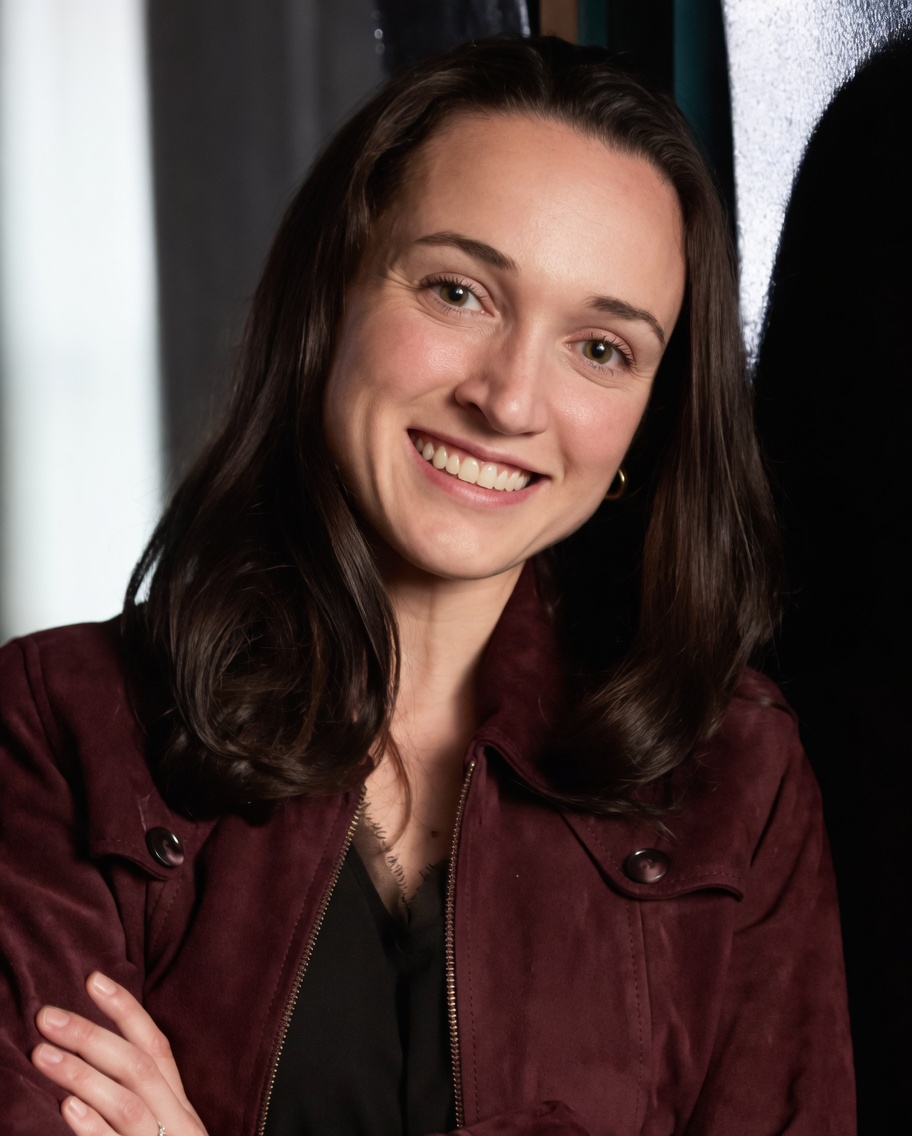
The Woman Who Ran Into AI Before It Was a Race
There's a specific version of Silicon Valley success that gets written about constantly: the founder who dropped out, the investor who saw the trend early, the operator who scaled the rocket ship. Leigh Marie Braswell is a different creature. She was inside Scale AI when it had three employees. She did the annotation work. She helped label the data for GPT-2 when most people in the industry couldn't have told you what a large language model was. That's not a resume line she deploys for effect - it's the foundation of everything that came after.
Today she sits as a Partner at Kleiner Perkins, one of the firms whose name alone can move a round. But the path there runs through rural Alabama, through MIT's math olympiad circuit, through a Jane Street internship where she got serious about poker, through Scale AI's chaotic early years, and through two-plus years as a Principal at Founders Fund. It's a lot of terrain for someone whose LinkedIn headline still reads with the matter-of-fact brevity of someone who doesn't need to oversell it.
"If you're not feeling like everything is on fire all the time, there's probably not product-market fit." - Leigh Marie Braswell on the reality of early-stage startups
Growing up in rural Alabama, she was the kid who competed in math tournaments. She graduated as valedictorian from Phillips Exeter Academy - the New Hampshire boarding school that has produced its share of consequential people - and landed at MIT, where she studied Mathematics with Computer Science and became the top competitive female mathematician on campus. This is the kind of background that opens doors in quantitative finance, in academia, in almost any field that rewards rigorous thinking. She chose something harder to predict: she went looking for the sharpest technical environments she could find and worked her way through them.
Scale AI in its earliest days was one of those environments. She joined as an intern, then early engineer, and eventually became the company's first product manager. She led 3D annotation products for autonomous vehicles, robotics, and AR/VR companies - the unglamorous, essential work of turning raw sensor data into structured training sets. She watched a talent vortex form around the company as it attracted people who would go on to found and fund major AI companies. She was in the room when Scale helped OpenAI label data for GPT-2. "We actually helped OpenAI with GPT-2," she has said - not as a boast, but as context. She saw how the sausage was made, and that made her a better judge of when someone is making it well versus when they're just showing you the packaging.
"The moat for all of these companies is just like how fast they can move." - Leigh Marie Braswell on competitive dynamics in AI
Her time at Founders Fund followed. As a Principal there, she led deals in Chronosphere, Persona, and Neon - companies that would later be acquired by Palo Alto Networks, and Databricks respectively. She was also writing angel checks in parallel, including the first outside money into Ambience Healthcare, an AI company for clinical documentation that is now valued at $1.1 billion. That check went in when almost no one was paying attention to healthcare AI at the infrastructure level. That's the pattern.
In 2023, Kleiner Perkins brought her on as a Partner. KP is not a firm that moves casually - it has been involved in Google, Amazon, Genentech, and a long list of companies that changed industries. For Braswell, it was the right platform to back the next generation of AI infrastructure founders with real conviction and real capital. At KP, she led the investment in Windsurf - the AI coding assistant that was subsequently acquired by Google - and continued to build a portfolio that combines deep technical validity with early-stage timing.
She describes her approach as "relatively generalist," which understates the specificity of her edge. What she actually means is that she doesn't define herself by a single industry vertical, but her networks concentrate heavily in and around AI - which she freely acknowledges is where the unfair advantages are right now. "You definitely want to have unfair advantages," she has said, "or pools of certain people and networks that you're really in."
"ARR can mean just wildly, wildly different things." - Leigh Marie Braswell, on why she doesn't take revenue claims at face value
The poker framework is real, not metaphorical. She got serious about the game during her Jane Street internship - the famously selective quantitative trading firm that attracts some of the sharpest mathematical minds in finance. The core lesson, as she describes it: "If the odds are in your favor, you push your chips to the center." It maps almost perfectly onto venture capital decision-making, where most information is incomplete, the outcomes are heavily skewed, and the discipline is knowing when your probability estimate is actually reliable versus when you're just pattern-matching on surface signals. She hosts regular poker nights with Alexander Wang, Scale AI's co-founder, and other Silicon Valley technologists. These aren't just games - they're a way of building relationships with people who think rigorously about risk, which happens to be a useful filter for finding founders worth backing.
Her views on AI agents - expressed in Fortune in December 2024 - were blunter than most investors in her position are willing to be. "They do not yet work reliably for the vast majority of use cases," she said, using autonomous vehicles as the analogy: yes, they exist on roads today, but they require constant human intervention. The final stretch toward reliability is where the hardest engineering problems live, and she's skeptical of the gap between demo and deployment. This is not contrarianism for its own sake. It's the perspective of someone who spent years watching AI products get built at the annotation layer and understands what "it works" actually means when you're running it at scale.
She runs long distances in her off hours. She scuba dives. She writes a Substack newsletter with more than 2,000 subscribers. None of this is incidental - she brings the same analytical discipline to endurance sports and underwater navigation that she applies to evaluating whether a founder's technical claims actually hold up. She's building a body of work in public, which is how the best investors operate. The newsletter is a record of how she thinks, not just what she funds.
The through-line from Alabama math competitions to Kleiner Perkins is a specific kind of ambition: one that chases hard problems rather than prestigious labels, that builds technical credibility before deploying financial capital, and that takes the long view on probability distributions rather than chasing whatever narrative is loudest this quarter. The portfolio exits are already speaking for themselves. The next chapter is still being written - in early-stage rounds, at poker tables, and in the infrastructure layer that the next generation of AI applications will be built on top of.