A video file can open perfectly and still be a terrible answer to the assignment. It has a beginning, an ending and perhaps even music. The client asked for a story. The software has delivered a file. Pavan Kalyan Tankala’s latest work lives in that awkward space between a machine finishing its motions and a person deciding the job is finished.
Tankala, known as PK, is the co-founder and CEO of TensorTest, the company formerly called Ritivel. He builds ways to evaluate and train AI agents on creative work, beginning with video editing. It is a fitting destination for a researcher whose earlier projects asked machines to tell stories with distinct voices, interpret language in context and cope with unfamiliar images. Across those projects, a recurring question emerges: what does an apparently capable system actually understand?
The question has acquired a business address in San Francisco and a place in Y Combinator’s Winter 2026 batch. But its interest reaches beyond the usual startup milestones. A system that announces success has supplied a claim. Someone still has to inspect the work. Tankala’s career offers several ways to make that inspection more demanding, and considerably more interesting.
A narrator needs more than a voice
Before there was a company to run, there were audio stories. In 2023, Tankala co-authored an Interspeech paper with Preeti Rao, Preethi Jyothi and Pushpak Bhattacharyya on expressive speech synthesis. Their material included 32.7 hours of English children’s stories narrated by one female speaker with a UK accent. One human voice could supply a narrator and a cast of characters. The research asked how a speech system could learn those distinctions.
Reading the words accurately was only part of the assignment. A character’s line needed to sound different from the narration around it. The team used a fine-tuned BERT model to label sentences as narrator or character speech and condition the generated voice accordingly. Their tests found improvements in expressiveness over reading-style and single-speaker alternatives.
Anyone who has endured a flat reading of a lively story will recognise the problem. The punctuation may be impeccable while every character appears to share the same accountant. Tankala was working on the particulars that make a listener follow the scene: who is speaking, how the voice changes and whether the performance carries the story.
In March 2024, another collaboration with Jyothi, Rao and Bhattacharyya produced STORiCo, a Hindi storytelling text-to-speech dataset released at EACL. It contained 16.8 hours of speech, again performed by a single speaker taking different character voices. The annotations identified dialogue, labelled characters and attributed their lines.
That work made consistency an explicit concern. A character should remain recognisable when the next line arrives. Subjective tests favoured the multi-speaker model’s expressiveness and character consistency, while objective measures examined voice consistency and emotion attributes. Here was a creative task with several obligations at once. Getting the words out was an opening requirement; keeping the cast straight required additional care.
Separate research releases. Both examine how one narrator’s performance can teach a model to distinguish story voices.
The sentence has company
Another 2024 project approached understanding through language rather than performance. Tankala co-authored PUB, a Pragmatics Understanding Benchmark, with Settaluri Sravanthi, Meet Doshi, Rudra Murthy, Raj Dabre and Pushpak Bhattacharyya. Published in ACL Findings, it examined how models handle meanings that depend on context.
Its fourteen tasks covered four areas: implicature, presupposition, reference and deixis. Those names sound like guests at an unusually stern dinner party. Their subject is ordinary communication: what a speaker implies, what a sentence assumes and how words point to people or things in a particular situation.
The benchmark contained about 28,000 data points, including 6,100 newly annotated examples. Testing nine models revealed uneven performance across the different phenomena and a gap between model and human capabilities. Chat fine-tuning benefited smaller models, while larger base models could be competitive with their chat-adapted counterparts.
The relevance to a creative brief is easy to see, even though the research questions differ. People communicate with shared assumptions. A request carries a situation around it. Measuring isolated correctness can leave those surrounding obligations untouched. PUB made some of that surrounding context available for testing.
New pictures, less comfortable answers
WikiDO, a NeurIPS 2024 collaboration, moved the inquiry into image-text retrieval. Tankala’s co-authors included Piyush Singh Pasi, Sahil Dharod, Azeem Motiwala, Preethi Jyothi, Aditi Chaudhary and Krishna Srinivasan. The researchers questioned whether established benchmarks were sufficiently different from familiar training material to reveal how well vision-language models generalised.
They assembled roughly 380,000 image-text pairs from Wikipedia, covering varied topics and geographical locations, with human-verified test sets for familiar and unfamiliar domains. Changing the test exposed a less comfortable picture of performance. A model could look reassuringly competent on one collection and struggle when the material changed.
In the reported comparison, BLIP-2’s zero-shot top-ranked retrieval performance on the unfamiliar-domain WikiDO test was around 66 percent, against approximately 81 percent on COCO and 95 percent on Flickr. These figures belong to the study’s particular evaluation setup. They illustrate why a researcher might spend time designing a harder examination rather than admiring the answer to an easier one.
The continuity with Tankala’s current work is an editorial reading of his projects: evaluation keeps returning as a subject in its own right. A benchmark is a choice about which abilities matter. Choose a comfortable test and the resulting confidence may be comfortable too.
The person between the papers
Tankala’s student website supplies a less formal introduction. He describes himself as being from Andhra Pradesh, India, and having lived in different Indian states. His account of those years centres on exploring people, places and subjects. The site also records volunteering at CODS-COMAD in January 2023.
His education ran from 2019 to 2024 at IIT Bombay, combining a BTech in electrical engineering with an MTech in data science and artificial intelligence. His CV records a 2020 Cargill Global Scholarship and a 2022 software development internship at Robert Bosch Global Software Technologies, where he worked on simulation and testing tools.
Alongside the technical material sit poems and songs in English and Hindi, learning violin and oil painting. These are interests he listed, rather than a claim to artistic distinction. They give the biography texture. The researcher measuring expressive voices also has room in his life for making things whose appeal resists a simple pass-or-fail answer.
Two neighbouring lines in that CV capture his attitude toward language models: “I am fascinated by large language models” and a second line describing his fear of them. Curiosity and concern occupy the same small patch of the page. It is a concise introduction to the tension that runs through his research.
“AI existential safety is at the core of what I care about as a researcher.”
Pavan Kalyan Tankala
A curriculum, then a company
Tankala later worked at Microsoft Research on training language models. In 2025, he co-authored CurLL with Shubhra Mishra, Satya Lokam and Navin Goyal. Published in the first BabyLM Workshop proceedings, the work investigated continual learning through a developmental curriculum inspired by skill acquisition between ages five and ten.
The framework organised five stages, 32 high-level skills and 128 sub-skills, with a synthetic dataset of 23.4 billion tokens. A 135-million-parameter transformer was trained in independent, joint and sequential settings to examine trade-offs in retaining skills and transferring learning. The concern was progress over time: what gets learned next, and what happens to knowledge already acquired?
In his account of AI safety interests, Tankala also describes investigating resistance to adversarial fine-tuning and training approaches that encourage human oversight. He argues for safety, transparency and accountability in everyday research practice. Those are stated priorities, with the research questions still demanding their own evidence and testing.
His transition into entrepreneurship had a more compressed rhythm. Announcing Ritivel’s YC acceptance, he wrote: “Three friends. 30 days. Zero safety net.” He said the team had left their jobs and committed to one another, tracing the beginning to a hackathon at Together. Nirmit Arora and Gunin Gupta became his co-founders.
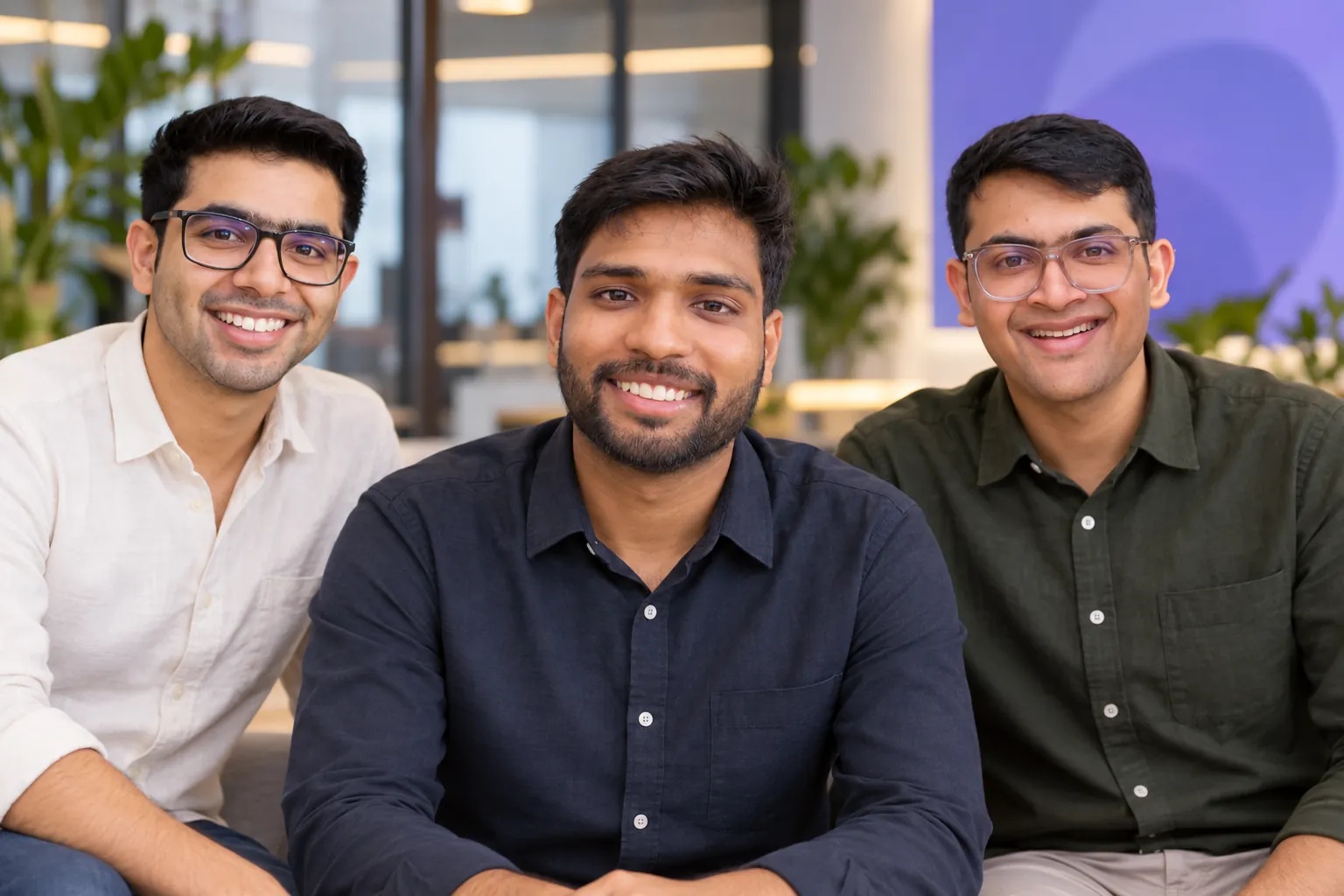
The relationships surrounding the company have their own history. Tankala says he first met Krishna Srinivasan through a research project when Srinivasan was at Google DeepMind. Collaboration developed into mentorship and, eventually, two founders exchanging support while building their respective startups. Tankala’s account emphasises the people encountered along the way as much as the difficulty of the work.
That detail puts a human scale on the familiar founder announcement. The company grew out of a group, and the group had people it could thank. Preethi Jyothi and Srinivasan appear in both his research connections and his acknowledgements of support. A career can change setting while carrying some of its relationships with it.
Who gets to say it is finished?
By September 2026, the three founders had written Timeline-Bench, a preprint testing agents on 56 real video-editing jobs. The work asks for a finished cut from raw production material. Delivery requirements and content checks sit alongside a quality assessment calibrated using 2,582 blind judgments from 43 professional editors.
The company’s published results draw a pointed distinction between an agent declaring success and a run passing the checks. Across sixteen agent setups, the reported average resolution rate was 14 percent. The best setup completed fifteen of the fifty-six jobs, or 26.8 percent. Those results describe this benchmark and its tested setups, rather than every possible editing system.
The claim and the finished work receive separate checks. Resolution requires every test to pass.
TensorTest offers private evaluations, reinforcement-learning environments and training data for creative agents. For Tankala, the current assignment brings together familiar concerns: expressive output, contextual requirements and examinations that expose limitations. The work also gives professional editors a role in deciding what counts as quality.
There is something pleasantly unglamorous about that last step. After the training, the tool calls and the triumphant completion message, someone watches the cut. Does it fulfil the brief? Does the story work? PK’s latest business begins where the machine’s announcement ends, with the audience still waiting to be convinced.