Pavan Kalyan’s startup begins with a document nobody frames for the office wall. A clinical study report can run for hundreds of pages. A regulatory dossier can draw from thousands more. The work involves finding the right file, confirming the right version, tracing the right number and then writing in a form precise enough to survive a professional reviewer’s suspicion. The prose is not trying to charm anyone. It is trying to be correct.
That is where Kalyan, known to friends and colleagues as PK, has decided to put his machines. Ritivel, the company he cofounded with Nirmit Arora and Gunin Gupta, builds AI agents for regulatory and medical writing teams in life sciences. The agents assemble source material and prepare first drafts of documents including clinical study reports, common technical documents, investigational new drug applications and biologics license applications. Each data point is meant to carry a citation back to the original material.
A less patient founder might advertise the paragraph. Kalyan’s pitch keeps returning to the trail beneath it. In a regulated industry, eloquence without provenance is merely a liability wearing good syntax.
Before the dossier, a bedtime story
At IIT Bombay, Kalyan studied electrical engineering in an integrated B.Tech. and M.Tech. program, adding work in data science and artificial intelligence. His research dealt with voices before it dealt with forms. In 2023, he and collaborators presented a system for expressive text-to-speech built around children’s stories. The technical problem was delightfully human: a narrator does not sound exactly like the characters she performs. A machine reading every sentence in the same voice may pronounce the words correctly while flattening the whole affair.
The group assembled 32.7 hours of English storytelling speech and trained a classifier to separate narrator sentences from character speech. A multi-speaker model could then modulate the voice accordingly. Later work brought the idea to Hindi with a 16.8-hour dataset, explored emotional speech through arithmetic on model weights, and tested whether language models understood pragmatics rather than merely vocabulary.
The recurring concern is context. Is this sentence spoken by the narrator or the wolf? What emotion should the generated voice carry? What social meaning is implied rather than stated? Which skill depends on an earlier skill? Those questions became papers at Interspeech and EACL, then a continual-learning benchmark published in 2025. The subject changed, but the habit held: do not treat language as an undifferentiated stream.
The research also reveals a taste for building the measuring instrument, not only the model. CurLL, created with colleagues at Microsoft Research, organized language learning around five developmental stages for ages five through ten. Its skill graph contained 32 broad skills, 128 sub-skills, more than 350 goals and over 1,300 indicators. The team trained a 135-million-parameter transformer under independent, joint and sequential setups to study what a model retained, what it forgot and which earlier lessons helped later ones. It is the sort of painstaking apparatus that never stars in a product demo but determines whether the demonstration means anything.
Recognition arrived along the route. Kalyan received a Microsoft travel grant to attend Interspeech in 2023. Two years earlier, he had been selected as one of ten Cargill Global Scholars from India. He also volunteered through the National Service Scheme, describing an interest in extending education to children without distinctions. The record is compact but consistent: research, teaching and the patient work of making difficult systems legible.
Kalyan carried that habit into Microsoft Research, where he worked on training language models. His academic adviser’s record describes him as a research fellow focused earlier on expressive speech synthesis. By the time he left, he had learned the strange dual citizenship of modern AI: a model can be astonishingly capable and still require a grown-up to check its work.
“No decks, no guarantees. Just conviction in the problem and trust in the team.”Pavan Kalyan on Ritivel’s beginning
Three friends choose the paperwork
Ritivel’s beginning is told in clipped founder arithmetic: three friends, 30 days, zero safety net. Kalyan, Arora and Gupta left their jobs and bet on one another. An early hackathon at Together gave the group a place to start. The company did not arrive fully dressed as regulatory software. The founders first offered a broader copilot to process-heavy industries, then kept asking practitioners where the real delays lived.
After more than 50 conversations with people in pharma, one answer grew difficult to ignore. Regulatory teams were synthesizing huge volumes of clinical material, rummaging through SharePoint, managing conflicting versions, chasing colleagues for missing inputs and drafting specialized documents over weeks. Even the first draft demanded expertise. The blank page was attached to a scavenger hunt.
So the founders narrowed the aperture. Ritivel would retrieve the relevant material, connect with systems such as SharePoint and Veeva, handle follow-ups through Outlook and generate drafts inside Microsoft Word. This choice matters. Enterprise software often asks users to move into a new universe. Ritivel tries to improve the universe where the work already occurs, right down to the familiar file.
The system’s promise is minutes instead of weeks for a comprehensive first draft. “First” is doing important work in that sentence. These are documents for expert review, not a parlor trick in which the machine makes the professionals disappear. The value lies in moving scarce attention away from hunting and assembly and toward judgment.
A startup built around the footnote
Generative AI made drafting cheap. It did not make verification optional. Ritivel’s sharper proposition is that the machine should leave breadcrumbs: citations, links and data lineage that let a reviewer travel from a sentence back to its source. The generated prose is visible; the accountability machinery is the product underneath.
This is a natural destination for a researcher who has publicly made AI safety central to his work. Kalyan has written about safe pretraining, evaluations that reflect real-world stakes, transparency and accountability. Such language can float comfortably at conferences. Regulatory work forces it down to the pixel. A reviewer needs to click. A claim needs a parent. A document needs a history.
There is also a social pattern to Kalyan’s account of the company. His announcement thanked a long cast of mentors, early believers, collaborators and hackathon companions. He described Krishna Srinivasan’s role evolving from research collaborator to mentor to fellow founder and supporter. Startup mythology prefers lonely geniuses because three words fit nicely on a poster. Kalyan’s version has more names in the credits.
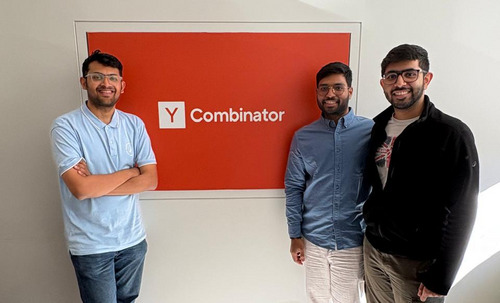
That instinct appears in the founding arrangement. Arora, the CTO, also came from Microsoft Research and worked on safer agentic systems. Gupta brought consulting experience in sustainability and process industries. Kalyan occupies the junction: research fluency, product ambition and the outward role of CEO. Their company remained a team of three when it entered Y Combinator’s Winter 2026 batch.
The fellowship of a tiny team is charming until Monday morning, when every missing function becomes someone’s second job. Research must become reliability. A conversation must become a contract. A technical possibility must become an installation that respects permissions, formats and the nervous system of a large organization. Kalyan’s title says CEO, but a three-person startup is wonderfully indifferent to titles. Everyone is still close enough to the code, the customer and the unwashed coffee cup to hear each problem arrive.
The useful distance between a demo and a workflow
Kalyan’s public posts are plainly fond of fast models and new tools. He experiments with research automation, comments on inference speed and shares the daily texture of an AI-heavy terminal. Yet the product he is selling is constrained by institutional reality. Pharma teams use existing repositories. Regulatory leads send reminders. Documents move through hands, permissions and reviews. A model can generate text in seconds and still spend the afternoon waiting for the correct appendix.
Ritivel treats those unromantic details as design requirements. Retrieval sits beside generation. Follow-up sits beside drafting. Word-level traceability sits beside speed. The company’s stated ambition is to let scientists focus more on innovation and less on paperwork. That aspiration only becomes credible if the software respects the paperwork enough to understand why it exists.
The fluent paragraph is the spectacle. The clickable evidence is the craft.
The leap from expressive storytelling to clinical documentation looks comic from a distance. One field asks a machine to recognize the witch’s voice; the other asks it to locate the origin of a table entry. Up close, they share a discipline. Language changes meaning with role, context and source. Good systems preserve those distinctions. Bad ones pour everything into the same smooth voice.
Kalyan is early in this chapter. Ritivel was founded in 2025, its YC batch arrived in 2026, and the public evidence describes a small team pursuing a large enterprise workflow. The sensible measure is not prophecy but direction. He has moved from studying how models speak to building a company around when they should be believed. It is a narrower question than artificial general intelligence, and a more useful one before lunch.
For now, the work is conducted in the ordinary rooms of a young company: conversations with practitioners, product demos, code, sales and the endless negotiation between what a model can do and what a customer can trust. Kalyan has already made one useful choice. He picked a problem where showing your work is not an optional courtesy. It is the work.