An eBay seller needed something shipped. Andrew Leto noticed a detail that would matter more than the package: the customer paid before the carrier needed paying. For someone with no startup money, the order of those two events was an opening. Freight could finance freight. A business could begin in the gap between money arriving and a bill falling due.
Leto has recalled looking for eBay listings too bulky for ordinary parcel delivery, then emailing the sellers to offer shipping. There was no glamorous consumer product to unveil. There were heavy objects, people who wanted them moved, and a young founder working out how to get paid for arranging it. The internet had made buying an awkwardly large object easy. Getting it home remained a separate adventure.
GlobalTranz began in 2003. Leto would build it with his younger brother, Michael, into a freight brokerage with software at its center. Years later, he would return to the same question from a different direction: how many better shipping options remain invisible to the person making the decision?
02A family business, with a browser open
The brothers grew up around their father's Pilot Airfreight franchise in the Phoenix area. Andrew went into the U.S. Navy after high school and worked on submarine technology. He served for five years. Returning to Arizona, he saw opportunity in ground freight and online booking. The family business gave him a close view of an industry whose next useful improvement might be sitting on the dock.
A carrier representative's delivery of a less-than-truckload tariff helped crystallize the idea: let people book freight online, with something approaching the convenience of booking air travel. Less-than-truckload, usually shortened to LTL, allows freight from different customers to share a truck. Andrew built the original software while Michael helped develop the business and bring in customers, carriers and agents.
The Navy years had also supplied a reading habit. Leto read business books, and Napoleon Hill's Think and Grow Rich became a lasting reference point. He has credited it with changing how he thought about starting a business. The book's influence persisted well beyond his first company; he was still discussing it in interviews more than two decades after GlobalTranz began.
That combination makes his origin more interesting than the familiar bedroom-startup image. He had exposure to freight through his family, technical experience from military service, and a strong appetite for business ideas. He then found a customer problem small enough to tackle immediately. Nobody needed the entire shipping industry repaired before an eBay purchase could move.
Book it. Find it. Choose it.
- 01GlobalTranz2003 · Arranging transportation
- 0210-4 Systems2012 · Seeing the shipment
- 03Emerge2017 · Comparing the options
03The brother clause
A sales network helped GlobalTranz expand. Independent agents brought relationships and freight business onto a common platform, extending the company's reach without requiring every salesperson to sit under one roof. The software and the distribution model reinforced each other: a booking system became more useful when there were people bringing customers to it.
Inside the partnership, the division of labor was unusually candid. Andrew described himself as the vision and technology partner, Michael as the person executing the business plan. He called their ability to complement each other a secret weapon. He also admitted that working together had come close to blowing up more than once.
His account included a decidedly unpolished advantage of sibling management: brothers can have an argument fierce enough to send another business partner out the door, then turn up the next day and get on with it. The essential skill, he suggested, was letting disagreements pass without storing up grudges. Family ownership comes with a shared history. Sometimes that history is the emergency exit.
By March 2016, GlobalTranz reported annual revenue of $484 million and more than 25,000 shipper customers. Bob Farrell succeeded Leto as CEO that month, with Leto continuing on the board. The numbers give the handover its proper scale. A venture started around individual shipping requests had become a company requiring a different level of management.
04First book it. Then find it.
Freight generates a second question almost as soon as it answers the first. Having arranged a shipment, someone wants to know where it is. Leto also founded 10-4 Systems, a business built around shipment visibility. Tracking was another place where information, scattered across transportation providers, could become a useful product when brought together.
Trimble announced its acquisition of 10-4 Systems on September 13, 2017. The Boulder company supplied visibility across transportation modes, including individual-shipment information, estimated arrival times and detail down to stock-keeping units. The acquisition also brought a small-carrier transportation management platform and shipper bidding capabilities. Financial terms were undisclosed.
For Leto's career, 10-4 broadens the picture. GlobalTranz had put technology inside a brokerage. Shipment visibility addressed what happens after a movement is arranged. Emerge, which the brothers co-founded in 2017, would work on the earlier decision: which carrier gets the freight in the first place? Booking, tracking and procurement were different doors into the same information problem.
05The spreadsheet that kept coming back
At Emerge, Leto's complaint was wonderfully ordinary: companies were still buying transportation through email and spreadsheets. A shipper could have established relationships with a dozen or so trucking companies, yet the process of asking for prices and comparing offers remained laborious. Familiarity made that small network convenient. It also set a limit on what the buyer could see.
In 2020, he described a model in which shippers could use a free procurement platform and bring their existing carriers with them. New providers joining the mix created the commercial opportunity. Each participating network could open doors for the others. His ambition extended beyond full truckload to the other transportation modes handled by the same procurement teams.
The idea was simple enough to state and awkward enough to explain that he called explaining the platform his biggest hurdle. Freight people already knew what a broker did. A platform that changed the buying process required a longer conversation. One suspects the spreadsheet enjoyed this period of confusion.
Leto's argument also reached the empty return trip. In a 2023 conversation with Matt Waller, he discussed connecting unused private-fleet and dedicated capacity with other shippers' freight. A truck returning without a load represents capacity someone has already paid to put on the road. Finding the right additional shipment makes information commercially useful in a very physical way.
06Capital, and the people who leave
Emerge announced a $130 million Series B in September 2021, led by 9Yards Capital, Tiger Global Management and The Spruce House Partnership. Existing backers Greycroft and New Road Capital Partners also participated. The money was intended to support product development, research and enterprise sales. It was a substantial financing round for a business asking procurement teams to reconsider an established routine.
Leto's ambitions were local as well as commercial. In 2021, he spoke of eventually taking Emerge public and making it a major revenue contributor in Arizona. Those were goals he expressed, rather than milestones already reached. He also wanted to recruit talent in the state. Building the software and building the place where it could be built were related concerns.
GlobalTranz's wider influence had become visible through its former employees. Freight businesses including project44 and MyCarrier emerged from that professional network. A company can keep producing consequences after its founder leaves: colleagues become founders, former operating problems become new products, and relationships turn into investment opportunities. The organizational chart is a poor map of where that influence ends.
Leto became an investor as well. In March 2021, a $10 million investment from him led Roadrunner's $50 million equity raise. Roadrunner planned technology spending around planning, pricing and efficiency. His interest in freight software had carried him into the ownership of a carrier, where those decisions affected trucks and terminals as directly as a booking screen.
07An invitation has a price
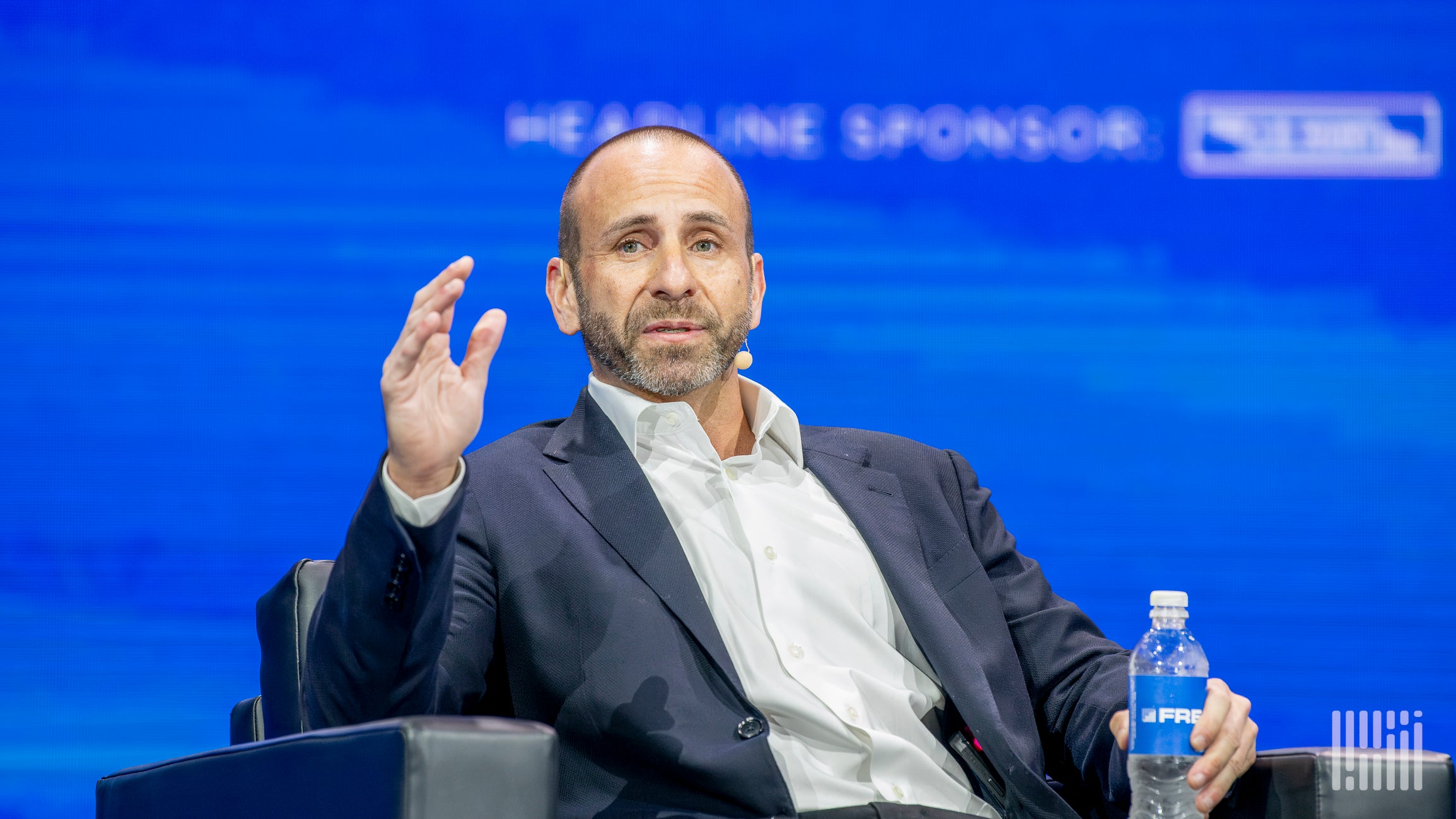
Onstage with Craig Fuller at the Future of Freight Festival in November 2023, Leto returned to the invitation list. His concern was that a shipper's bidding event could exclude most of the carriers that might serve it. A carrier could own trucks and still never get a chance to compete for a particular customer's business.
He was also blunt about the economics facing new founders. Investment had become harder to secure, and he urged entrepreneurs to find ways to make money without burning through it. The advice had a certain autobiographical symmetry. A founder who began by noticing when customers paid was again talking about the timing and survival value of cash.
“You have to bootstrap, figure out how to make money.”
Andrew Leto · November 2023
The warning sat alongside his criticism of labor-heavy freight matching. If people must keep calling carriers to book trucks, software alone does not remove the cost of those calls. His business argument kept returning to participation: enough freight, enough carriers, enough reasons for them to transact through the same system. A marketplace needs company.
freight to move
Make the decision.
08The next offer
By September 2026, Leto was making a related argument about artificial intelligence. Carriers that accept the first broker's morning call, he argued, can miss better choices elsewhere in the market. Shippers accepting the first workable quote face a version of the same problem. He put the potential difference at 10 to 20 percent in the situations he described. That is his contention, rather than a guaranteed saving on every load.
The appeal of AI, in his telling, is its ability to examine more of those choices than a person can handle at once. The ambition is familiar even as the technology changes. The early online booking idea, the shipment visibility business and the procurement marketplace all ask what becomes possible when useful information reaches the person who needs it.
His job title has changed again. On September 2, 2026, Mark McEntire became Emerge's CEO, and Leto returned to the Founder role. Michael continued as president. McEntire had previously worked at Emerge in 2022 and 2023, bringing an existing acquaintance with the business to the handover.
Leto's career keeps circling a modest-looking transaction: someone has freight, someone has a truck, and each needs to find the other on workable terms. He has built businesses around arranging the meeting and making its consequences visible. The first offer got him started. The possibility of a better one has kept him busy.