The recruiter had a manufacturing job to discuss. Andrew Filson had another reason to listen: his son lived closer to the company in Colorado. In 2017, after nearly 28 years at Corning, he joined CoorsTek as its first chief operations officer. The family had already moved nine times, including internationally. Another address was manageable. Leaving the employer that had occupied most of his working life was the larger leap.
That small domestic calculation belongs beside the executive titles. Filson works in a business where decisions can involve expensive equipment, unfamiliar chemistry and customers with exacting requirements. Yet one of his consequential career choices also involved the ordinary wish to be nearer to family. The factory network mattered. So did the distance to his son.
In January 2026, he took another step, becoming president, chief executive officer and a board member of Spartech, the St. Louis manufacturer of engineered thermoplastics and specialty materials. Glass, then ceramics, then polymers: his career has followed the substances underneath other people's products. You may never see his employer's name on the thing you buy. Its material still has to perform.
A glass lesson in keeping your shape
Filson is originally from Albany, New York. He studied industrial engineering at Rensselaer Polytechnic Institute and earned an MBA at Syracuse University. The pairing suits a career spent moving between the technical and commercial sides of manufacturing. An engineer needs to understand what a process can deliver. A business leader must also understand why anybody would pay for it, and whether it can be delivered repeatedly.
His Corning work ranged across business leadership, operations, commercial responsibilities and joint venture governance. A July 2009 management announcement placed him in charge of global sales and marketing for environmental products. The context was uncomfortable: the automotive downturn had forced the company to rethink the scale of that business. Materials expertise existed alongside the less elegant problem of matching an organization to demand.
That earlier Corning assignment adds something to the later account of factory coordination. Sales and operations encounter the same business from different directions. A commercial team hears what customers want to buy; a production team knows what the existing system can make. Demand can fall while equipment remains in place. It can also return before capacity is ready. The executive moving between those responsibilities has to translate, especially when customers and factories sit in different countries. Filson’s documented responsibilities crossed that boundary well before he took the COO title in Colorado. The work connected decisions about the market with decisions about the means of serving it.
Two years later, he was explaining a different material problem. At the launch of Corning Lotus Glass in October 2011, Filson was identified as worldwide commercial director for Display Technologies and vice president of Corning Holding Japan. The glass was designed for the manufacturing requirements of advanced displays, including OLED and high-performance LCD screens.
The attraction was stability. During high-temperature processing, the material needed to preserve its shape and surface quality. Thermal sag and warp could interfere with the components being built on it. A display's eventual resolution depended in part on something more prosaic: the underlying glass behaving itself while the factory did difficult things to it.
This episode offers a useful way into Filson's working world. Consumer electronics can be sold through photographs of luminous screens and slender devices. Further back in the production chain, the conversation concerns thermal cycles and dimensional consistency. Glamour has a supplier, and that supplier has specifications.
Forty factories, one manufacturing function
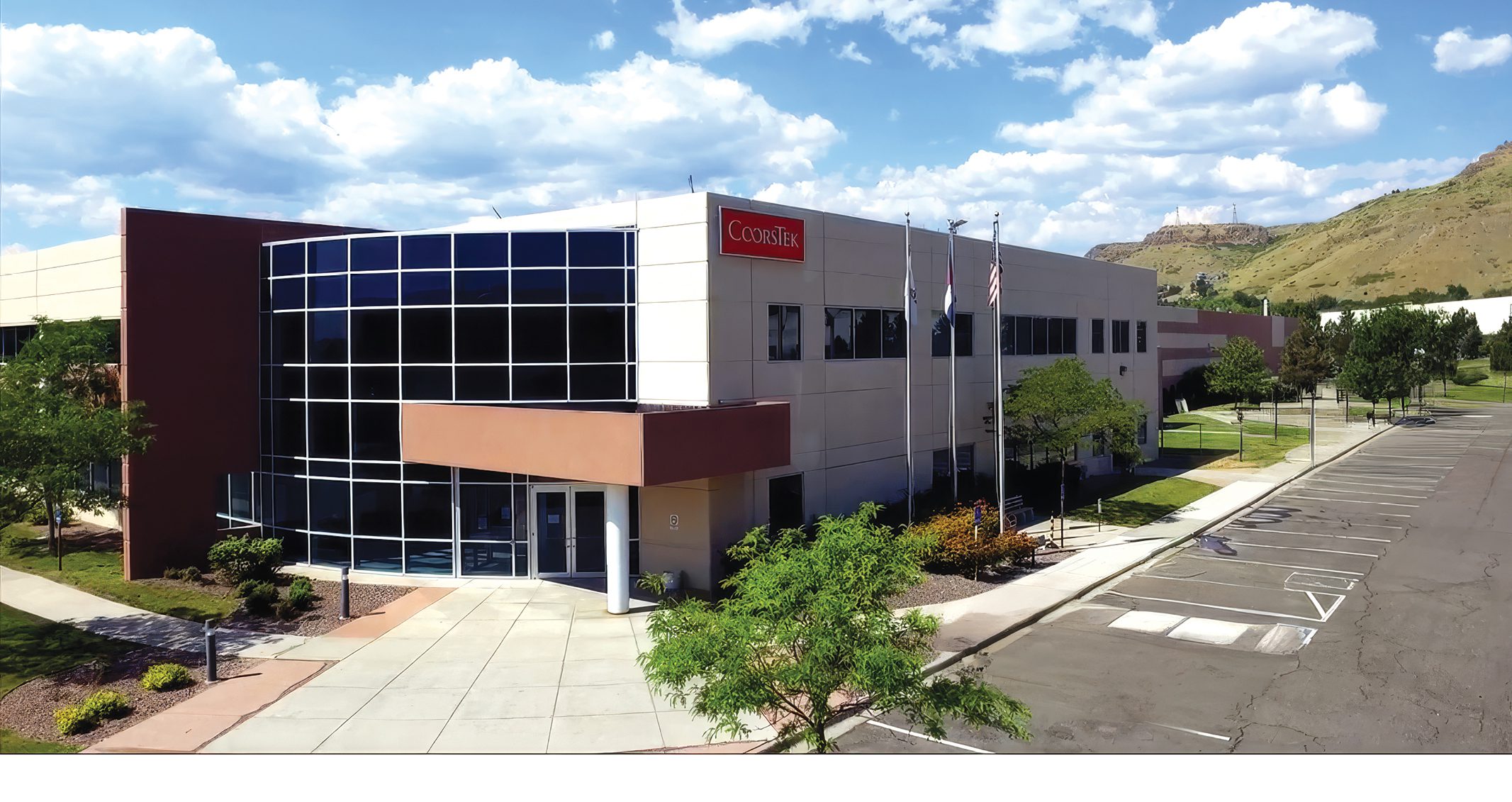
When Filson arrived at CoorsTek in 2017, the assignment involved a worldwide collection of factories. He developed an operational excellence model and a manufacturing strategy that brought more than 40 siloed factories into a united manufacturing function. The scale makes the distinction between running a plant and coordinating a network quite concrete. A good decision at one site must fit the needs of the wider business.
Consider the managerial problem behind that description. A factory has its equipment, routines, skills and local experience. A network adds questions about where work belongs, how knowledge travels and which decisions should be shared. Bringing those pieces together requires choices that a tidy organization chart can conceal. A line connecting two boxes is wonderfully inexpensive. Getting the people in those boxes to coordinate takes work.
Filson's subsequent account emphasized a hub strategy, resource allocation and the practical use of capital. The aim was to combine scale with technology development. Equipment is costly; so is a promising capability that cannot find its way into a customer's production program. His account of operations placed those issues in the same conversation.
In 2024, he became president of a group of CoorsTek businesses that included semiconductor fabrication, aerospace and defense, and industrial applications. He described opportunities to give teams clearer purpose and to convert new technology into commercial growth. Accountability, in his telling, helped people decide what deserved attention.
“How can we more efficiently and reliably exceed customer expectations?”Andrew Filson, reflecting on his CoorsTek operating strategy
The question is revealing because it contains two clocks. Efficiency concerns the resources used now. Reliability concerns what the customer can expect next time. An organization can delight somebody once through an extraordinary effort. Building a business around repeat orders asks for a less theatrical achievement: dependable performance.
Glass and specialty materials
Technical ceramics
Engineered thermoplastics
The customer arrives before the order
Filson also described the advantage of working with customers early in their development cycles. CoorsTek's material portfolio and research capabilities allowed the business to take part while a product was still being designed. He pointed to more than 400 formulations, three dedicated research and development facilities on three continents, and relationships with roughly 2,500 customers in his 2024 interview.
Those figures describe CoorsTek at that time. Their interest here lies in what they suggest about his role. A library of formulations is a collection of possibilities. Customers arrive with constraints. The commercial task is to find the useful meeting point and make it reproducible. An earlier conversation can change which possibilities reach the drawing board at all.
There is an understated sort of ambition in this position. The materials supplier helps determine what another company can make, while remaining several steps away from the eventual purchaser. Credit travels unevenly along that chain. The work still demands an answer when a prototype becomes an order and the order becomes a schedule.
- 01FormulationDevelop the material
- 02PilotingTry the process
- 03Scale-upPrepare for production
Spartech describes these three capabilities at its Innovation Center. This is a process diagram, not a performance measure.
A new material, a familiar assignment
Spartech appointed Filson to succeed interim CEO Terry Sutter, who remained on its board. Kevin Duffy joined as executive vice president of sales and marketing, reporting to Filson. In choosing its new chief executive, the board emphasized his experience with talent, process and manufacturing transformation. The appointment brought operational and commercial leadership into the same transition.
By March 25, 2026, Spartech had set out its next direction. The company said it had reduced debt, improved liquidity through an asset-based lending facility and secured additional capital from new equity holders. Filson joined a business already undergoing financial change. That sequence matters: the financing work extended over the preceding year, before his appointment.
The strategy named electric vehicle battery systems, aerospace transparencies, automotive acoustics and energy storage among its areas of focus. These are distinct applications with a common requirement: materials must do a particular job under particular conditions. The announcement also emphasized better operating consistency and customer responsiveness across established markets such as graphics, signage and building products.
Those ambitions have an everyday counterpart. A material intended for a vehicle, an aircraft or a building eventually becomes somebody's design choice and somebody else's production obligation. Development and delivery have to meet. Spartech's Innovation Center, with formulation, piloting and scale-up capabilities, sits at that intersection in the company's stated plan.
The March announcement describes a direction and the financial room to pursue it. It does not settle the outcome. For Filson, the assignment is now to turn resources and priorities into a business that serves customers consistently. The material has changed from his Corning and CoorsTek years. The need to connect technical promise with repeatable production is recognizable.
People are part of the process
Filson's public activity also has a lighter register. Discussing ceramic armor on LinkedIn, he invoked Superman and the nickname “the Man of Ceramics.” It is a pleasingly specialized comic-book revision. Even a superhero, apparently, might benefit from a more careful discussion of material selection.
He has also participated in CNEXT's executive community: a May 2024 discussion document on leading change lists him among the participating leaders. In Colorado, Scouting Colorado's 2026 executive board includes Andrew M. Filson, identified as Spartech's CEO. These are specific connections beyond his operating roles, linking him to executive exchange and a local youth organization.
Put those details beside the family move and a less remote portrait emerges. There is the executive who coordinates manufacturing businesses, the father who considered where his son lived, and the materials enthusiast willing to recruit Superman into a ceramics discussion. None requires a grand personal mythology. They give the career a human scale.
The interesting continuity is the work he keeps choosing. A screen needs glass that holds its dimensions. A customer needs a component that can be produced again. A manufacturer needs the people, equipment and money to honor that commitment. Filson's latest chapter places him among specialty polymers, with the same practical question waiting at the end of the development process: will it work when somebody needs it?