Before there were shops to open, there were people to meet. Anass Boumediene spent the period before eyewa talking to hundreds of people in industries he wanted to understand. Coffee and lunch were part of the preparation. Some of the people across those tables would eventually become investors, colleagues or board members. The company was taking shape in conversations before it had much to put on a shelf.
It is an appealingly ordinary beginning for a business whose later announcements would involve millions of dollars. No lightning bolt is required. There is a question, somebody who might know the answer, and the small social courage needed to ask for their time. Even an ambitious company can begin with the practical matter of finding somewhere to sit.
Boumediene, eyewa’s co-founder and co-CEO, has a compact description of a professional network: those people you can count on
. The emphasis falls on reliability. That makes a useful introduction to a founder whose career has moved steadily closer to the consequences of his own decisions.
A table for two, then a company
His education took him through Concordia University and ESCP Business School, with commerce, finance and management on the syllabus. Strategy consulting at Bain & Company followed. There he met Mehdi Oudghiri, the colleague who would become his operating partner through two quite different businesses. A consulting project gave them a working relationship before they had a company to share.
Consulting offered a view into how organisations worked. Boumediene wanted the responsibility of making one work himself. Explaining the move into entrepreneurship in 2021, he said: We always wanted to contribute and to make something happen and create something
. The verbs are revealing. They all require an outcome beyond a recommendation.
In 2015, the two joined Foodpanda’s Middle East business. They were taking regional responsibility inside an existing international startup, with the resources and complications that came with it. Food delivery was an education in a business where the customer’s patience could be measured in minutes. A strategy that looks reasonable in a meeting still has to survive a dinner order.
Oudghiri has described regional revenue growing fiftyfold over a couple of years through organic growth and acquisitions. Delivery Hero acquired Foodpanda in 2016. The pair arranged a transition and began preparing their own venture. They had already experienced expansion together; now they would have to decide what deserved that effort next.
A useful difference of opinion
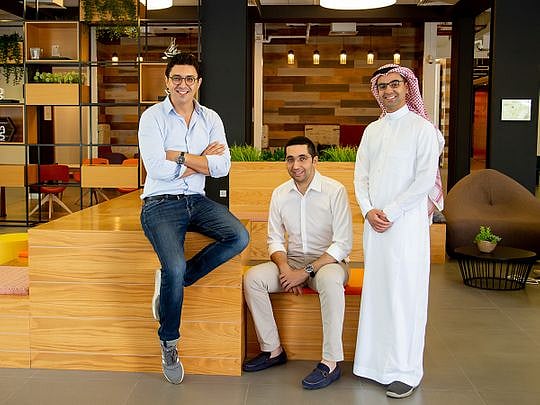
Their partnership contains a detail more interesting than a matching pair of consulting résumés. Oudghiri describes himself as an introvert and Boumediene as an extrovert. He says the two often disagree, and that constructive arguments improve their decisions. The analytical training is shared. The personalities give it different ways to enter the room.
That is a credible arrangement for a long working relationship. Founders do not need identical reactions to every proposal. They need some way to examine a proposal without turning the examination into a quarrel about the partnership itself. Knowing how somebody works before founding a company offers a considerable head start.
By the time eyewa launched, Boumediene and Oudghiri had seen one another in consulting and in operating roles. Their common history gave the new business something a pitch deck cannot supply: experience of the person who would be there for the next difficult decision. They were choosing a venture and renewing a partnership at the same time.
The distinction matters because the public story of a startup tends to favour solitary resolve. Here, the practical unit was a pair, later joined by a wider founding and leadership team. There is room in that picture for ambition, sociability and the occasional well-supported objection.
Learning what belongs on the shelf
Eyewa launched online in October 2017. Both founders wore glasses, and they saw an opportunity in the region’s eyewear market. The early business operated from their Dubai apartments. A $1.1 million seed round followed in 2018, backed by investors from the UAE and Saudi Arabia.
The initial proposition was straightforward enough for a shopper to understand: browse eyewear online and have it delivered. For the founders, it was also a way to learn. Selling products creates evidence about preferences that a market presentation can only approximate. A customer choosing a frame has made a more consequential statement than somebody politely approving an idea.
Boumediene later described the company’s first three years as a period of selling third-party brands and understanding the market before developing brands of its own. That sequence is worth pausing over. The founders entered retail, learned from transactions, and used that knowledge to shape what they would sell next.
An own-brand business puts more decisions within the retailer’s reach. The assortment, the look and the price become connected choices. It also gives the customer a new question to answer: will I buy something because this retailer made it? A familiar label can lend confidence. A new label has to earn its place.
“You have to contribute.”
Anass Boumediene, on professional relationships
The website gets a front door
In December 2020, eyewa opened its first physical store in Saudi Arabia. The online business was acquiring a second way to meet its customers. By August 2021, it had opened at City Centre Mirdif in Dubai, its first UAE store, alongside an initial Saudi footprint.
The move asks an interesting question of a founder who started on the internet. How much of the original plan should survive contact with the customer? A shop adds rent, staffing and inventory. It also lets someone pick up a frame, try it on, compare colours and decide whether the thing on the screen belongs on their face.
Boumediene publicly committed to expanding the physical network. The company’s $21 million Series B in 2021 helped support that next stage. What had begun as a website was becoming an organisation with many local points of contact, each requiring the promise made by the brand to feel convincing in person.
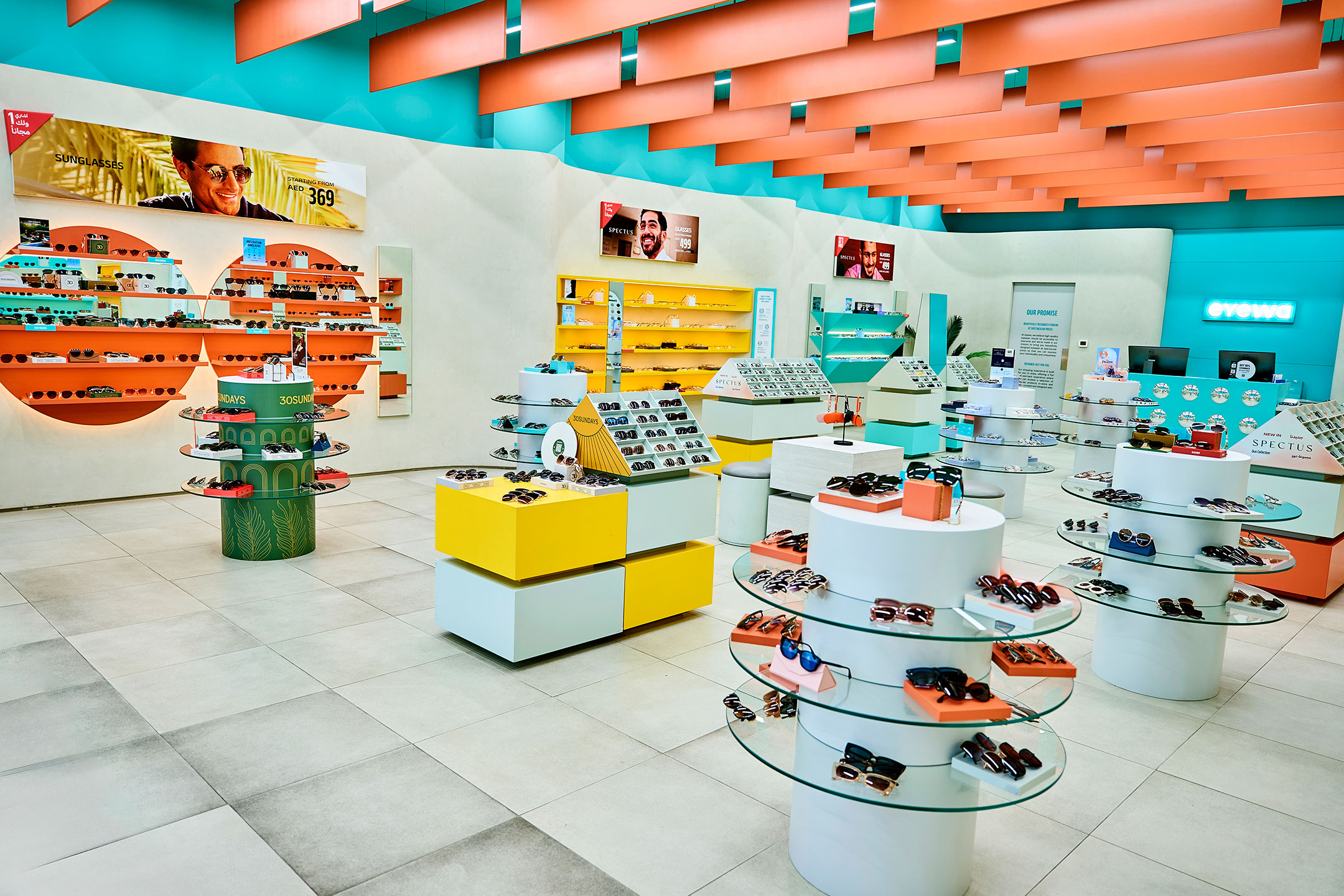
In November 2024, the funding announcement described more than 150 GCC locations. In 2025, eyewa announced store number 200, at Villaggio Mall in Qatar. The footprint then covered Saudi Arabia, the UAE, Kuwait, Bahrain, Oman and Qatar. Geography had become part of the company’s daily workload.
The less photogenic side of ambition
For all the visibility of a shopfront, much of retail takes place somewhere the customer never sees. Boumediene has discussed the role of Dubai’s trade connections and logistics partners in getting products into the business and onward to customers. The journey involves manufacturers, imports, stock and delivery. A pair of frames may be small; the organisation around it is rather less portable.
There is a human consequence to that machinery. The colleague in a shop needs the right products to arrive; the customer wants the pair they chose. The founder’s expanding map has to remain legible at that small scale. Growth becomes tangible when the order on somebody’s desk matches the box that turns up.
His account of starting at in5, the Dubai incubator, is practical too. Licensing, workspace and training helped the founders get started. These details rarely compete successfully with a funding headline, but they explain how a founder gets from an intention to a functioning company. Somebody still has to arrange permission to trade and somewhere to work.
In November 2024, eyewa announced a $100 million Series C led by General Atlantic, with Badwa Capital and Turmeric Capital participating. The plans attached to the capital included research and development, hiring, at least 100 additional stores during 2025, and a production and fulfilment hub in Riyadh.
The 200th-store announcement added a smaller, useful number: the Qatar opening was eyewa’s 42nd new store of 2025. It offers a glimpse of the work between the large milestones. Each addition represents another location to organise and another group of customers to serve. Counting shops is easy from a distance. Running the next one is a fresh assignment for the people involved.
Those were commitments about the next stage. The money made room for action; it did not perform the action. Warehouses require systems. Stores require colleagues and stock. Developing products requires choices that a customer will eventually judge. A larger round makes the responsibilities more substantial, even when the announcement makes them look pleasantly compact.
Boumediene has also argued that building regional businesses requires easier movement between countries. It is an observation from an operator who has to deal with the border, rather than merely draw a circle around a market. Shared geography leaves plenty of administrative work intact.
People you can count on
Eyewa’s leadership now extends well beyond its original partnership. Abdullah AlRugaib is co-founder and managing director for Saudi Arabia. The company’s public leadership list includes executives responsible for strategy, finance, marketing, technology and product. The business Boumediene co-leads depends on people handling problems he cannot personally attend to in every shop.
That gives the early conversations a useful place in the later story. His approach to meeting people was reciprocal: ask for help, offer something useful, and stay open to what the relationship might become. An ESCP friend encountered over lunch in Taiwan could offer a view into doing business there. Knowledge travelled through an existing connection.
There is an appealing continuity between that habit and the demands of retail. Listen carefully. Understand what somebody needs. Make a promise you can keep. Then turn up again. The calendar fills, the company grows, and the founder’s job acquires more moving parts. The value of having people to count on remains easy to understand.