A course can end with a satisfied customer and an unopened shipping carton. The videos have been watched. The notes are excellent. Somewhere, a supplier is waiting for an answer. At Amazing.com, the distance between those two events has become a business problem worth selling a solution to.
- Amazing sells ecommerce training, seller software and personal coaching.
- Its current membership bundles Amazing Selling Machine with Amazing Intelligence.
- The premium offer tackles a practical bottleneck: choosing a product and getting it launched.
The company’s name suggests enthusiasm. Its more interesting material concerns hesitation. On the current Copilot page, CEO Mike McClary estimates that only 15-20% of the roughly 40,000 people who went through its programs actually launched a product. That is a company estimate, not an independently measured completion rate. Even with that qualification, it is an unusually candid admission for a business selling instruction.
Estimated share of past participants who launched a product, according to CEO Mike McClary.
The interpretation matters. More training may help somebody who lacks knowledge. Somebody unable to choose between three suppliers might need a conversation. Amazing’s premium answer is Copilot: weekly calls, private messaging, software and an AI coach called AIDA. The advertised promise concerns selecting a product within six weeks, subject to doing the work. It does not promise a profitable launch.
The classroom came after the shop
Matt Clark and Jason Katzenback built Amazing around something they had done themselves: selling physical products online. A March 2015 announcement dates Amazing Academy to 2013 and introduces Amazing.com as a wider portal for entrepreneurial education. The ambition was to break business-building into teachable actions, supported by a community rather than a lonely stack of videos.
That origin helps explain the customer. Amazing is for the aspiring founder trying to create a product brand, and the existing seller trying to improve one. The work involves selecting a market, sourcing goods, creating a brand and reaching buyers. These are people buying an operating method for a business they will own and run.
Clark’s first-person account of the company’s beginnings supplies another ingredient: distribution. He recalls Katzenback proposing a course to an existing audience of about 250,000 people. Their predecessor program, Amazon Money Machine, reportedly sold more than $1 million in its first week. Those figures are Clark’s retrospective account. The practical point is simpler: expertise arrived with an audience ready to hear it.

The cheaper course that people wanted less
In January 2016, Amazing announced a $39 monthly membership covering a broad range of entrepreneurship courses. The proposition was understandable: make business education affordable and reach more people.
In a 2021 podcast, Clark described the less comfortable sequel. Amazing replaced its flagship Amazing Selling Machine program with a lower-priced course membership, expecting volume to compensate. Demand failed to meet expectations. McClary recalled the appeal of a Netflix-like subscription; Clark acknowledged the danger of removing an established business before proving its replacement.
“It just wasn’t what people really wanted.”Matt Clark, recalling the earlier course membership
The current membership is another subscription, with a different composition. ASM remains inside the offer, alongside working software. The distinction suggests a lesson for any founder tempted to reduce a price: first establish what the customer values. More material can be a poor substitute for a clearer route to a result.
A syllabus with a workbench attached
Amazing Selling Machine AI Edition now describes 13 connected systems. The curriculum reaches from product discovery and validation through sourcing, branding, Shopify, Amazon, fulfillment, content and paid advertising. AI runs through the tasks, including copy, imagery and analysis. A customer can work toward both an Amazon listing and a store on an owned domain.
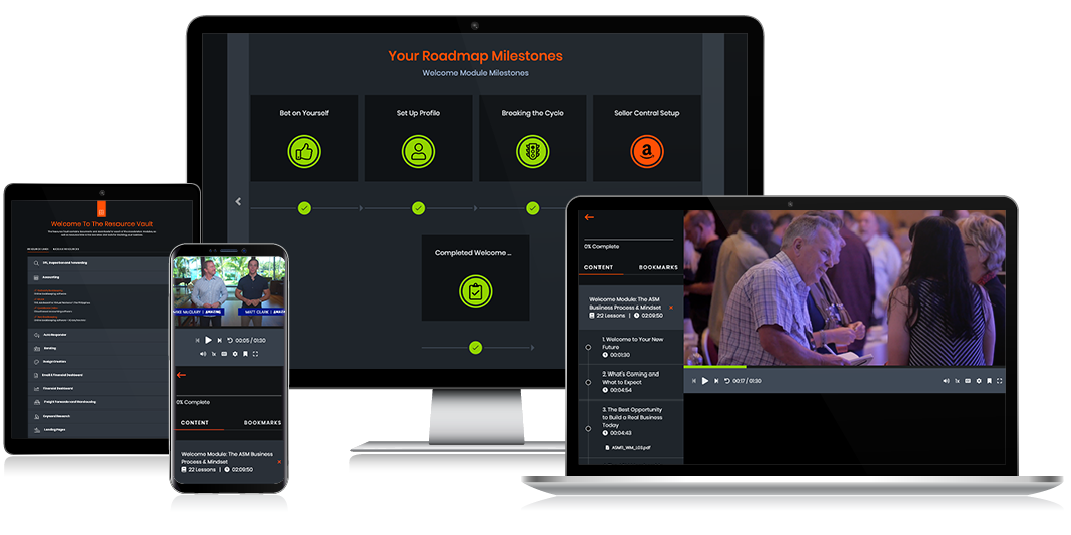
This widens the old Amazon-first proposition. Clark’s direct-to-consumer teaching argues for a unique product and selling through one’s own website. That brings another set of decisions into the room: the offer, the landing page, advertising and how to acquire customers. Owning a website creates choices; it also gives the owner more jobs.
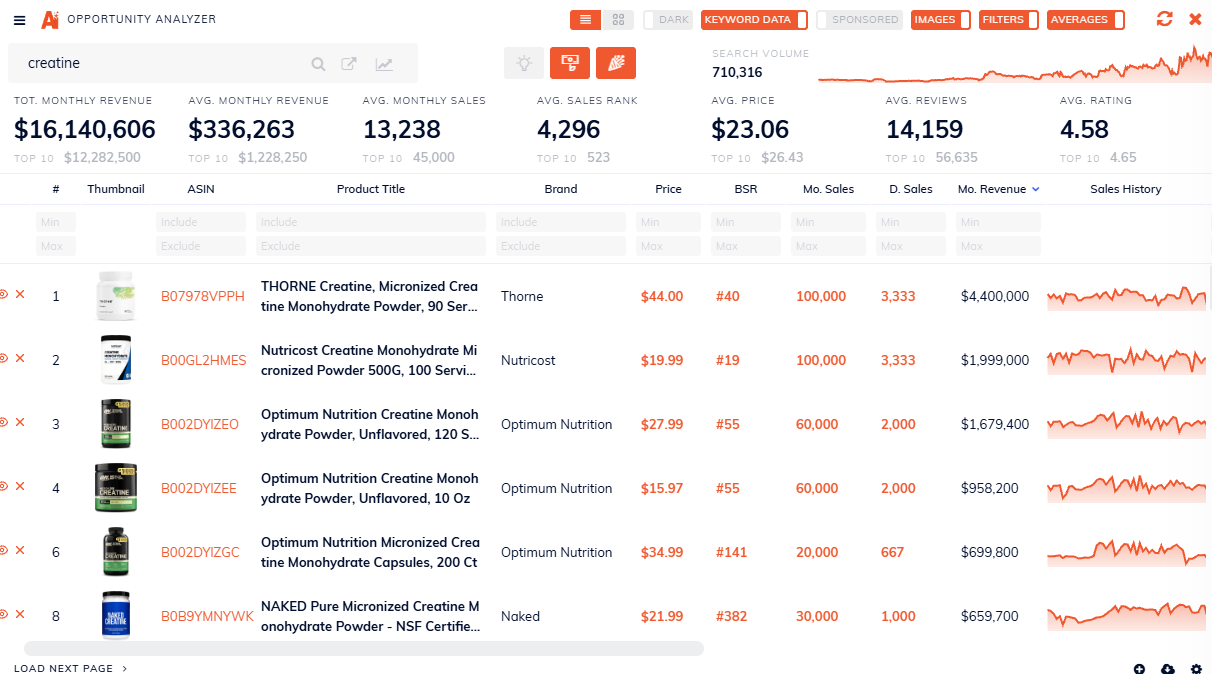
The accompanying Amazing Intelligence suite incorporates Zoof, which Amazing says it acquired. Its current product page lists 32 active tools. Among them are product discovery, review analysis, profit calculation, keyword research, listing editing and launch tracking. Account integrations connect Amazon and Shopify data; team permissions and supported Zapier workflows add operational uses beyond the first product search.
- 01Research demand
- 02Validate economics
- 03Build the offer
- 04Track the launch
- 05Measure profit
A simplified reading of Amazing Intelligence’s five-stage workflow.
A review-analysis tool can point to complaints worth investigating. A profit calculator can expose a product whose apparent margin disappears after fees. The value is in shortening the trip from observation to decision. The decision remains the seller’s, as does the purchase order.
Tuition is only the first budget
Amazing advertises membership at $99 monthly or $708 annually, equivalent to $59 a month. The annual commitment saves $480 against twelve monthly payments. It also requires the money sooner. For a new seller trying to preserve cash for inventory, that difference deserves as much attention as a feature comparison.
The purchase path deserves inspection. The main storefront describes self-guided membership and reserves personal coaching for Copilot. The checkout page lists weekly coaching and a seven-day trial, while the Zoof page describes immediate charging and a fourteen-day refund period. These public terms differ. The specific offer presented before payment is the one a prospective member needs to examine.
The cost of the subscription also sits outside the cost of building a physical-product business. Samples, inventory, shipping, fulfillment and advertising have their own economics. Amazing’s current training explicitly includes supplier checks, policy risks and margins before placing a production order. A cheap learning plan cannot rescue an expensive product mistake.
Read the sales number twice
Amazing’s history contains striking student figures. Its 2015 announcement reported more than 150 members with voluntary, validated badges representing at least $100,000 in monthly gross revenue. That demonstrates that some members reached substantial sales. A voluntary badge system does not tell a prospective student the probability of doing so.
A 2018 company announcement supplied a narrower outcome disclosure: among members joining in 2013-2016 who completed the program and launched a new brand, median annual revenue was $60,750 and median annual profit was $6,896. The population excludes people who never reached launch. The figures are historical, but the distinction between sales, profit and participation remains useful.
For a business school selling ecommerce, this is central expertise: understand what the number measures before letting it persuade you. A sales dashboard is incomplete without costs. A success story is incomplete without knowing whose experience it represents.
Who needs the map?
Helium 10 and Jungle Scout occupy the same shopping conversation, offering seller software and educational resources. Amazing’s particular proposition combines a brand-building curriculum with a software workspace and an optional coaching relationship. Buyers can compare the kind of help they need: research data, instruction, or someone to discuss a consequential decision with.
The reader can borrow a method without borrowing a promise. Study customer complaints. Calculate landed costs. Validate suppliers. Start with a manageable product decision, then track what happens. In Amazing’s interview with seller Eric Toohey, he recalls resisting the advice to start with one product before understanding its usefulness. Brand hijackers and size-related fulfillment costs became practical problems to solve, rather than details to skip in the lesson.
This approach requires money to invest, time to execute and a product customers want. It will struggle when the buyer expects the program to operate the business for them, or treats estimated demand as guaranteed orders. The tools can help someone make a better decision. Eventually, someone still has to answer the supplier.