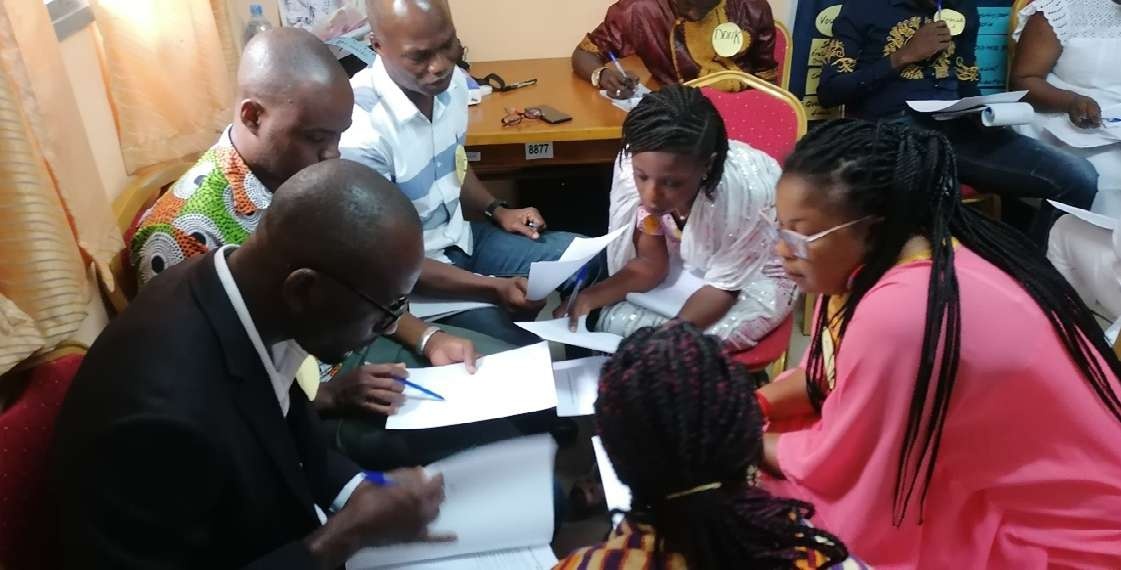
Before CEFE International could teach business skills in Gagnoa, Côte d’Ivoire, it had to choose the teachers. Almost 150 people applied. Twenty-nine reached a selection workshop; 22 were retained, and a technical adviser joined them. The resulting group of 23 would practise building a business and facilitating exercises for others. Entrepreneurship training, in this case, began with an audition.
That small scene explains a company whose language can otherwise sound like a development-policy conference. CEFE International works on private-sector development: helping enterprises operate better, helping institutions support them, and managing the projects that connect the two. Its distinguishing feature is the attention it gives to the person doing the teaching. A useful business lesson needs someone who can make it usable.
The company occupies an interesting space between a management consultancy, a training provider and an international project operator. An assignment might involve a rural business coach, a start-up mentor or an executive preparing to meet German companies. Across those settings, the task is practical: turn information into something a person can do.
A consultancy with two audiences
CEFE describes two connected businesses. It manages projects for international cooperation organizations, ministries and other public institutions. It also provides capacity development for micro, small and medium-sized enterprises, usually shortened to MSMEs, and start-ups. Those are different relationships. The organization commissioning a programme may be far removed from the entrepreneur receiving coaching.
That distinction explains the service mix. A development agency needs project design, coordination and delivery. A business owner needs help with an actual decision: managing money, reaching customers or developing a workable growth plan. CEFE has to translate an institutional objective into a service that makes sense to someone running an enterprise.
Its project portfolio names GIZ, Germany’s international cooperation agency, repeatedly. Enabel, the Belgian development agency, commissioned its work with youth and women entrepreneurs in Kigali. A European climate-farming education project lists Erasmus+. These relationships describe commissioned development work and programme support; they should not be mistaken for venture-capital investment in CEFE itself.
The commercial model is therefore built around professional services and implementation assignments. Training, coaching, curriculum development and organizational advice sit alongside logistics and business events. For a buyer, the useful question is which combination a project requires. Buying a course and buying the local ability to keep delivering that course are different scopes of work.
Business practice, with the chairs moved
CEFE stands for Competency-based Economies through Formation of Entrepreneurs. The name is a mouthful. The premise is easier: people develop business and personal competencies through activities, decisions and reflection. The method’s description emphasizes problem-solving, decision-making and management skills, with applications extending to employability and rural development.
Its trainer licence requires Training of Trainers followed by coached, supervised practice. Further certificates recognize different levels of competence. This gives the teaching approach a quality-control structure: attending a workshop is one step; demonstrating the ability to facilitate one is another.
“no lectures, no powerpoint”
CEFE International’s company profile on Wellfound
That brisk formulation appears on CEFE’s Wellfound profile. It captures the participatory emphasis, although the current service range includes online learning and plenty of digital tools. The same undated profile claims an average training cost of $200 per participant. That figure is a historical company claim, not a current quotation or a reliable budget for a new assignment.
Programme design involves more than the price of a seat. Preparation, trainer development, supervised delivery and follow-up all take work. CEFE’s licensing structure makes that visible. An institution considering this approach should specify what happens before and after the sessions, as well as what happens inside them.
The qualification builds practice into the route to teaching.
The company’s toolkit also stretches beyond its own named method. Its start-up division lists lean start-up, design thinking, sprints, business canvases and even fuck-up nights. The last entry is a welcome interruption in a catalogue of development terminology. Discussing mistakes has a place beside discussing ambitions.
The classroom survived the digital turn
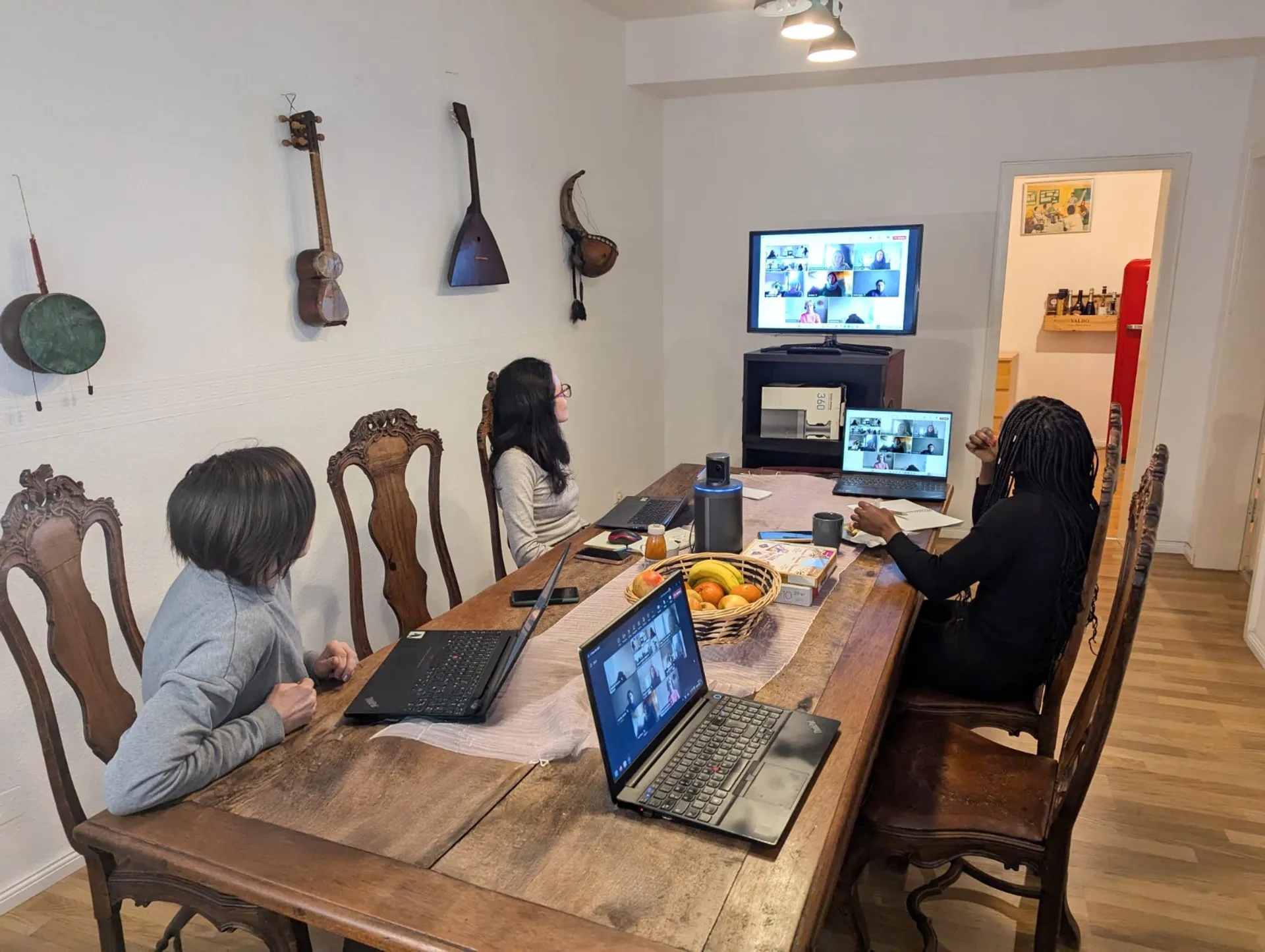
COVID-19 forced a delivery rethink. In Tajikistan, plans for distance training through computers and then mobile phones proved unworkable because of internet limitations. CEFE’s eventual arrangement had participants gather locally while instruction came remotely from Germany. The first obstacle was access to the lesson, before anyone could test its usefulness.
The 2021 review also records requests from trainers to preserve in-person participation. Management agreed on a hybrid direction. That change matters: the people delivering the method helped shape how it would move online.
CEFE Academy, dated from April 2020 in the portfolio, uses Moodle for participatory digital courses. A separate e-facilitation licence qualifies trainers to conduct CEFE courses online. The digital offering therefore includes both a place to learn and preparation for the person leading the session.
There is a longer-running resource behind those tools. CEFEpedia, dated from 2009, collects exercises contributed through the network. Its job includes quality control, adaptation and distribution. A training organization needs ways to retain what its practitioners learn; a shared manual gives those experiences somewhere to go.
From a start-up’s mentor to an exporter’s meeting
The range becomes clearer through specific assignments. For GIZ’s SAIS initiative, CEFE’s published May 2023-April 2025 role involved an online mentor and expert network for African agriculture and food start-ups. Its responsibilities included sourcing short-term experts and pro bono mentors, managing the platform and coordinating additional services and equipment support.
That is a useful description of what “investment readiness” can require behind the scenes. An entrepreneur may need specialist input and coordinated assistance before approaching investors. CEFE’s role in this SAIS assignment was to organize that support. The company was serving the programme, rather than announcing investments of its own.
For established companies, the business-cooperation division offers export coaching, delegation programmes, matchmaking and trade-fair preparation. Its Partnering in Business with Germany portfolio describes online preparation, a two-week attendance phase in Germany and a six-month transfer phase. Company visits and meetings belong to a longer sequence intended to help managers use what they learn.
Published programme structure. These are durations, not measures of commercial success.
This puts CEFE alongside several kinds of alternative provider: local business advisers, incubators, training firms and trade-promotion organizations. Its distinctive offer is the combination of enterprise support, trainer development and international implementation. Whether that combination is useful depends on the assignment. A business seeking a single specialist answer has a different need from an agency building a regional advisory service.
A 2025 assignment in Namibia shows another side of that combination. Under ProBATS II, CEFE’s brief covered financial-governance training for small enterprises and support for financial-service providers. The published scope includes accounting, auditing and risk management, alongside reviewing and adapting financial products for MSMEs. Selection work extended across Namibia’s 14 regions.
The Namibia project addresses both sides of a business-finance relationship. Entrepreneurs need the skills to manage money; providers need products suited to those enterprises. Teaching the customer is only part of the assignment. For institutions commissioning business support, that is a useful design choice to examine before assuming every difficulty can be solved with another training session.
The course needed fewer complications
The ClimateFarming project supplies a revealing admission. Educational materials were difficult to simplify for the intended audiences. Partners revised them after participant feedback. They also encountered a shortage of advisers specializing in climate-friendly agricultural practices, strengthening the case for training those advisers.
The 2024 project account gives the reader something more useful than a smooth success story. Expertise has to survive translation into a teachable format. The practical move to copy is straightforward: test materials with the people expected to use them, listen for what is confusing, and revise before expanding delivery.
A related lesson emerges from the Ivorian trainer programme: newly qualified facilitators need opportunities to practise and a business model beyond dependence on one client. The programme account recommends developing that local market. A certificate alone cannot supply customers.
A local adviser after the project ends
That concern appears again in Moldova. Technovator and CEFE launched SALTO in March 2025 to develop business advisory services across five regions. The initiative connected support for enterprises with development of the consultants serving them. It also used the SME Loop approach, combining structured training and coaching.
“It is essential to build strong partnerships, share knowledge, and collaborate actively,” founder Eberhard Peter Baerenz said in the launch announcement. Behind the familiar language sits a concrete requirement: people who understand local businesses must be able to keep providing useful advice.
A February 2026 closing account, labelled advertorial, reported that 101 participants from 84 companies received tailored consulting. Those are reported participation figures, not proof of a lasting increase in profits. More telling for the programme’s design, the account describes regional providers expected to continue their services independently.
CEFE International’s corporate history begins in 2008, distinct from the method’s roots in the 1980s. Its current team page lists Marlinde Elisabeth Baerenz, Pauline Sautter and Tom Buehler as managing directors. It also says people are listed by name rather than hierarchy, with joint decision-making part of the working culture. Participation is a stated internal preference as well as a teaching technique.
The test for this kind of company arrives after its trainers leave. Can a facilitator deliver the next course? Can an entrepreneur act on the advice? Can a local consultant find another customer? CEFE’s project records repeatedly return to those practical questions. For anyone designing business support, they are useful questions to ask before booking the room.