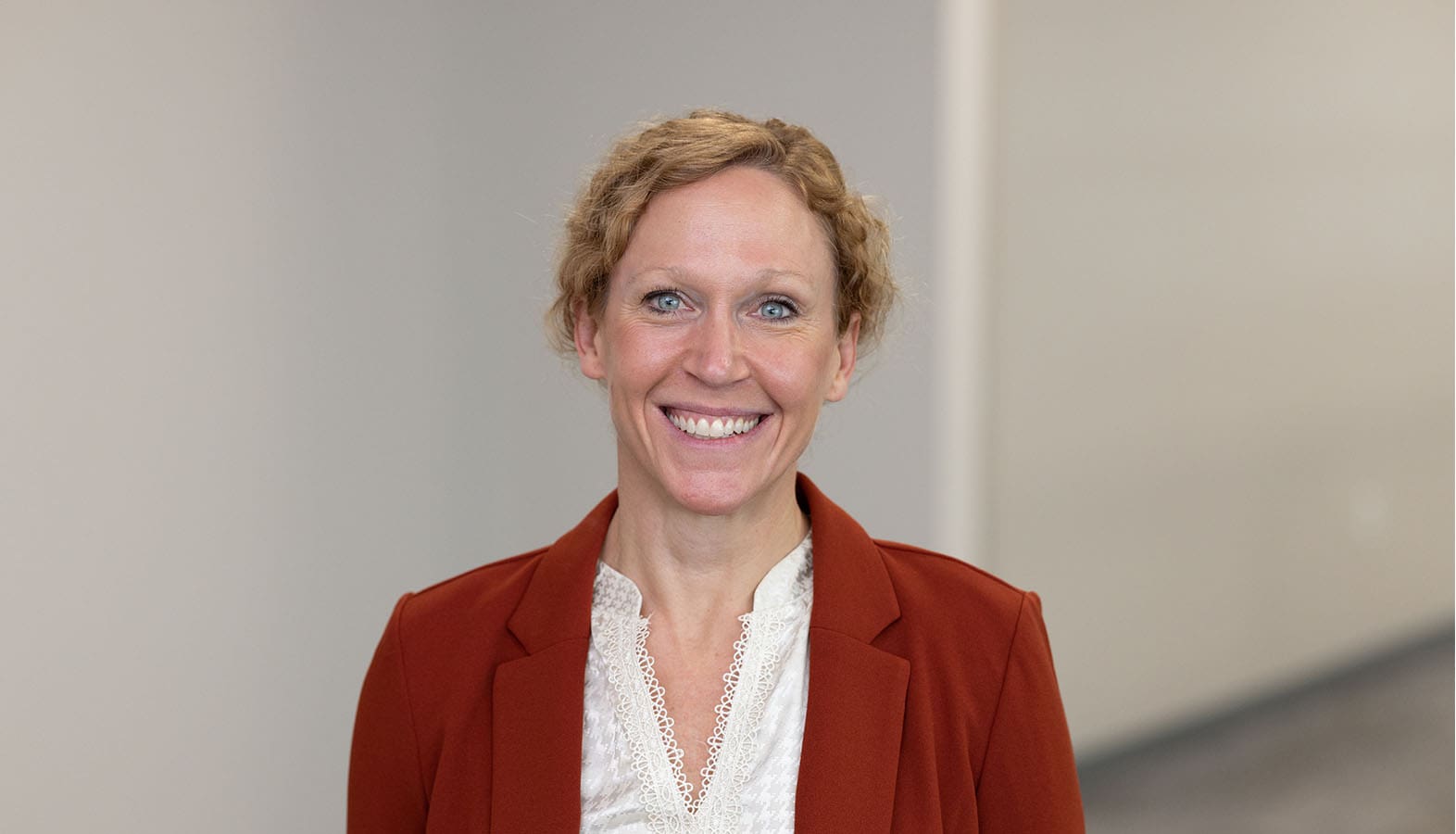
Alyson Watson calls herself a "water brat." It is the most efficient résumé she owns. Growing up steeped in the industry - its rhythms, its politics, its particular urgency - gave her a frame of reference that no Stanford degree can quite replicate. The degree came anyway: a Bachelor's and then a Master's in chemical engineering, the kind of rigorous technical foundation that lets you understand not just where the water goes, but why it moves the way it does, what happens when it doesn't, and who pays when the system fails.
She did not arrive at the corner office by the straightforward route. After Stanford, Watson went to Accenture first - technology consulting, large-scale public services systems, the unglamorous work of making government infrastructure function. It reads now as an origin story detail hiding in plain sight: the future CEO of an environmental engineering firm spent her earliest years building the digital scaffolding that holds up public works. She learned that water infrastructure is never just pipes. It is data, governance, trust, and politics, all at once.
She moved into environmental engineering at CDM Smith, managing water resources planning and design projects. Then came RMC Water and Environment, the California-based firm that would define the next decade of her career. She worked her way through project management, operations, and business development before reaching the top role in January 2015, becoming President and CEO of a firm that specialized in integrated regional water management, watershed planning, recycled water systems, and wastewater treatment. Colleagues described her style with unusual specificity: "a steady and energetic leader with a firm commitment to excellent client service." In the consulting world, that combination - steady plus energetic, not one or the other - is harder to maintain than it sounds.
"There are few things more critical to our quality of life than the availability of abundant, clean water. Finding innovative and collaborative ways to protect, preserve, and enhance this precious resource is my passion." - Alyson Watson
In 2016, Woodard & Curran acquired RMC Water and Environment. Watson came with it - but not as a passenger. She took on leadership of the Municipal West strategic business unit, running Woodard & Curran's California operations and staying hands-on with water resources projects. By 2018, she was on the firm's Board of Directors, chairing the Governance and Nomination Committee. She was being groomed for the top job, and she knew it. The transition took three years by design - a deliberate investment in getting it right.
On January 1, 2021, Watson became CEO of Woodard & Curran, the firm's third chief executive in 41 years. Her predecessor, Doug McKeown, had tripled the company's revenue and grown it from 450 to over 1,100 employees. Watson inherited a company already in high gear. She also inherited something more important: a culture built on employee ownership. Woodard & Curran is an ESOP - an Employee Stock Ownership Plan company - which means the people doing the work also own the firm. Watson has written about this model with conviction. For her, it is not a benefit package detail. It is a philosophy about who deserves to benefit from the value they create.
Her approach to leadership takes the same view of the water sector's problems. In a 2021 podcast with Bluefield Research, Watson laid out her case for outcome-based contracting - a model that shifts risk to private-sector partners while demanding results rather than deliverables. The argument is built on trust and empathy, which sounds soft until you realize it is also built on case studies showing better employee retention and measurable client outcomes. Watson came to this position through project work, not theory. She has managed the kind of complex water projects where the difference between a traditional contract and an outcomes-focused one shows up in real water quality data, real operating costs, and real communities that get - or don't get - reliable service.
Under her watch, Woodard & Curran has grown to 1,300 employees across 27 offices and more than 50 operations sites. The firm's work spans water resources planning, environmental remediation, PFAS contamination cleanup, stormwater management, wastewater design-build, SCADA and automation systems, and asset management for municipal utilities. It is, in practice, the full stack of American water infrastructure - from the watershed to the tap, from the treatment plant to the regulatory permit.
Watson also serves on the board of Mark Thomas & Co., a California transportation engineering firm, where she is both a director and an ESOP trustee. She sits on the ACEC Research Institute Board, joining a peer group of 70+ industry executives who set research priorities for the engineering profession. She has written publicly about employee ownership, flexible work culture, and the kind of organizational innovation that makes it possible for engineers to pursue passion projects inside a large firm - an effort she named the Frank Woodard Leadership through Innovation Award. She builds cultures of engagement the same way she builds water systems: by understanding the full system, not just the visible parts.
Away from the boardroom, Watson competes as a triathlete. The sport requires exactly the kind of disciplined pacing and long-game thinking that characterizes her approach to leading a complex organization through climate uncertainty and infrastructure stress. You do not win a triathlon by going all-out in the first leg. You do not fix America's water infrastructure with a single contract or a bold press release either. Watson knows the difference between urgency and panic - and she has built a career on choosing the former while refusing the latter.