The clothes kept coming back. In the account Alvanon chief executive Janice Wang gives of the company’s beginnings, American designers were rejecting garment samples because they did not fit. Her father, Kenneth, had a useful combination of qualifications for investigating the complaint: he was a doctor who had become a garment manufacturer. He looked at the bodies the clothes were being made on.
Those bodies were fit forms, the mannequins behind the scenes. Papier-mâché could shrink differently with humidity. A supposedly shared reference could quietly become two different references. The remedy was pleasingly concrete: fiberglass forms with consistent dimensions. Alvanon, founded in 2001, built a business around making the body dependable.
- Alvanon helps apparel businesses decide what their sizes mean.
- Its physical forms and digital twins give teams a shared reference.
- The useful result is consistency across design, suppliers, and shopping.
A medium needs a body
A size label is an agreement. Someone has to decide which shoulders, waist, hips, and proportions it describes. Then a designer, pattern maker, supplier, and quality team have to honor that agreement. A shopper sees a single letter. Behind it sits a long chain of decisions.
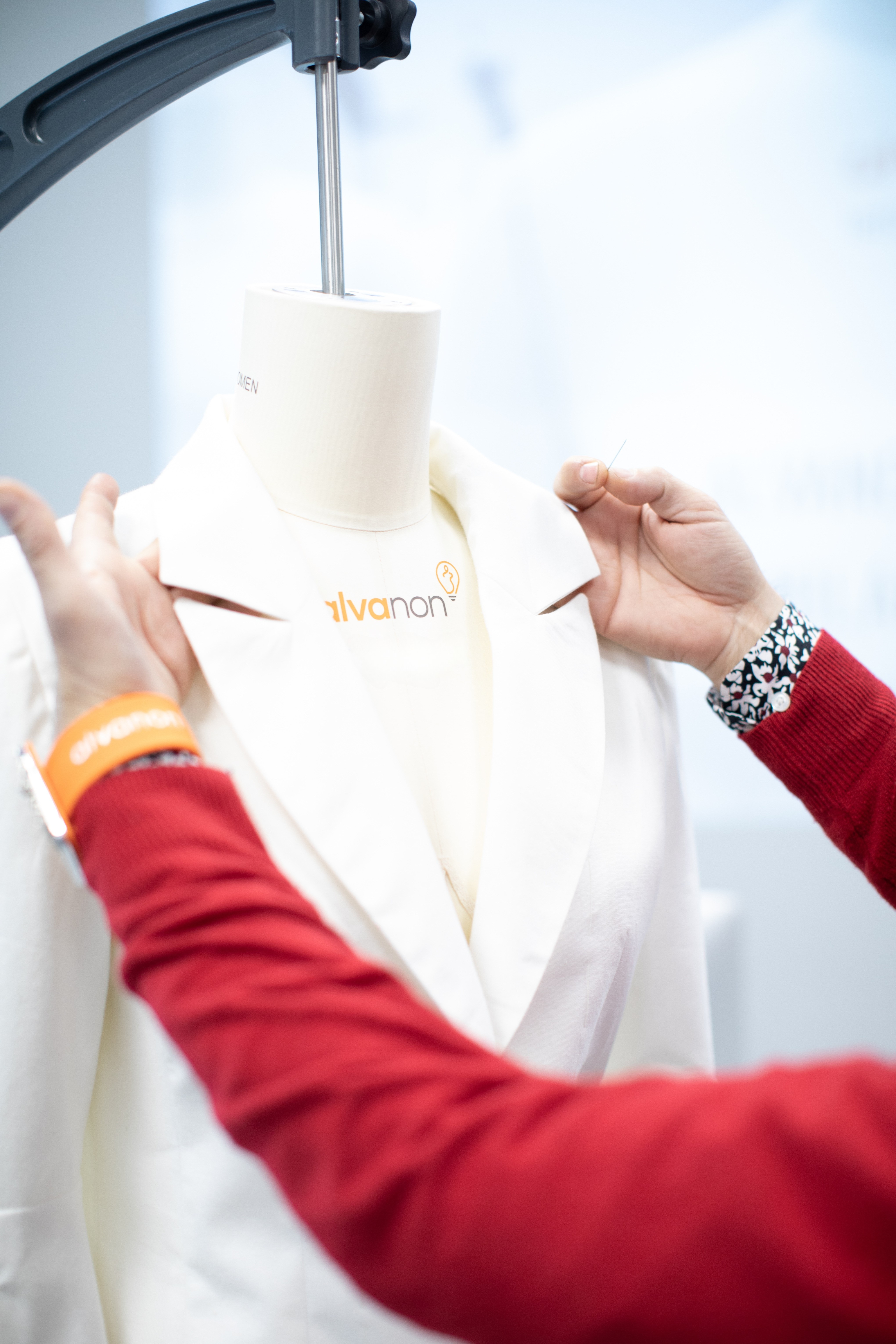
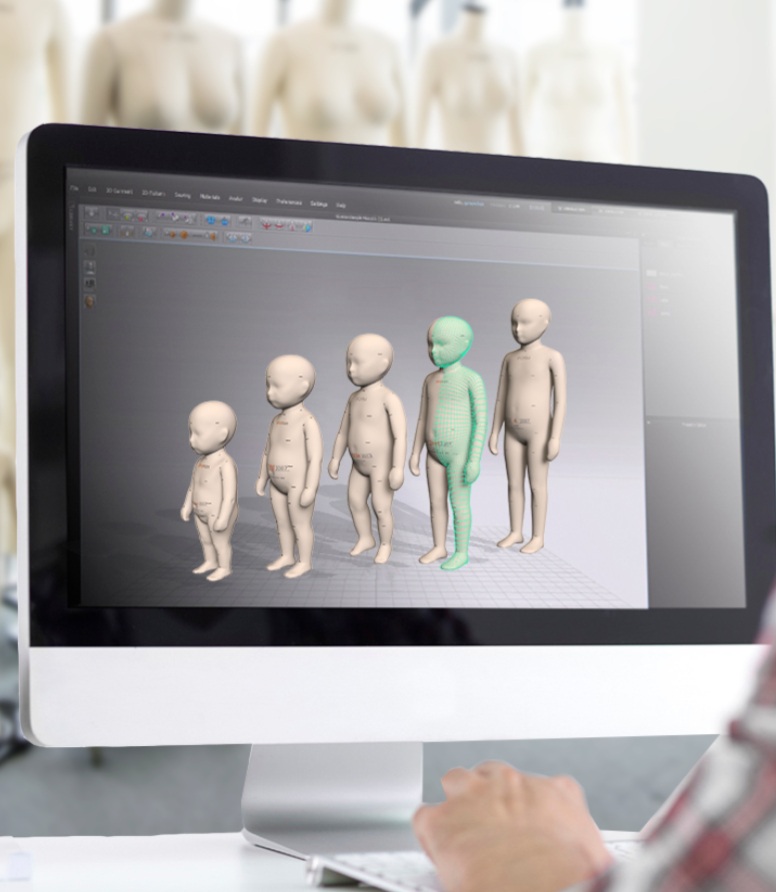
Alvanon sells tools for that chain. Its AlvaForms are physical fit mannequins informed by body data. Virtual AlvaForms reproduce those forms digitally, so a team developing garments in 3D can work against the same dimensions used for physical checks. The company supplies the reference body inside a larger apparel development process.
The audience is business customers: apparel brands, retailers, manufacturers, and their technical teams. Alvanon’s current client display includes adidas, Arc’teryx, Chanel, lululemon, Patagonia, and Target. That range is revealing. An outdoor jacket and a luxury dress may have different ambitions, but both need a definition of the person expected to wear them.
The body travels as a file
In January 2019, the company launched the Alvanon Body Platform, a cloud library of more than 6,000 virtual bodies at launch. Brands and authorized vendors could share their fit standards through it. American Eagle Outfitters, J.Crew, Kohl’s, and Under Armour were among the businesses invited to beta-test the platform.
The important detail is permission to use the same body in different places. A brand’s supplier needs access to its chosen standard; another supplier needs that standard too. Alvanon distributes encrypted digital twins through the platform and supports multiple garment simulation systems. Moving a fit reference becomes a software task rather than another shipment.
A 2022 partnership with Centric Software made this more practical. Centric PLM users could store, search, and download Alvanon avatars inside their product lifecycle management system. Integration with CLO3D and GoVise connected that library to garment design. Arc’teryx’s participating teams welcomed the prospect of a visual, searchable avatar library available in CLO3D.
The pandemic helped change the reception. In its 2021 profile of Janice and Jason Wang, Glossy described growing traction for virtual bodies as fashion businesses confronted remote work. The appeal was practical: samples and fit bodies could exist digitally. A technology available before the disruption suddenly addressed a problem that more teams had reason to solve.
C&A’s problem was everyone’s problem
The company’s C&A case study offers a useful view of the work underneath the software. Different fit models had contributed to inconsistent sizing across the retailer’s products. For its autumn/winter 2015 denim collection and ladieswear, C&A worked with Alvanon to establish technical fit standards informed by its target European customers.
The intervention included body-shape analysis, mannequins, and block patterns. It also included training at head offices, sourcing offices, and key suppliers, followed by audits of specifications, patterns, designs, and finished products. Buying a better mannequin was one part of a much larger coordination job.
- 01Define the customer
- 02Set the body standard
- 03Equip and train suppliers
- 04Audit the garments
There is something here any product team can copy: settle the reference before accelerating the work. Write down who the product serves. Give suppliers the same specification. Check whether the finished object still reflects it. Speed is much more useful once people agree on the destination.
The price of an agreement
Alvanon combines physical product sales, digital platform subscriptions, and consulting and training services. In a November 2022 podcast, Janice Wang described physical forms as costing over $2,000 apiece. Treat that as a historical indication of the investment, rather than a current quotation. A full deployment also involves decisions about size ranges, supplier access, and training.
Its guided services show the detail a brand can buy: comparison of existing sizing with recommended standards, custom body growth charts, competitor analysis, and reviews of sales by size and returns. Those are separate business questions. A label can be internally consistent and still be aimed at the wrong customer.
“We’re focused on the body and its application inside the apparel industry.”Janice Wang, A Sustainable Future podcast, 2022
The next fitting includes the shopper
MyAlva extends the argument toward e-commerce. In a July 2025 interview, chief operating officer Jason Wang described capturing body shape and size through shopper inputs or scanning. His emphasis was on letting product, merchandising, and e-commerce teams use the resulting information. Measurements could inform patterns; size distributions could inform buying.

Alvanon has alternatives. Humanetics Digital Europe’s Avalution offering also combines body data, avatars, mannequins, and consulting. Alvanon’s case rests on its particular combination of physical and digital standards, apparel expertise, and integrations. A brand should judge that combination against its own workflow.
The conditions matter. Lectra’s simulation documentation stresses that fabric properties affect drape; a dependable body alone cannot settle every fit question. Teams must also adopt the standard. Alvanon’s most persuasive lesson is that clothing consistency requires ordinary people to share precise information, then keep checking the clothes.