A forklift is easy to notice when it is moving. When it stops, it becomes much more interesting. Goods wait. Workers wait. Somewhere, a delivery schedule begins to unravel. The machine’s purchase price suddenly has company: the cost of everything that cannot happen until somebody fixes it.
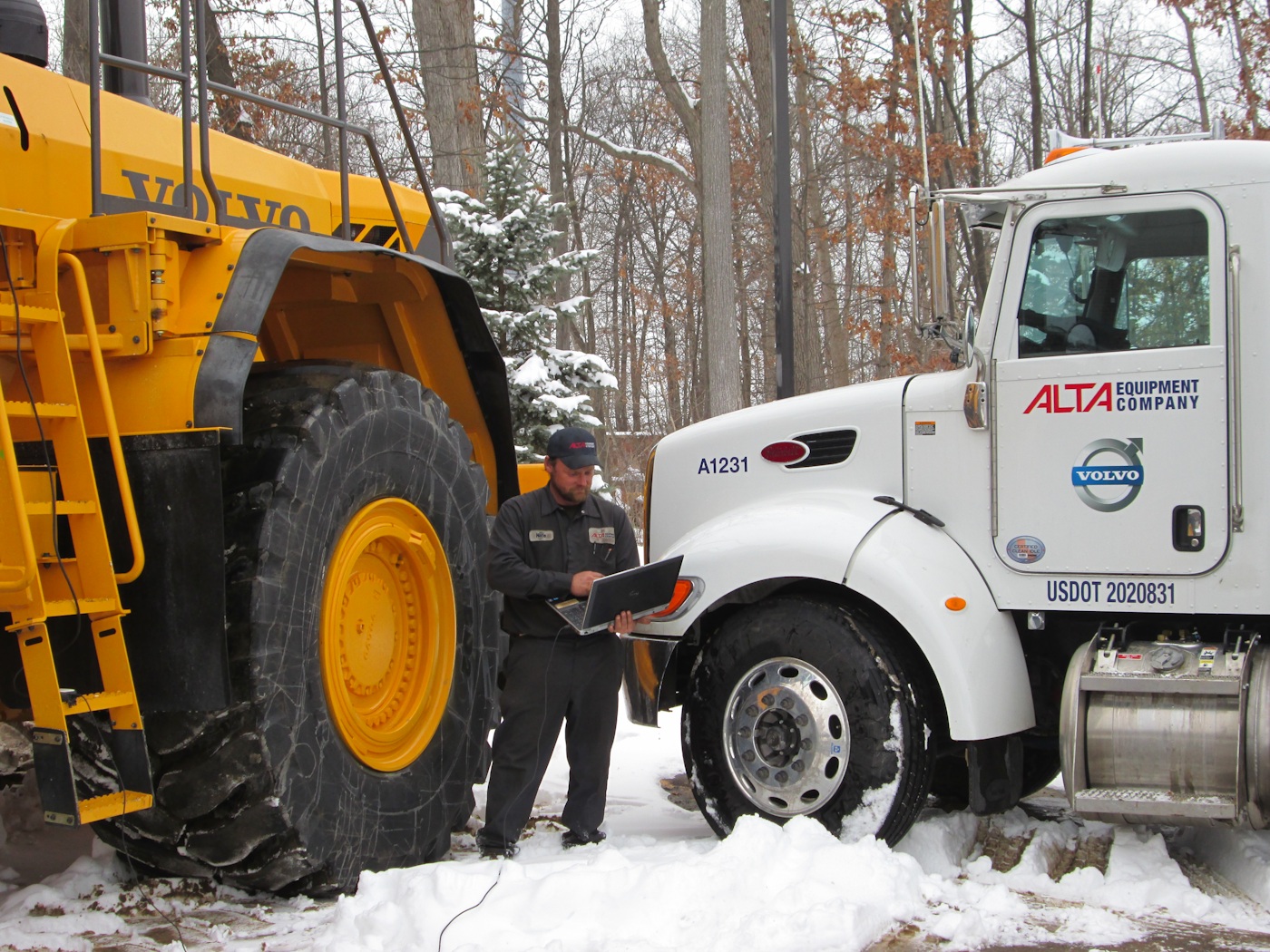
This is the useful place to begin with Alta Equipment Company. The excavators and lift trucks attract attention. The service truck parked beside them explains why a customer might keep coming back. Alta sells access to machinery, then sells the practical means of keeping that machinery useful.
- Buy or rent equipment, then get parts, maintenance, and repairs through the dealer.
- Customers range from warehouse operators to contractors and waste processors.
- The strategic test: does a machine placement create worthwhile support work?
01 / The second transaction
Alta’s range includes Hyster and Yale forklifts, Volvo construction machinery, paving equipment, cranes, and warehouse systems. Manufacturer representation varies by territory. This is a dealer business: the company connects equipment makers with people who need machines selected, delivered, maintained, and eventually replaced.
For a contractor, that can mean renting equipment for a particular job. For a distribution center, it might mean buying lift trucks and arranging fleet maintenance. Through subsidiary PeakLogix, the conversation can expand into warehouse layout, software, installation, and automation. The customer’s problem determines how much of the operation Alta touches.
The business makes money through equipment sales, rental payments, parts, service labor, and integration projects. Those revenue streams have different rhythms. A buyer can delay a new machine. A working fleet still needs attention. That distinction gives the dealership model its appeal, although maintenance demand is hardly immune to reduced activity.
02 / Buy the next capability
Steve Greenawalt started the Detroit-area Yale dealership in 1984. Construction equipment arrived through Alta’s 2010 acquisition of Wolverine Tractor & Equipment, a Michigan Volvo dealer. Acquisitions became a way to add both geography and expertise: another territory, another manufacturer relationship, another set of customers with machines already working.
In February 2020, Alta entered public markets through a business combination with B. Riley Principal Merger Corp. The company reported $538 million in net proceeds from associated equity and debt financing. That figure describes financing proceeds, rather than the price of the business or a venture-capital round.
Later that year, Alta acquired PeakLogix, which designs and integrates material handling systems. The addition extended the relationship from an individual forklift toward the operation around it. In 2024, PeakLogix announced a Movu Robotics partnership covering warehouse automation technologies, including pallet shuttles and autonomous mobile robots.
There is a practical continuity here. A warehouse choosing more efficient storage and a contractor choosing a replacement machine both need someone to translate a production problem into equipment that works in their particular setting. Integration adds complexity, but it also gives the dealer more work to do than simply quote a price.
03 / A different kind of waste problem
The 2022 Ecoverse deal added environmental processing equipment and a master-distribution business. Its machines serve applications such as composting, recycling, and food-waste processing. Here Alta could reach customers through other dealers, extending beyond the economics of its own branches.
The announced purchase terms make the cost tangible: $42.5 million in cash, $2.5 million in stock, and a $6 million seller note at closing, plus performance-dependent consideration. The potential total ranged from $51 million to $67 million. Alta was buying distribution rights, a dealer network, and application knowledge alongside a revenue stream.
04 / The rental business that did not fit
The revealing counterexample arrived in May 2025. Alta sold substantially all of its Chicago-area aerial fleet rental business, an operation it had grown organically over seven years. Management cited competition, a commoditized product, and weak returns from subsequent support work.
“lack of product support yields”Ryan Greenawalt, explaining the Chicago exit, May 2025
That phrase is wonderfully unromantic. It asks whether a business delivers enough worthwhile work after the initial transaction. Rental activity alone did not make this operation fit Alta’s priorities. The company said sale proceeds would reduce outstanding debt.
The wider rental fleet also demanded attention. In 2024, management described competitive equipment oversupply and pressured construction sales margins. Alta subsequently reduced fleet investment and costs. By June 2026, rental fleet gross book value stood at $519.2 million, down $50.3 million from a year earlier. Owning machines creates options for customers and financing obligations for the owner.
Alta Equipment Group’s 2025 parts and service revenue. Consolidated group figures, including businesses beyond the Alta Equipment Company brand.
05 / Uptime still has a balance sheet
The recent accounts resist a tidy success story. Alta Equipment Group reported $1.836 billion in 2025 revenue and an $83.3 million net loss available to common stockholders. Parts and service held comparatively steady. That support business cushioned the cycle; it did not remove it.
In the second quarter of 2026, revenue was $475.5 million and the loss available to common stockholders was $8.2 million. Service gross margin reached 61.4%, but interest expense was still $19.5 million. A healthy service margin can coexist with a loss at the bottom of the accounts.
For customers, the sensible comparison is local and specific: available brands, machine suitability, rental terms, parts supply, and service response. Other dealers, independent repair shops, and rental specialists may suit a particular job better. A broad portfolio cannot compensate for the wrong machine or distant support.
For other businesses, the transferable idea is to evaluate the next transaction before celebrating the first. Alta’s Chicago decision shows the condition attached: repeat work needs enough value to justify the capital and effort involved. The forklift eventually moves again. What matters is whether getting it moving builds a relationship worth keeping.
Keep the machines moving
Explore Alta’s website, construction equipment, material handling, PeakLogix, and Ecoverse.
Follow LinkedIn, X, Facebook, or Alta Canada on Instagram. Browse Alta Material Handling videos and company news.