A combine sitting outside a dealership looks like a machine waiting for work. To the farmer, it represents acres harvested before the weather turns. To the dealer, it represents something less photogenic: money committed to inventory. The same red machine can be a solution for one business and a growing expense for another. Titan Machinery has spent the past two years confronting that difference.
- Combine dealerships so local customers can draw on a larger pool of equipment, parts and expertise.
- Earn business after the sale through repairs, replacement parts and technology upgrades.
- Keep inventory moving when farmers become reluctant buyers. This is the expensive part.
In fiscal 2026, Titan reduced total inventory by $205.6 million. It still reported a $54.2 million net loss. Those figures belong together. Clearing the yard can improve a business’s financial position without making the business profitable. For a company built around availability, learning how much equipment to keep available becomes a rather consequential exercise.
01 / The dealership was the invention
Titan’s origins are unusually practical. David Meyer worked for Case before moving into equipment retailing. In 1980, Meyer and partner Darrell Larson bought out the majority shareholders of their North Dakota dealership business and established the corporation that became Titan. The founding idea was to combine dealer resources: purchasing power, parts, training and knowledge.
Consider the problem that solves. A single dealership has a limited shelf, a limited pool of specialists and a limited territory in which to find a buyer for a used machine. A network can share resources. Titan’s operating model pairs expertise near the customer with centralized administrative support. The ambition is to give a local team the resources of a larger organization.
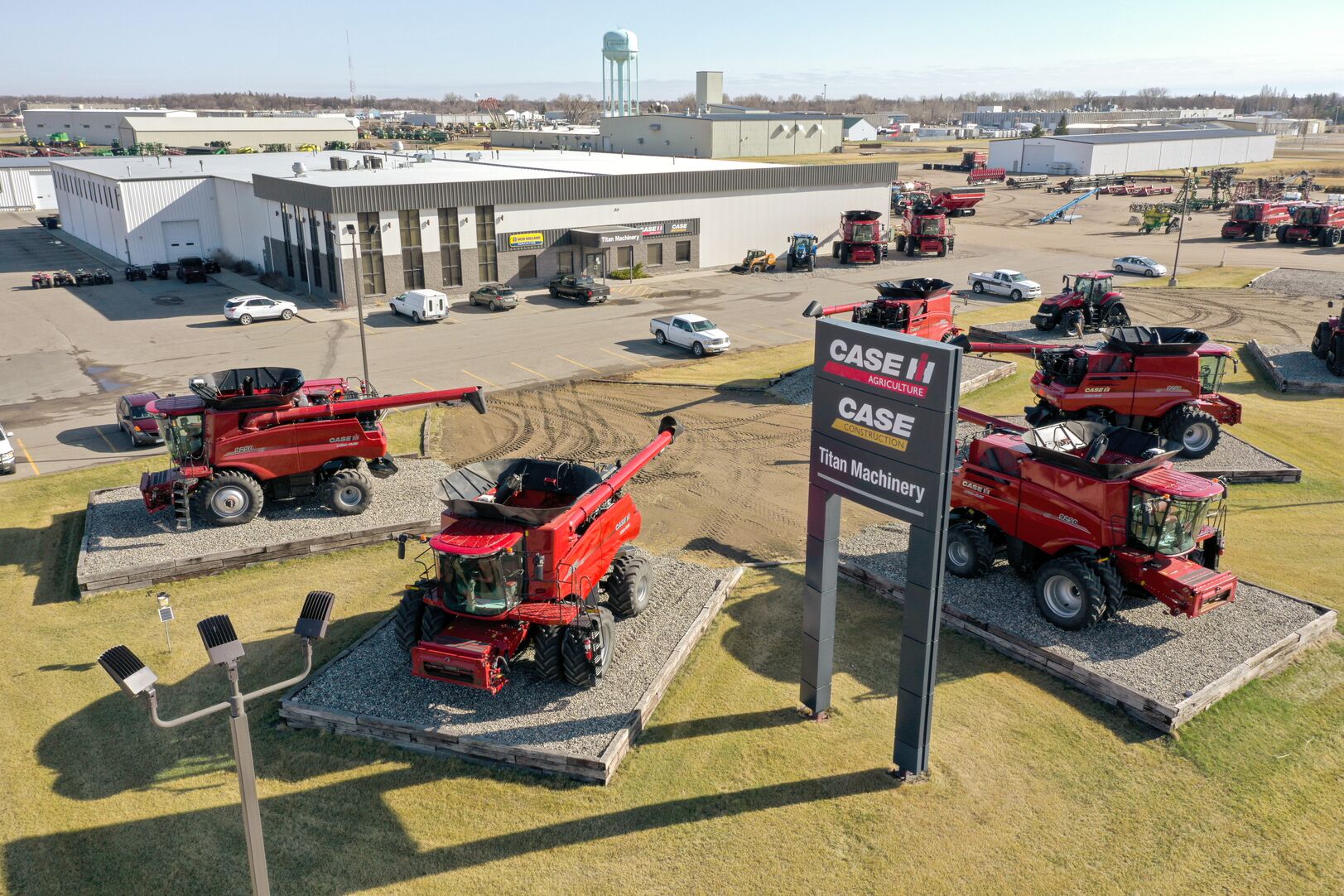
By its December 2007 public offering, Titan had 34 locations and roughly $300 million in revenue, Meyer later recalled. Expansion carried the business into Europe and, in 2023, Australia. The O’Connors acquisition was announced at $63 million before closing adjustments. It brought an established Australian organization with 15 dealerships and one parts location, along with a management team Titan planned to retain.
02 / The customer buys a working day
Titan sits between equipment manufacturers and people whose income depends on using their products. Its customers include farmers, contractors and government equipment buyers. Case IH, CASE Construction and New Holland are central to its assortment. Tractors, combines, excavators and loaders draw attention. Parts counters and repair shops supply reasons to return.
The practical offering extends well beyond choosing a machine. Customers can buy new or used equipment, arrange rentals, order parts online, book inspections and seek repairs. Titan offers off-season Uptime Maintenance inspections and mobile application-equipment service. A farmer planning the next season and a contractor filling a temporary equipment gap arrive with different problems; the dealer can serve both.
Precision technology adds another layer. Titan distributes Raven products, Precision Planting components and Leica machine control, among other systems. Its specialists help select and install planter upgrades. Reichhardt integration can keep existing John Deere guidance working in other equipment brands. That is a refreshingly concrete answer to an expensive question: must replacing one machine mean replacing everything around it?
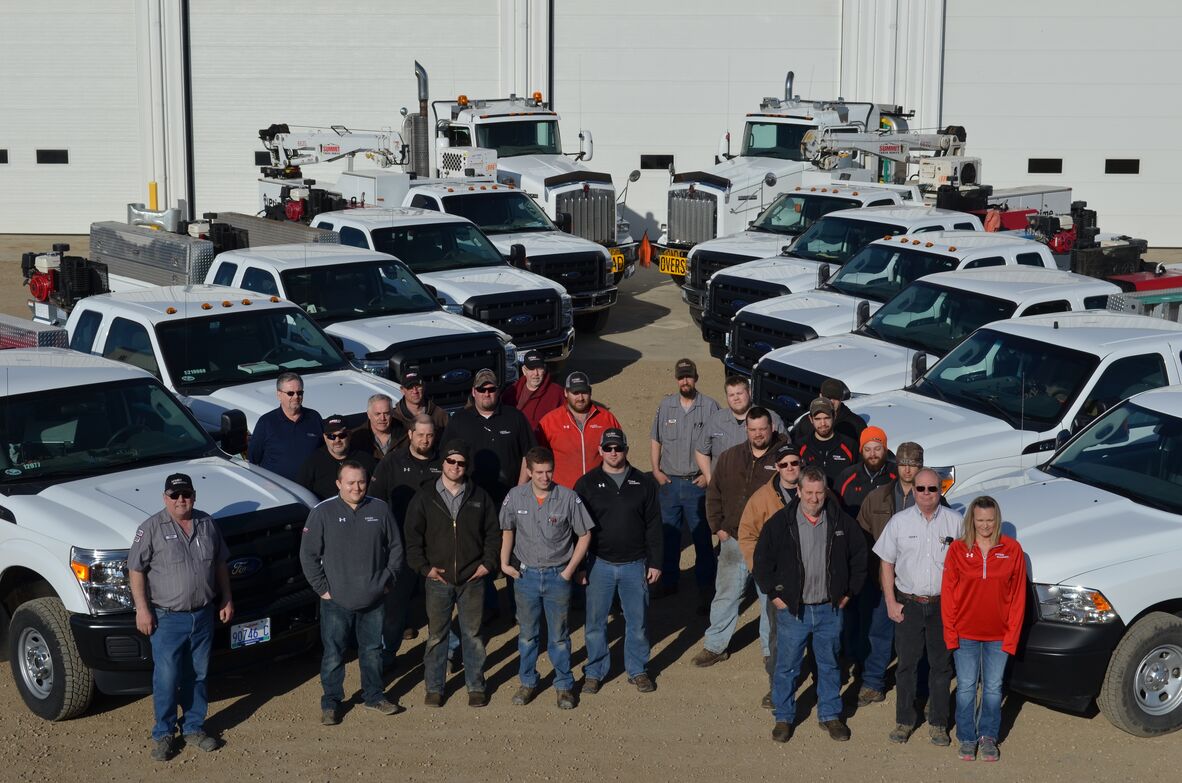
These services also explain the competitive position. Buyers can choose other local dealers and networks representing competing manufacturers. Titan’s case rests on product availability, regional coverage and support. The useful comparison for a customer includes distance to the workshop, technician expertise and access to parts. An attractive machine price answers only part of the ownership question.
03 / When availability becomes exposure
The difficulty is that the dealer must commit before the customer does. Titan finances equipment inventory through manufacturer and third-party floorplan facilities. Think of it as a financing clock attached to the stock. Holding a machine has consequences even while its engine stays off. Used equipment adds another judgment: what is the trade-in worth, and who will buy it next?
A full yard is useful only if the machines match what customers can afford to buy.
The change in demand was visible in management’s own revisions. In May 2024, Titan cited softer demand than anticipated when adjusting revenue expectations and assumptions for equipment margins and inventory-financing expense. Lower commodity prices and financing pressure were squeezing farmers’ purchasing decisions. The network’s buying capacity could not manufacture a customer’s willingness to replace a tractor.
Inventory reduction became a priority. Titan exceeded its revised $150 million reduction target in fiscal 2026, ending January with $903.1 million of total inventory. That same year’s loss included a $17.8 million non-cash deferred-tax valuation allowance. The loss therefore cannot be treated as a tidy price tag for clearing equipment. Several forces were moving through the accounts at once.
The reset was substantial. Inventory still needs active management.
04 / A recovery with the engine running
The August 2026 results show progress and its limits. Quarterly revenue fell to $496.4 million, while gross margin improved to 18.6% from 17.1% a year earlier. Titan attributed the improvement partly to stronger equipment margins as aged stock declined. Yet it lost $9.2 million, and total inventory had risen from January to $931.5 million.
For another operator, the transferable lesson is specific: share expensive support functions, preserve local knowledge, and watch inventory age alongside financing costs. Build reasons for customers to return after the original purchase. Titan’s apprenticeships, student sponsorships and college camps make sense in that context. A support promise requires people capable of keeping it.
That approach depends on conditions no organization chart can guarantee: customers able to invest, dependable supplier relationships and available technicians. Farmers can keep existing machines longer; regional markets can weaken together. Titan’s scale offers more ways to help a customer. Its recent experience shows how carefully that scale must be managed while the customer waits.