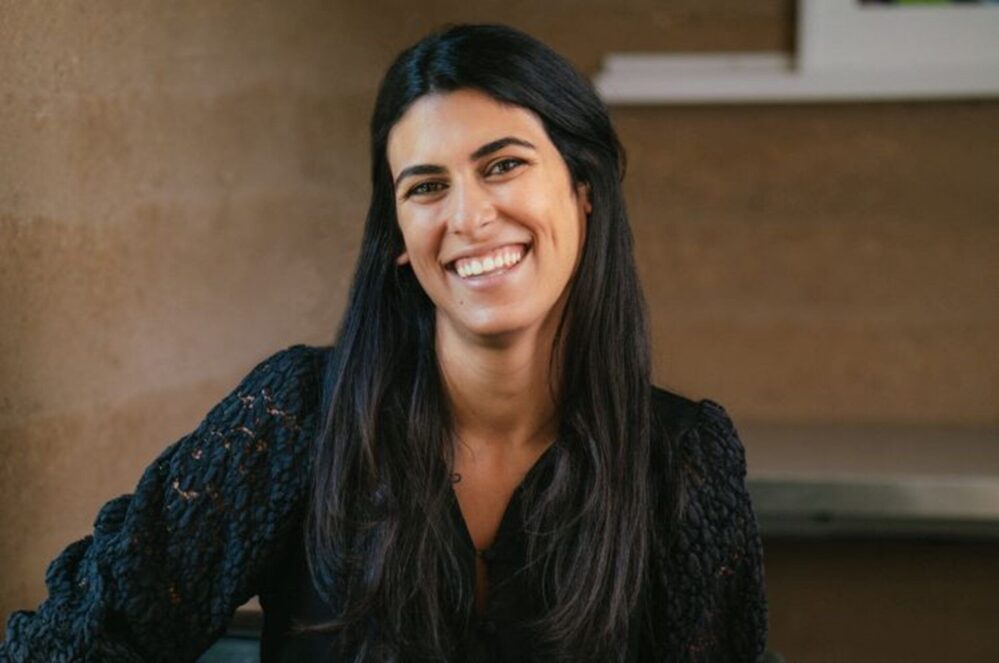
Consider the cheese pull. A fork rises, a strand follows, and lunch briefly becomes a demonstration of materials science. The strand is doing something that many plant-based alternatives struggle to do. For Magi Richani, that small disappointment became a rather large engineering assignment: persuade a plant to make the protein responsible.
- The original target: casein, the milk protein behind cheese’s familiar stretch and melt.
- The production system: soybeans engineered to grow target proteins.
- The useful discovery: better soy purification, now applied to non-GMO soy flour.
- The customer: the formulator trying to put more protein into a product without putting more trouble into the recipe.
A very particular disappointment
Richani had trained as an engineer and worked at Shell before founding the company in 2016. Her move toward a plant-based diet, and the discovery that she was lactose intolerant, made cheese a personal problem. Substitutes existed. Satisfaction was harder to purchase. The attraction was not an abstract nutritional category. It was the bite of a pizza and the texture of a grilled cheese sandwich.
That distinction shaped the project. If people love a food for what it does, asking them to accept a version that behaves differently is a formidable sales strategy. In a 2023 essay, Richani put her preference plainly: “I believe in the power of temptation.” Give somebody a desirable lunch and the environmental argument gets a much friendlier hearing.
Casein offered a route into the problem. Alpine Bio’s original approach was to give soybeans genetic instructions for making dairy proteins, then extract those proteins for food. The company began as Alpine Roads, became known as Nobell Foods, and adopted Alpine Bio as its broader identity in 2024. The succession of names tells a story: an invention first attached to cheese was acquiring uses beyond the cheese counter.
“We have a KPI internally for how long your cheese is stretching.”Magi Richani, speaking to Fast Company in 2021
A field with a second assignment
Alpine Bio belongs to molecular farming: using plants to manufacture selected proteins. Precision fermentation companies assign comparable work to microbes. Conventional dairy assigns it to animals. These are different production systems, with different equipment, biological constraints and routes to scale. A soybean field is an appealing factory partly because people already know how to grow and process soybeans.
The argument is practical. Choosing a crop also means choosing its growers, harvest equipment and processing infrastructure. Soy comes with an established industry. Alpine Bio’s intended advantage is the ability to use that industry while changing the protein output. The field supplies the growing system; protein science supplies a new assignment. Whether that delivers the desired economics still depends on yield and downstream processing.
Plants, however, have their own housekeeping. Richani has described proteases breaking down the casein the company wanted to accumulate. Getting a plant to produce a protein is therefore only part of the work. The protein must survive. The team explored protective strategies, including expressing proteins together. A seed is a living system with priorities of its own, rather than a compliant little warehouse.
The useful accident
Much of the commercial drama happens after the harvest. Food developers need ingredients that dissolve, taste acceptable and behave predictably. Ordinary plant proteins can arrive with flavors and texture problems that require further formulation work. A sustainability pitch offers little comfort when the drink in the bottle disappoints.
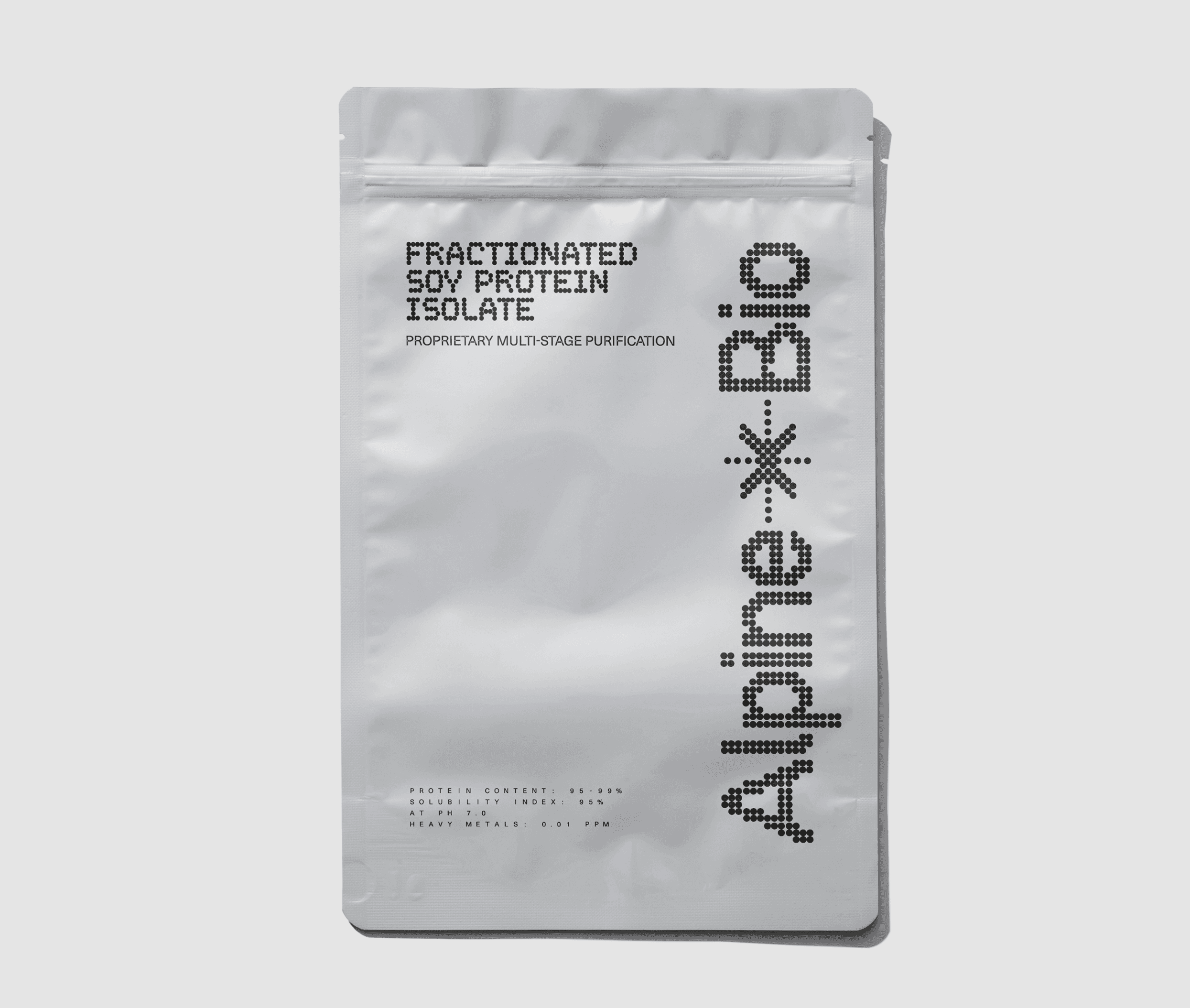
While working on proteins extracted alongside casein, Alpine Bio developed a way to improve the soy component. The method could also be applied to commodity non-GMO soy flour. The resulting fractionated soy protein isolate, or FSPI, gave the company a separate ingredient proposition. Here was a discovery from one development program that could be useful without the engineered crop that originally prompted it.
Today Alpine Bio positions FSPI for formulators seeking neutral flavor and high solubility. Its published specifications list more than 90% protein and more than 90% solubility at pH 7. Those are company-reported figures with a condition attached. The pH matters. A successful result in one environment should send a developer to the test bench, rather than straight to a universal claim.
Alpine Bio’s published FSPI specification. A defined test condition, not a guarantee for every recipe.
The company’s applications include ready-to-drink shakes, bars and fortified beverages. Its business proposition is refreshingly unromantic: an ingredient that creates fewer problems for the person making the finished food. That person may care about protein content, additive costs, mouthfeel and the length of the ingredient list before considering the elegance of the underlying biology.
Two jobs for one iron-binding protein
Lactoferrin takes the company into a different corner of the ingredient market. This iron-binding protein occurs in mammalian milk. Alpine Bio grows it in soybeans and presents two forms: an iron-loaded version for nutrition applications and an iron-depleted version positioned for antimicrobial activity. Changing the iron content changes the intended job.
The current website reports iron saturation above 60% for the loaded ingredient. This is a property of the material; it should not be casually translated into a promise about a finished supplement or a person’s health. The relevant customer is a product developer evaluating an ingredient against a particular specification, application and regulatory route.
At the October 2025 MISTA event in San Francisco, Alpine Bio showcased both soluble soy protein and soybean-grown lactoferrin. The pairing made its wider ambitions visible. One offering improves a familiar plant ingredient through purification. The other asks the plant to produce a protein normally associated with animals. The methods can sit inside one business while requiring distinct explanations.
The bill, and the calendar
This work has attracted substantial venture funding. Nobell Foods announced a $75 million Series B in July 2021, taking reported cumulative funding above $100 million. Backers included Breakthrough Energy Ventures, Andreessen Horowitz and FootPrint Coalition Ventures. The announcement said the money would support team expansion, farming partnerships, production scale and commercialization.
Money raised is a financing figure, rather than a price tag for making a kilogram of protein. It tells us investors funded a demanding development effort. It does not settle what a customer will pay, or what the finished supply chain will cost. That distinction is especially useful in biotechnology, where a persuasive manufacturing idea and a profitable manufacturing operation are separated by quite a few invoices.
The calendar provides another distinction. The 2021 announcement anticipated public cheese products by the end of 2022. The current website still places casein in its development pipeline, alongside thaumatin and Clear SPI. Those early ambitions should be read as ambitions. The present offering has broadened toward ingredients and formulation support, with a sample-request route for prospective business customers.
Intellectual property is part of the manufacturing story. In April 2024 the company reported its tenth US patent. Patent US11952606B2 concerns food compositions comprising recombinant milk proteins. That reaches beyond the act of growing a protein to its use in food. Production, extraction and formulation are connected problems; ownership of an invention can follow more than one of them.
What to borrow from the soybean
For other builders, the useful lesson is to examine what an experiment teaches outside its original assignment. Improving the soy alongside casein produced an ingredient opportunity of its own. That lesson is an interpretation of Alpine Bio’s history, not a recipe for reproducing its proprietary process. The repeatable habit is to ask who else suffers from the problem your team has just learned to solve.
For a food developer, the next step is concrete: request samples and documentation, then test in the intended product. Evaluate flavor, concentration, pH, processing and storage. Ask how the ingredient fits existing equipment and target costs. Alpine Bio’s own workflow moves from discovery to development to delivery, with food scientists supporting validation. The sample has to earn its place in the recipe.
There are boundaries to the opportunity. Non-GMO FSPI remains soy-derived. Animal-free casein remains a milk protein; the production method does not erase its allergen identity. Engineered protein crops require careful segregation and stewardship. A formulation that excludes soy, or requires a particular regulatory status, cannot be waved through by enthusiasm for the platform.
Alpine Bio’s charm lies in this peculiar pairing of ambition and ordinary work. It wants plants to take on jobs once assigned to animals. It also wants protein to disappear politely into a drink. The latter sounds modest until you remember how many products ask customers to tolerate an ingredient’s shortcomings. A soybean that learns a new trick is interesting. An ingredient that lets the cook stop compensating for it has somewhere to go.
Try it, follow it, watch it
Explore the company website, review FSPI specifications and lactoferrin, or request an ingredient sample.
Follow Alpine Bio on LinkedIn and the Nobell Foods brand on X and Instagram. Read the company’s ingredient writing and the October 2025 ingredient coverage. Watch Richani’s Hub Culture interview.