Ali Hasan Raza went on holiday and came back with an inventory problem. Over Labor Day weekend in 2016, he drove from Houston toward Pennsylvania, a journey he described as 1,500 miles. The roadside businesses began to look like a repeated experiment: familiar stores, familiar dealerships, familiar arrangements of things waiting for someone to buy them. A vacation had acquired an inconvenient second occupation.
He noticed oilfield equipment, but the accumulation went well beyond his own industry. Cars filled dealership lots. New trucks stood idle. Goods sat along the interstate routes. He wondered how much would actually sell, and why so much had been produced before anyone needed it. He also acknowledged the usefulness of reserve stocks when disasters interrupt deliveries. His objection was to quantity without a convincing reason.
“Does everything actually sell?” he asked. It is an excellent roadside question, and a rather awkward boardroom question. A business can count everything it owns and still struggle to explain why it owns it. Raza has built a career around that awkwardness. Today he leads ThroughPut.ai, a company concerned with the movement of materials and the money caught up in them.
There is something appealingly troublesome about a founder who cannot leave a parking lot alone. Most of us pass a dealership and see choice. Raza's account asks us to see waiting: objects paid for, space occupied, a sale still pending. His work begins in the gap between the reassuring abundance of a full yard and the less reassuring question of what the customer needs next.
What caught his eye: cars, idle trucks and goods waiting along the way.
The engineer before the software
Raza studied chemical and biomolecular engineering at the University of Pennsylvania, completing a bachelor's degree in 2010 and a master's in 2011. He traces his interest in process-flow bottlenecks to a senior design class, which he subsequently helped teach as a graduate student. The financial consequences of a constrained process mattered alongside the engineering. A slow step could also be an expensive step.
His next workplace was Schlumberger, now SLB. His recorded tenure runs from 2011 to 2015, in international hydraulic fracturing engineering and management. This placed his early professional life inside a business whose output depends on equipment, materials, scheduling and the coordination of people across distances. Software would come later; operations supplied the questions.
His career includes onshore and offshore logistics and several manufacturing formats: batch, continuous and discrete. Those categories describe quite different rhythms of work. A batch ends; a continuous process keeps going; a discrete product passes through a sequence of operations. A recommendation that ignores those differences can look tidy on a screen while making very little sense where the work happens.
His final field posting was Yemen in 2015. He has described working across eight countries and serving as geomarket manager during the Houthi takeover. The significance for his later work is practical: supply, production and delivery are exposed to events outside an organization's control. Planning requires assumptions. Running an operation requires noticing when those assumptions have expired.
A basket was too small a name
RigBasket began in 2015, with Raza as co-founder and CEO. Its early emphasis was oil-and-gas parts management. By September 2016, he was already discussing a broader remit. In March 2017, he publicly explained the change to ThroughPut. A name tied to rigs could make experience in one industry sound like a limit on all the others.
The explanation contains a telling admission: the engineering-heavy team had itself become caught up in technology. Raza wanted the commercial question asked first. What would a tool do for the business's financial output? New tracking devices and predictive capabilities could be useful, but usefulness needed an operational consequence. A beautifully monitored delay remains a delay.
He also made the issue personal. “Leaving food on my plate bothers me.” That small confession does more work than a grand mission statement. The same discomfort can apply to an uneaten dinner or a storeroom full of unused parts, although the accounting treatment is considerably different. Waste bothers him before it becomes a market opportunity.
A company name is usually expected to explain what a business sells. ThroughPut names an outcome: how much passes through. It asks a different question of the yard beside the highway. Counting the vehicles gives a stock figure. Knowing which ones move, when, and for whom begins to describe a business. Raza's rebrand carried that change of emphasis into the name on the card.
“Leaving food on my plate bothers me.”
Ali Hasan Raza · On why waste is personal
When a better number changes nothing
By 2019, Raza was writing publicly about a trap in industrial improvement: attractive metrics can distract from the actual objective. He urged companies to distinguish recurring bottlenecks from isolated events and to investigate root causes. A temporary rise in a local performance measure need not mean the supply chain as a whole has become more effective.
Here is a deliberately simplified example. Suppose three steps can each handle 100, 40 and 80 units an hour, in that order. The middle step sets a limit of 40. Making the first step faster does not, by itself, raise finished output. It may simply leave more work waiting in front of the middle step. Everyone upstream can look impressively busy while the customer receives the same amount.
The example explains why constraint management asks leaders to inspect relationships between steps. It also explains the uncomfortable politics of the subject. A department can meet its own target while adding to the next department's queue. A system can reward the behavior that makes its overall task harder.
Raza's writing returns to the difference between acquiring technology and making use of information already held. In his 2019 discussion of industrial data myths, he challenged the idea that a large digital transformation or cloud migration had to precede useful analysis. Existing operational records could support decisions while a broader technology project was still underway.
That argument gives his software ambitions an unusual discipline. It requires a seller to ask whether the customer's current tools and records are being used well enough. The shiny purchase is often easier to discuss. It arrives with a specification and a budget. Changing the order of work requires an explanation, and sometimes a disagreement with a perfectly respectable habit.
Faster upstream. Same finished output.
is the line’s capacity limit
The customer at the end of the chain
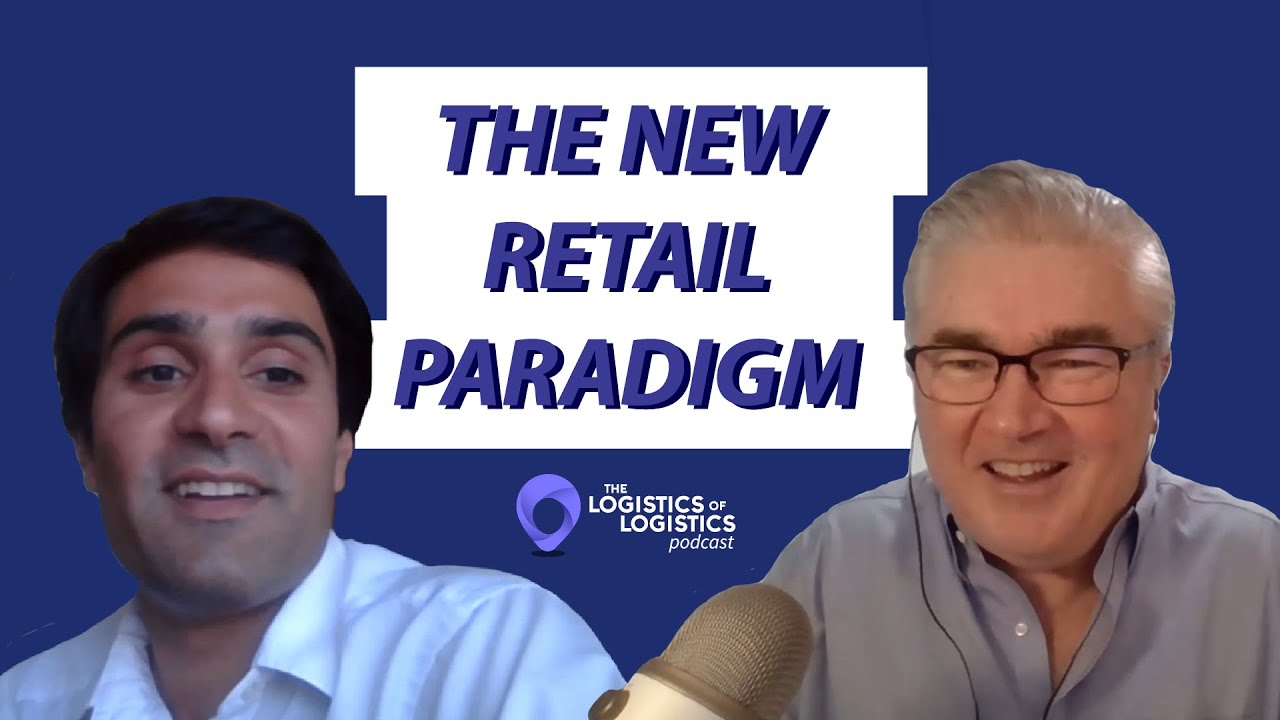
Raza is a practitioner of the Theory of Constraints. In his conversation with Joe Lynch about retail, the problem widened from industrial production to how customers buy. More sales channels complicate allocation: the same stock may be wanted in several places, with different timing and different expectations. Ownership of a product is only the beginning of fulfilling demand.
The discussion belongs naturally beside his highway observations. A parking lot tells you where goods are. A supply chain has to answer where they ought to go. The distance between those answers can involve a forecast, a supplier's lead time, a production schedule and a customer's changed mind. A shelf full of yesterday's preference is still a shelf full.
He took the same concerns to Sarah Barnes-Humphrey's Let's Talk Supply Chain in April 2021. The conversation covered visibility, artificial intelligence and operational decision-making. It also placed his real-world experience in the foreground. Across those appearances, his recurring subject is what an organization does with information once it has it.
ThroughPut's software works with existing business data to support demand, inventory and capacity decisions. In April 2022, the company announced $6 million in angel funding. Raza's explanation of the approach started with customer demand and the capacity available to meet it. Purchases, production, stocks and distribution should follow that relationship as it changes.
There is a useful humility in the phrase available capacity. A forecast can promise nearly anything. A process has to deliver it. The question connects Raza's engineering education with his work as a chief executive: how much can this operation fulfill, and what must change before it can fulfill more? Money spent answering the wrong question can leave the right question untouched.
Growth needs permission to be awkward
Raza's public arguments extend beyond analytics to management culture. In a 2020 essay on growth, he argued that organizations have to be prepared to expose weaknesses and work on them. He used the New England Patriots as an example of a culture organized around improvement. The implication for a company is that encountering a bottleneck should invite inquiry rather than embarrassment.
This is where the apparently technical topic becomes personal. Somebody must be willing to say that an established routine is failing. Somebody else must hear it without treating the observation as disloyalty. Buying an analytical system does not automatically arrange either conversation. The people who know the process need room to explain it, including the bits that make a monthly report less flattering.
An external marker of ThroughPut's work appears in a 2022 U.S. Air Force SBIR Phase I award record. It lists Raza as principal investigator on a cloud-based supply-chain optimization project, with an award of $49,366. The description concerns bringing existing, time-stamped datasets together to analyze activities that involve making or moving things.
The figure is a specific project award, separate from the company's angel round. It is also a reminder of the range of settings in which these questions occur. Commercial inventory and equipment readiness use different language, but both depend on the right items reaching the right operation. Raza's career crosses that vocabulary border more than once.
Phase I award to ThroughPut
Ali Raza listed as principal investigator
Another bottleneck, this time in conversation
In January 2026, Raza announced Supply UnChained, a podcast co-hosted with Anzar Kamdar. He described a knowledge bottleneck: operational experience existed across the industry, but people in different functions did not always have access to it or use the same language. The proposed audience included mechanics, dispatchers and operators alongside executives.
He also remembered how difficult it had been to get his own ideas heard when starting out. The podcast offered an entry point for emerging voices as well as established practitioners. Its ambition was to preserve experience and let listeners consider competing approaches. Raza and Kamdar would bring different strengths to the interviews rather than claim complete knowledge of every node in a supply chain.
A podcast is an interesting next move for someone concerned with flow. Information can sit unused just as inventory can. A specialist knows something valuable; the person who needs it works elsewhere, under a different title, with a different dictionary. Getting them into a conversation does not solve every disagreement. It at least gives the knowledge somewhere to go.
The holiday drive still provides a fitting way into Raza's working life. He saw abundance and asked about its purpose. Years later, that question has room for parts, production schedules, company budgets and professional knowledge. The inventory is larger now. The test remains fairly plain: who needs this, what is holding it up, and what would help it move?