The problem began with martini glasses. An entrepreneur importing home barware through Seattle needed somewhere to put his goods. His warehouse lease ran for years. His sales did not politely follow the timetable. Sometimes there was too much space; sometimes too little. The building was doing exactly what a building does. The forecast was asking rather more of itself.
- Rent storage, distribution, or fulfillment capacity as needs change.
- Connect partner warehouses through one technology platform.
- Put inventory closer to demand, then measure the complete bill.
The martini-glass problem
Karl Siebrecht heard the complaint from Dhruv Agarwal. With software engineers Edmond Yue and Francis Duong, he examined the obstacles: liability, insurance, operational responsibility. They asked people who knew the business. Eventually they returned with a practical question: would Agarwal use the service if they built it? He agreed. Flexe incorporated in 2013 and, Siebrecht later recalled, generated revenue six weeks afterward.
The appeal was wonderfully unromantic. One business’s unused warehouse capacity might solve another business’s shortage. Software could help the two find each other and coordinate the goods. A warehouse operator already carrying fixed costs could earn additional income. A merchant could stop treating every temporary inventory problem as an invitation to sign another lease.
A building is only the beginning
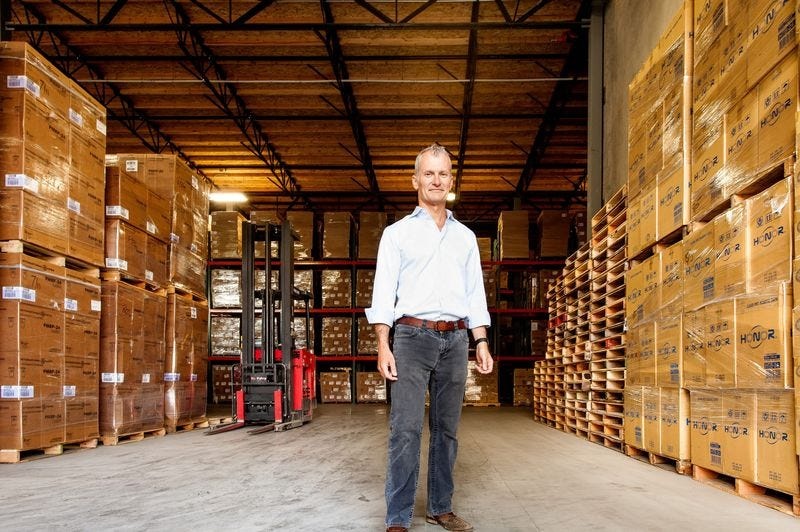
Today Flexe offers three connected services: capacity for storage and overflow; distribution to position inventory near retail destinations; and fulfillment for ecommerce orders. Its published network covers more than 3,000 locations and 800 operators across the United States and Canada. Those are company-reported network figures, not buildings Flexe owns.
The distinction matters. Operators provide the facilities and warehouse labor. Flexe provides technology, sourcing, and operational coordination. Customers can see inventory and performance across different sites through a common platform. Instead of separately knitting together each warehouse’s systems, they work through a single integration. The company sells managed logistics capacity; the software makes that capacity usable.
For buyers, the alternatives include a warehouse lease, a conventional third-party logistics contract, or another technology-enabled network such as Stord or Flowspace. The sensible comparison depends on the job. A brand shipping individual parcels has different requirements from a manufacturer replenishing retail stores. Flexe’s enterprise proposition spans those channels, making operator capabilities and system compatibility part of the purchasing decision.
Consider DeFili Solutions. During the pandemic, a large retailer needed a 100,000-square-foot fulfillment operation in three weeks. DeFili and Flexe launched it without the extensive automation normally associated with high-volume fulfillment. Temporary workers were processing orders within a day of training, according to the operator’s account. Flexe supplied dashboards for orders, shipping dates, and service targets, alongside experts who trained and monitored the work.
A marketplace listing could have identified the floor space. It would have struggled to teach the temporary workers. This is the less glamorous expertise behind Flexe: implementation, labor planning, and the daily discipline of shipping the right thing.
Move the box before the customer asks
Aterian illustrates the geographical part of the proposition. Its products ranged from essential oils to refrigerators. The company needed a broader domestic fulfillment network without large infrastructure investments. With Flexe, it deployed 12 nodes. A case study published in October 2022 reported thousands of daily orders, with 76% delivered in one day and 97% within two.
Another customer discovered the warehouse problem at checkout. An unnamed skincare brand was growing, yet reported a 64% cart-abandonment rate. Shopping trials showed that better delivery options and free shipping helped. Its existing network could not expand quickly enough to deliver the new promise.
Flexe and the brand scoped six nodes near customer demand, introducing them in phases. The published case study reports next-day delivery coverage for 90% of ecommerce customers, a 9.4% reduction in final-mile costs, and 25% lower cart abandonment in the first expansion phase. These are the company’s account of one customer’s results. Still, the mechanism is intelligible: inventory begins closer to the person who will buy it.
What the empty space costs
Flexe uses transactional, pay-as-you-go pricing. A buyer pays for agreed capacity and services rather than undertaking a long warehouse lease. In February 2026, the company formalized its Spot Warehousing Index and promoted Flexe Discover, which combines warehouse search, cost comparisons, and market information. The index benchmarks monthly spot storage rates per pallet. It is a reference for storage, not the price of an entire fulfillment operation.
When researched in October 2026, Flexe’s homepage displayed a national spot benchmark of $13.35 per pallet. That number is useful chiefly for what it leaves out: a particular product’s handling, fulfillment, and transportation needs. Discover helps a buyer search and compare before committing. The decision still concerns a specific shipment, facility, and service agreement, rather than an abstract national average.
The practical implication is to compare complete networks, not isolated rent figures. Storage, handling, transport, duplicated inventory, and service requirements all belong in the calculation. Flexible space may be attractive for uncertain demand while a dedicated operation serves predictable volume. That is a purchasing judgment, not a universal rule about which model wins.
The same logic sets the limits. A nearby warehouse must actually handle the product and meet the service requirement. More locations can introduce replenishment work and inventory decisions. If those costs outweigh the savings from shorter journeys or avoided idle space, the attractive map has become an expensive decoration.
Flexibility has a payroll, too
Flexe raised $119 million in July 2022 at a reported valuation above $1 billion. Its customers have included Ace Hardware, Walmart, Staples, and Ralph Lauren. Yet the company remained exposed to the logistics cycle. September 2023 layoffs included 131 Washington positions. In January 2024, another reduction affected 99 workers, or 38% of its workforce.
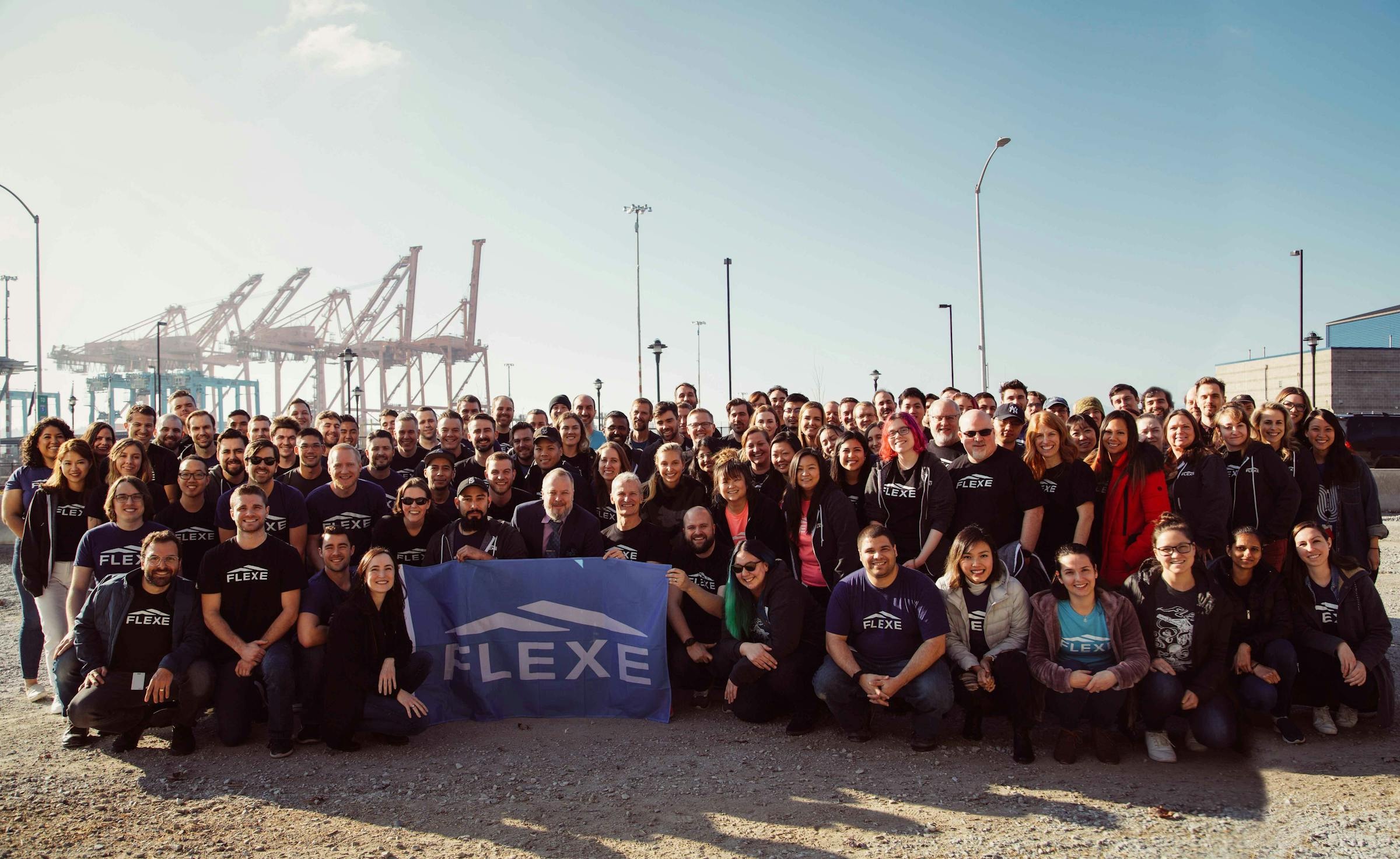
Its published values stress customer impact, critical thinking, collaboration, and accountability. Siebrecht described a fitting internal slogan:
“Move fast and don’t break things.”Karl Siebrecht, describing Flexe’s operating culture
A useful trial would begin with an identifiable problem: one market with slow delivery, one seasonal overflow, or one product group whose volume is hard to predict. That is an inference from these examples, rather than a promised Flexe result. A narrow test gives the buyer something concrete to measure before rearranging the wider network.
The lesson a reader can copy is modest: separate reliable demand from the demand that might surprise you. Test additional capacity, measure delivery and total cost, then decide whether to expand. Flexe’s original customer did not need a more confident prediction. He needed somewhere for the error to go.