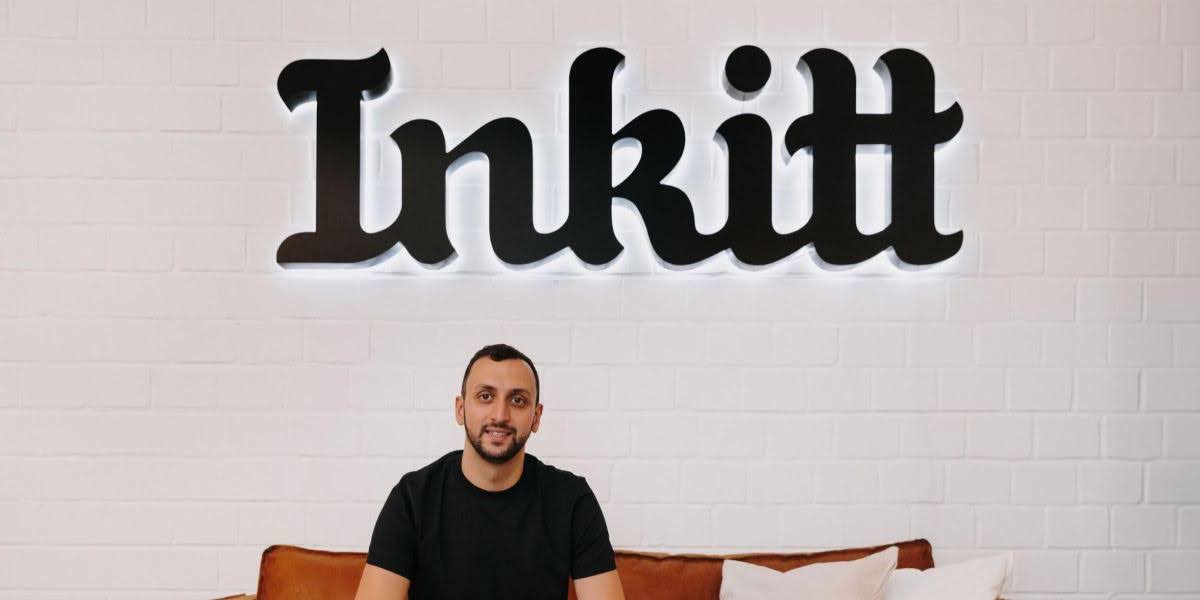
The publisher who replaced gut instinct with a machine
J.K. Rowling was rejected 13 times. Stephen King's first novel got turned down 30 times. Twilight, 14. These are publishing's most-cited cautionary tales, and for most people in the industry, they function as folklore - charming proof that the gatekeepers sometimes miss. For Ali Albazaz, they were a business plan.
Albazaz grew up in Baghdad, then Iran, then Germany - three countries by the time he was ten. By thirteen, he was buying second-hand phones on eBay, polishing them up, photographing them like a professional, and reselling at a 20-30% margin. This was not a hobby. It was research into how things get valued - and who decides.
The publishing industry, he would later discover, ran on the same opaque instincts as every other gatekeeper business. An editor liked something, or they didn't. A book got through, or it sat in a drawer forever. The data was sitting right there in reader behavior - page turns, time-on-chapter, dropout points, re-reads - and nobody was using it.
In 2013, Albazaz founded Inkitt in Berlin with a simple, radical idea: let readers decide what gets published. Authors upload manuscripts for free. Readers consume them for free. The platform tracks everything - which chapters make readers stop, which make them binge, which make them return. The algorithm surfaces what the data says will sell. Then Inkitt publishes it.
J.K. Rowling got 13 publisher rejections. Albazaz logged 140 investor nos before anyone believed in the algorithm. He kept a count. He kept pitching.
The worst coder on the team
He will tell you himself: he was the worst coder in the room. His co-founders knew it too. So they handed him everything else - marketing, supplier relationships, customer service, the pitch deck. "Fine, you do everything else," they said. He did. That's how he became CEO.
There's an honesty in that origin that cuts against the polished founder mythology. He wasn't the visionary programmer who built the product in a garage. He was the one who refused to stop pitching even after the 139th no. He was the one who asked why traditional publishers ignored all those reader signals that were right in front of them.
Before Inkitt, Albazaz had failed at two startups. He graduated with a Computer Science degree from the University of Bonn and promptly went 0-for-2. Then he watched the publishing industry reject genius manuscripts by instinct and thought: this entire market is broken, and I know how to fix it.
"I had to learn that you can't take rejection personally, and you just have to keep trying. That's the only way you can ever create something that has the potential to truly change the world."- Ali Albazaz
Three platforms. One pipeline.
Free manuscript upload for 300,000 writers. Free reading for millions. Every page turn is data. The algorithm ranks what deserves to go next.
The world's fastest-growing immersive reading app. 60M+ chapters consumed monthly. Sound effects, music, vibrations, character chat - fiction as experience.
Formerly GalateaTV. Rebranded June 2025. 3M minutes watched daily, 98% female audience. The stories go from page to screen - Inkitt produces the adaptation.
What 33 million readers know that editors don't
Traditional publishers make bets. Inkitt makes measurements. When a reader drops off at chapter three, the platform knows. When a chapter gets re-read three times, the platform knows that too. When someone shares an excerpt at 2am, when they binge twelve chapters in a row, when they leave before the ending - every signal feeds the model.
The output: Inkitt publishes bestsellers at 40 times the success rate of traditional publishers. Not 40% better. Forty times. The company is now ranked the No. 11 bestselling publisher globally - above Penguin Random House. One in two novels discovered by Inkitt becomes a bestseller. More than 50% of published works on Galatea have generated over $100,000 in sales.
In 2023 alone, 133 Galatea authors reached bestseller status. Top authors earn five figures per royalty cycle. And crucially - Albazaz's founding principle holds - they keep their copyright. Inkitt publishes the work, shares the revenue, and the authors own what they created.
The algorithm learns to write
The $37M Series C announced in February 2024 - led by Vinod Khosla, one of Silicon Valley's most deliberate investors - came with a new mandate. Inkitt was no longer just using AI to find good stories. It was going to use AI to help make them better.
Albazaz described the vision plainly: AI-written stories based on user ideas, personalized fiction versions, expansion into games and audiobooks, more video content. The staff were "heavily using AI to iterate on stories." Bloomberg Businessweek took notice, publishing a major feature in April 2025 titled "The A.I. Romance Factory" - an examination of what happens when a data-driven publisher goes all-in on generative AI.
The platform runs on a stack that would look familiar to any serious engineering team: Kubernetes, Elasticsearch, PostgreSQL, ClickHouse, Airflow, dbt, Python, Google Cloud Platform, Amazon AWS. The infrastructure is built to scale at the pace of 60 million chapter reads per month.
Galatea's user base grew 40% in 2024. CandyJar - the rebranded video platform that launched its first original feature film in June 2025 - is pulling 3 million minutes of watch time daily with an audience that is 98% female and averaging 40 minutes per session. For a startup that started with reader-generated manuscripts from an online community, that's a remarkable pivot toward premium entertainment.
"Inkitt's mission is to become the Disney of the 21st century where our authors' stories turn into blockbuster movies, Emmy-winning TV series, theme park rides, and more." - Ali Albazaz. The man is not speaking metaphorically. CandyJar is step two.
From Baghdad to $400M
Publishing as a fairness problem
Albazaz talks about fairness the way other founders talk about product-market fit: it's the thing he's trying to optimize for. Traditional publishing is a network-effect industry - you need an agent who knows editors who know publishers. Where you went to school matters. Who you know matters. The quality of your manuscript is one of several variables, and not always the dominant one.
Inkitt's model inverts this. The algorithm doesn't care where you went to school. It doesn't care if you have an agent. It cares whether readers stopped reading at chapter four. It cares whether they came back. The writer who uploads from a small town in Germany or a suburb of Lagos gets the same algorithmic evaluation as the one with an MFA from Iowa.
Authors retain their copyright on Inkitt - a non-trivial commitment in an industry that has historically treated intellectual property as the publisher's prize. Albazaz built the model around the idea that the person who wrote the book should keep owning it.
"No matter where someone is born, their network, or how much they spent for university. Everybody should have an equal chance to succeed - that's our core belief."- Ali Albazaz, on the founding philosophy of Inkitt
"I, personally, never actively intended to become an entrepreneur for entrepreneurship's sake. I wanted to provide value to society."
"What other amazing stories were sitting in someone's notebook or computer unread? That question drove everything."
The specifics
Ali Albazaz on film
Ali Albazaz, Founder & CEO of Inkitt - BBC interview on reader-powered publishing
TOA Berlin 2023 - AI: The New Muse for Master Artists. Albazaz on AI's role in storytelling.