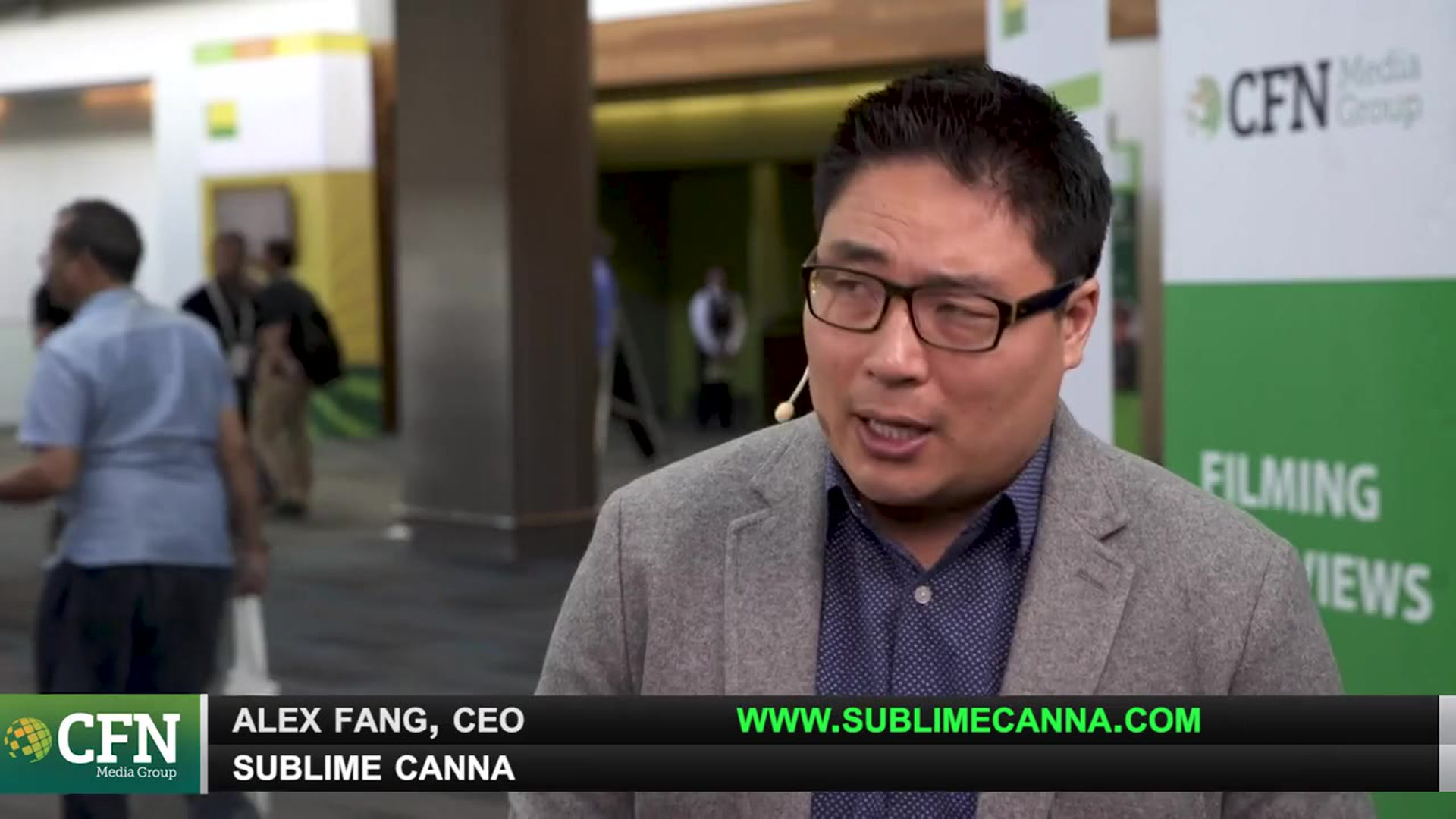
Alex Fang had arranged a rather agreeable life. He worked as a financial planner, ran a nonprofit, and traveled. By his own account, the paying job occupied two days a week. Then a childhood friend arrived with a proposal involving cannabis extraction, and Fang made an investment with one especially consequential assumption: eventually, his friend would run the business.
Six months later, the handover failed to materialize. The friend could not supply the time or money the venture required. Fang had already committed both. His investment had acquired a job description.
Looking back in 2018, he described his earlier existence this way: “Life was pretty much on autopilot.” For someone who had managed to combine financial planning with surf travel and international volunteer work, autopilot seems a little unfair to the itinerary. But it explains the appeal of a startup. He wanted to get involved in making something. Sublime supplied rather more involvement than planned.
A surf trip with work attached
The detour began years before the Oakland company. In 2007, Fang and Jonathan Sofer took surf trips to Central America and saw communities dealing with the changes that tourism brought. Their response became Surf For Life, an organization connecting travelers with locally directed development projects.
The premise had an appealing practicality. People were already willing to travel considerable distances for a wave. Some of that enthusiasm, money, and time could go toward a community project. A holiday could contain a working day. The destination would have something left when the visitors went home.
In El Cuco, El Salvador, Surf For Life worked on a high school with local organizer Ester Perez. Volunteers helped with foundations and walls. The work made the relationship between a visitor and a place unusually tangible: a school needed building, and there were hands available to help build it.
“focus energy towards creating something positive”
Alex Fang, on the idea behind Surf For Life, 2011
In 2011, a group including surfers, artists, and board shapers prepared to travel to El Cuco. Before leaving, they organized San Francisco fundraisers toward the $25,000 needed to complete the school. Fang appeared alongside people whose skills included shaping surfboards and making things with their hands. The gathering joined a recreational network to a specific construction budget.
That detail matters. Good intentions had an amount attached. The money was for a particular building, in a particular town. Financial planning and volunteer organizing could occupy the same conversation without either requiring a change of costume.
- 01The coastSurf For Life
Travel meets community projects - 02The factorySublime
Finance meets manufacturing - 03The funding gapRoundZero
Philanthropy meets startups
The investor inherits the factory
Sublime put Fang into a different kind of construction. The business made cannabis products in Oakland, including vaporizer cartridges and pre-rolls. His background offered familiarity with budgets, investors, and the expectations surrounding someone else’s money. Running a manufacturer added products, production, and distribution to the list.
A January 2018 securities filing carries a small but useful piece of this history. Sublime Machining Inc., incorporated in California in 2015, listed Fang as an executive officer and director. He signed it as CEO. The signature is a dry counterpart to the origin anecdote: the investor who expected a handover had become the person accountable for the company.
At a Southern California investment forum before the start of California’s adult-use sales, Fang described raising $6 million in Series A funding. His explanation was almost comically sensible. The team had assembled a business plan, a presentation, financial projections, and a data room. They had brought the documents an investor would normally request.
In a young industry, routine preparation could attract attention. Fang’s account turns the usual startup drama down a few degrees. A pro forma rarely gets the glamorous part in a founder story. Here it had earned a speaking role.
The chef at the other end of the counter
One of Sublime’s more interesting connections began well away from its manufacturing floor. Fang met chef Dennis Lee while studying to become a financial planner. He brought his books to Lee’s first restaurant and ate at the counter. The customer and the chef became friends.
By 2018, Lee, known for San Francisco’s Namu Gaji, was joining Sublime to develop edibles. He had asked to borrow Fang’s extraction equipment, then followed up with technical questions. Fang noticed the depth of the inquiry.
“He started asking me these really high-level questions that piqued my interest,” Fang said. The exchange gave the partnership a convincing beginning. Before the announcement, there was a curious chef asking how something worked, and a friend taking the questions seriously.
The collaboration brought another set of standards into the company. A chef would think about flavor and texture alongside the machinery and ingredients. Fang had known Lee as a restaurateur long before there was a joint venture to discuss. A counter where someone once revised for a professional qualification had become the starting point for a product-development relationship.
A large number, with smaller numbers inside
Fang could also have fun with the incongruity of his career. At a 2019 private investment summit, his presentation was called A Financial Planner’s Guide to Becoming a Drug Lord: Looking at Cannabis as an Asset Class. He joked about the title’s length. Even the joke came with an investment category.
Two years later, Sublime became the subject of a substantial transaction. Harborside announced the completed acquisition of Sublimation Inc. in July 2021 for $43.8 million. Its products included the Fuzzies pre-roll brand.
About $3.4m of the cash repaid Sublime debt. These are company transaction figures.
The composition deserves a moment. Approximately $38.4 million was payable in Harborside shares and $5.4 million in cash, with about $3.4 million of that cash used to repay Sublime debt. An acquisition headline compresses several financial events into one handsome number. Fang’s old profession would have been well equipped to read the smaller print.
The transaction marks a chapter in the company’s history. It also gives his later work with founders a concrete operating backdrop: he had participated in the business whose budgets, products, and investors had to coexist before a buyer arrived.
Back to the question of where money goes
Fang’s subsequent work has returned him to the meeting point of capital and social purpose. At OneValley, he has served as director of social impact. Berkeley Lab’s Cradle to Commerce program lists him on its management office team in that capacity. Its January 2023 workshop agenda also placed him among the people helping connect laboratory work with entrepreneurship.
The setting changes the object being built. A research team needs a route toward a company and a product that can be used outside the laboratory. Training, commercial partners, and money become part of that route. Fang’s involvement puts him alongside researchers and entrepreneurs working through those practical transitions.
He has pursued the subject academically, too. His professional biographies describe sustainable-finance study at Frankfurt School of Finance & Management and a thesis on using donor-advised funds for impact investment. He holds an MBA from Quantic School of Business. The financial planner’s interest in the destination of capital had acquired a new research question.
By New York Climate Week in 2025, Fang was appearing as a RoundZero co-founder on a panel about funding innovation through donor-advised funds. Fellow speakers included Prime Coalition’s Sarah Kearney and Endaoment’s Robbie Heeger. The discussion examined how philanthropic capital could support companies developing climate solutions.
His work also includes chairing the CleanTech group of the Coalition for Innovation, hosted by LG NOVA. He describes the mission as “bridging the gap between breakthrough research and real-world impact.” In the same statement, he talks about helping innovators through the “messy middle.” The phrase suits someone whose first cannabis investment became a much larger operating commitment than anticipated.
Fang also contributed to the coalition’s CleanTech Blueprint. Its concluding chapter, which carries his name, addresses several kinds of reader: the policymaker, the founder, the student, and the person looking for a useful way to contribute. The range feels consistent with the earlier volunteer project. There are different jobs available, and participation begins with finding one that fits. Writing a framework is another form of organizing: it gives people who start in different places a common piece of work to discuss. For Fang, the invitation has moved from a school-building trip to the less visible work of helping an innovation reach the market.
In April 2026, Enduring Planet featured Fang in its discussion of raising capital from donor-advised funds for climate startups. The subject is a specific financing problem, one he has approached through study, advising, and RoundZero.
There is a useful continuity beneath the changes of industry. Surf For Life connected people willing to travel with communities building something. Sublime connected investment, manufacturing, and an emerging consumer market. His more recent work connects philanthropic money with founders. The settings have become more technical. The practical question remains recognizable: who has resources, who can use them, and what has to happen before work can begin?