The useful thing about a famous company name is that it answers a question before anyone has asked it. Creative Artists Agency. The National Football League. Three letters, or one shield, and the room understands the prestige. Alden Reiman began his career inside both. Then he did the professionally impolite thing: he decided the name on the building was less interesting than the problem hiding inside it.
The problem was not a shortage of agents. Entertainment has never suffered from that. It was an imbalance of advocacy. Talent had sophisticated representation, large agencies had earned their market power, and brands still arrived with objectives that could be flattened into the vague instruction to “do something with a celebrity.” Reiman saw room for a representative who began with the brand’s business question. Was the target impressions, sales, or attribution? Which athlete, creator, or story could plausibly carry it? What would count as a return?
That idea became The Reiman Agency in 2021. It later became an acquired company. In April 2026, it also became a completed chapter when Reiman started Reiman Partners in Corona del Mar. His route from employee to founder to acquired operator and back to founder is a tidy timeline only in hindsight. Up close, it is a story about status, timing, and the strange courage required to exchange a prestigious answer for a useful question.
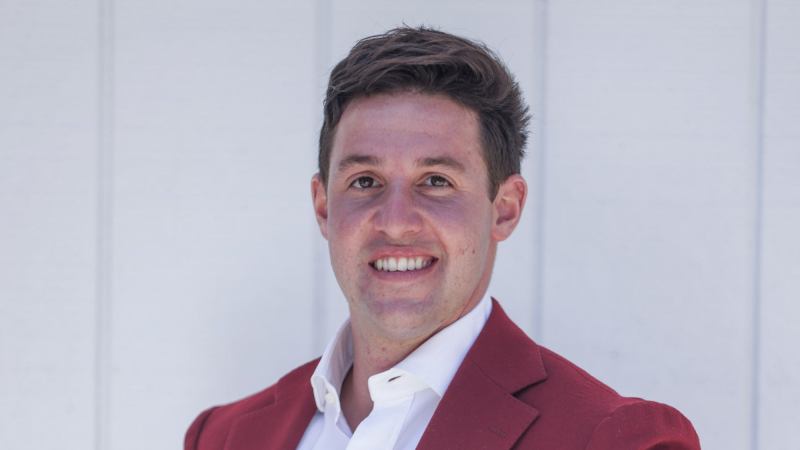
An apprenticeship in the machinery
Reiman graduated from Emory University in 2016 with a political science degree. That same year, he entered CAA in digital talent and packaging. It was a useful moment to learn the trade. Online creators were becoming durable entertainment businesses, traditional talent was learning to speak in platforms, and agencies were figuring out how to package attention that did not arrive through a studio gate.
In 2019, he moved to the NFL, working in club strategy and operations. The shift widened his view from individual careers to the intricate ecosystem around teams, leagues, sponsors, and fans. Sports marketing is never merely the placement of a logo. It is affiliation borrowed at high speed. A brand pays to stand near years of loyalty, ritual, heartbreak, and hope. Get the match right and the audience supplies meaning. Get it wrong and no quantity of reach can make the partnership feel natural.
By February 2021, Reiman had joined BrandArmy as vice president of digital talent and brand partnerships. He brought creator clients and a mandate to build revenue channels on a direct fan-monetization platform. The job joined two halves that would keep recurring in his career: the human work of representing talent and the operational work of turning an audience into a business.
The least glamorous client in the room
When Reiman described his new agency in 2022, the pitch was refreshingly specific. The firm would guide companies through entertainment and new-media partnerships while concentrating on the return from their marketing dollars. He was not claiming that talent agencies had failed. His observation was sharper: they were built to advocate for talent, and that left a wedge for someone willing to advocate just as intensely for the brand.
This is where his political science training seems, at minimum, poetically appropriate. Every deal has constituencies. The creator wants money, credibility, and control. The audience wants entertainment without being treated like inventory. The brand wants attention that moves a commercial needle. The platform wants activity. The representative must build a coalition that survives contact with all four.
The Reiman Agency’s early work overlapped with Clubhouse Media Group. In August 2021, Reiman joined the company as a consultant focused on brand and sponsorship deals. The announcement credited him with brokering more than $5 million in brand partnership agreements over the preceding year. A joint-venture arrangement followed in 2022. That relationship ended in 2023, and the agency continued on its own path.
There is a revealing frankness in how Reiman has discussed the emotional part of that path. Entertainment, he observed, runs on ego. The industry’s habitual questions - where do you work, whom do you represent, who are you signing - can make affiliation feel like accomplishment. He admitted that the pull of famous agency initials did not vanish when he left them. Instead, he learned to measure progress by the equity in producing good work.
“There is no linear route to success.”Alden Reiman, on choosing work over institutional status
That may be the central tension of his story. Institutions are superb teachers partly because they make success look institutional. Founding exposes the confusion. The logo is suddenly your own. The meeting still has to be earned. The invoice still has to be paid. There is no famous reception desk to lend drama to an ordinary Tuesday.
An exit, then another entrance
On July 24, 2024, IZEA closed its acquisition of The Reiman Agency. The public announcement arrived the next day. Financial terms were not disclosed. Reiman became managing director, and IZEA awarded him 169,357 time-based restricted stock units tied to the employment relationship. The strategic logic was plain: his agency brought sports and celebrity marketing expertise; IZEA brought technology, infrastructure, and a broader creator network.
For Reiman, the combination extended a thesis he had been developing since BrandArmy. Software can remove friction from discovery, contracts, reporting, and payment. But creator marketing is not an industrial input. The audience judges the match. A brand can find a creator in a database and still fail at the more delicate task of finding a reason for that creator to care.
Sports made the stakes of that judgment especially clear. By the time of the acquisition, Reiman’s experience included work with athletes, teams, and brands across the NBA, NFL, MLB, and college sports. The arrival of name, image, and likeness opportunities added an enormous new class of potential partnerships. It also added young athletes, local audiences, campus loyalties, and brands learning a new rulebook at once. Scale could help organize the market. Judgment still had to protect the fit.
A 2025 partnership between Squad, The Reiman Agency, and Famous Birthdays made that seam visible. A sponsor button was designed to help brands begin conversations with creators. Reiman’s explanation was short: “This is a relationship business.” The button could open the door. People still had to conduct the meeting.
The acquired chapter lasted until April 2026, according to Reiman’s current professional profile. Then came Reiman Partners, with Reiman again in the founder and CEO seat. Public detail about the new firm remains spare, but the career pattern is already legible. He learns inside a system, identifies an underserved relationship, and builds at the intersection of brand, talent, sport, and media. He has also invested in Anvara since 2024, widening the operator’s view with a seat on the capital side.
The operating system under the operator
Reiman calls himself southern-born, a die-hard Atlanta Braves fan, and a lover of family and storytelling. The combination is almost suspiciously well suited to sports marketing. Baseball rewards patience, memory, and the ability to make statistics feel like folklore. Marketing asks for the reverse trick: make folklore accountable to statistics.
His advice to founders follows the same practical-romantic split. Believe obsessively in the idea, but know the model. Tell the story, but invite people who can sharpen the forecast. Seek funding before the need becomes desperate. Take meetings. Ask for feedback. Hear no without converting it into a verdict on your identity. The language can sound aspirational; the mechanics are disciplined.
He has described entrepreneurship as the work of championing an idea until it becomes real. The phrase suits an agent, because representation is organized belief. Someone has to make the call, frame the value, tolerate rejection, and return with a better version of the case. Founding simply removes the distance between representative and represented. The idea on the table is also the founder’s livelihood, reputation, and Monday morning.
He is also conspicuously generous about colleagues in public. When Gianna Garcia credited his mentorship after a promotion at The Reiman Agency, Reiman returned the praise, saying the company was where it was because of her. It was a small exchange, but useful evidence. Relationship businesses are often described as if relationships are merely a sales channel. Inside a team, they are the product every day.
“Look for funding when you don’t need funding.”Alden Reiman’s advice to entrepreneurs
The creator economy now has better databases, more formal contracts, deeper analytics, and an increasingly crowded vocabulary. Its oldest truths have survived the upgrade. Audiences recognize a bad fit. Talent remembers a fair negotiation. Brands remember whether the result arrived. Good representatives remember that all three memories will be present at the next deal.
Reiman’s career has been an argument for occupying that difficult middle. He has worked for the institution, the league, the platform, the agency, the acquirer, and himself. Each seat changes the incentives. The durable skill is seeing the whole table without forgetting whom you promised to represent.
Reiman Partners begins with a name that has already appeared on two founder chapters. The more interesting inheritance is the question behind it: whose objective is being overlooked? In a business fond of fame, that is an unfashionably useful place to start.