A crash test makes a spectacle. The report makes an appointment. It must arrive complete, consistent and in time for someone else to act on it. Between those two events lies a considerable amount of engineering work, much of it performed without an audience. This is the territory Ajay Krishnamurthy has chosen for his business: the planning, booking, checking and recording that allow a test programme to proceed.
Krishnamurthy is the founder and CEO of 12th Wonder, the software company established in 2012. Its TITAN platform manages the lifecycle of physical testing. The subject has less immediate glamour than a vehicle meeting a barrier, but glamour has never been much use when two teams need the same piece of equipment on Tuesday.
His work is easiest to understand through the people involved. Engineers need to know what must be tested. Technicians need instructions. Schedulers need resources. Managers need a view of progress. Customers need results. A single test can have quite a social life before anyone switches on a machine.
A software career meets the laboratory
Krishnamurthy’s background includes more than two decades in software development and consulting. His experience spans finance, securities, invoice processing, and project and resource management. These are businesses of records and dependencies, where a transaction or a task must retain its meaning as it passes between people.
Today, he leads a company serving engineering operations. The professional setting has changed, while the subject still involves information moving through a process. A request becomes a plan; a plan requires resources; completed work needs a record. Software has to preserve those connections if the people using it are to follow what happened.
12th Wonder’s wider business includes custom applications and services in areas such as cloud technology, mobile development, quality engineering and geospatial software. The company is headquartered in California and has branches in India, Japan and Ivory Coast. Krishnamurthy’s testing work therefore sits within a broader software business, with colleagues operating across several countries.
Two visits to Novi, one continuing subject
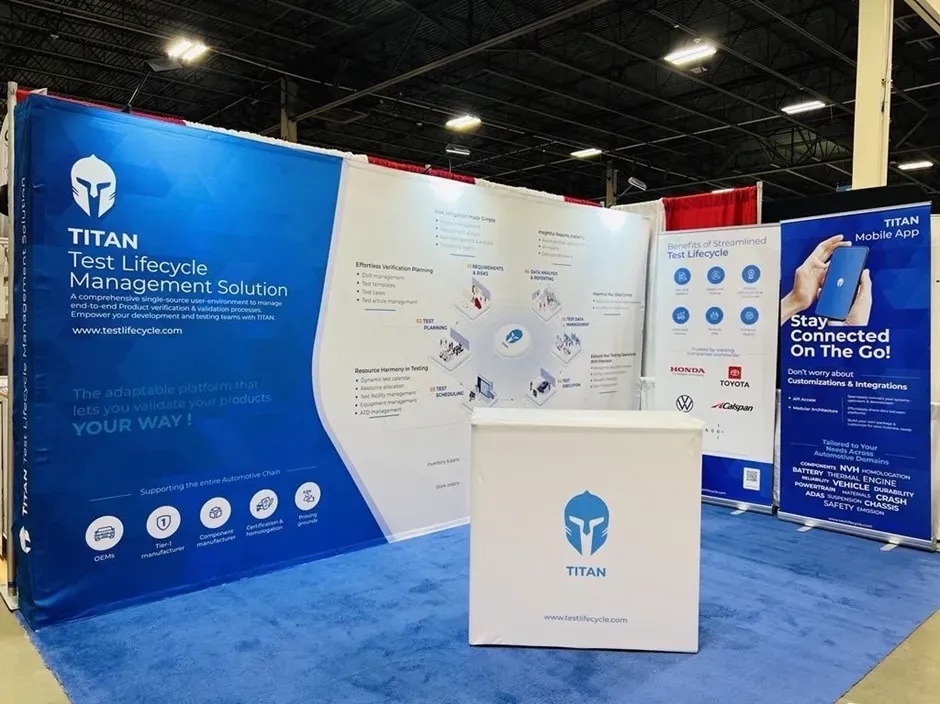
On October 25, 2023, Krishnamurthy spoke at Automotive Testing Expo in Novi, Michigan. His presentation concerned engineering tools for effective product development. At the exhibition, 12th Wonder showed an upgraded TITAN, including risk management and scheduling features. The company’s event account connected his talk to the V-curve, the development framework linking requirements and design with verification and validation.
It was an appropriate setting for his subject. Product development is full of handoffs. A requirement written early must still make sense when a later test examines it. The connection between the two can become difficult to follow when plans, bookings and results live in separate places.
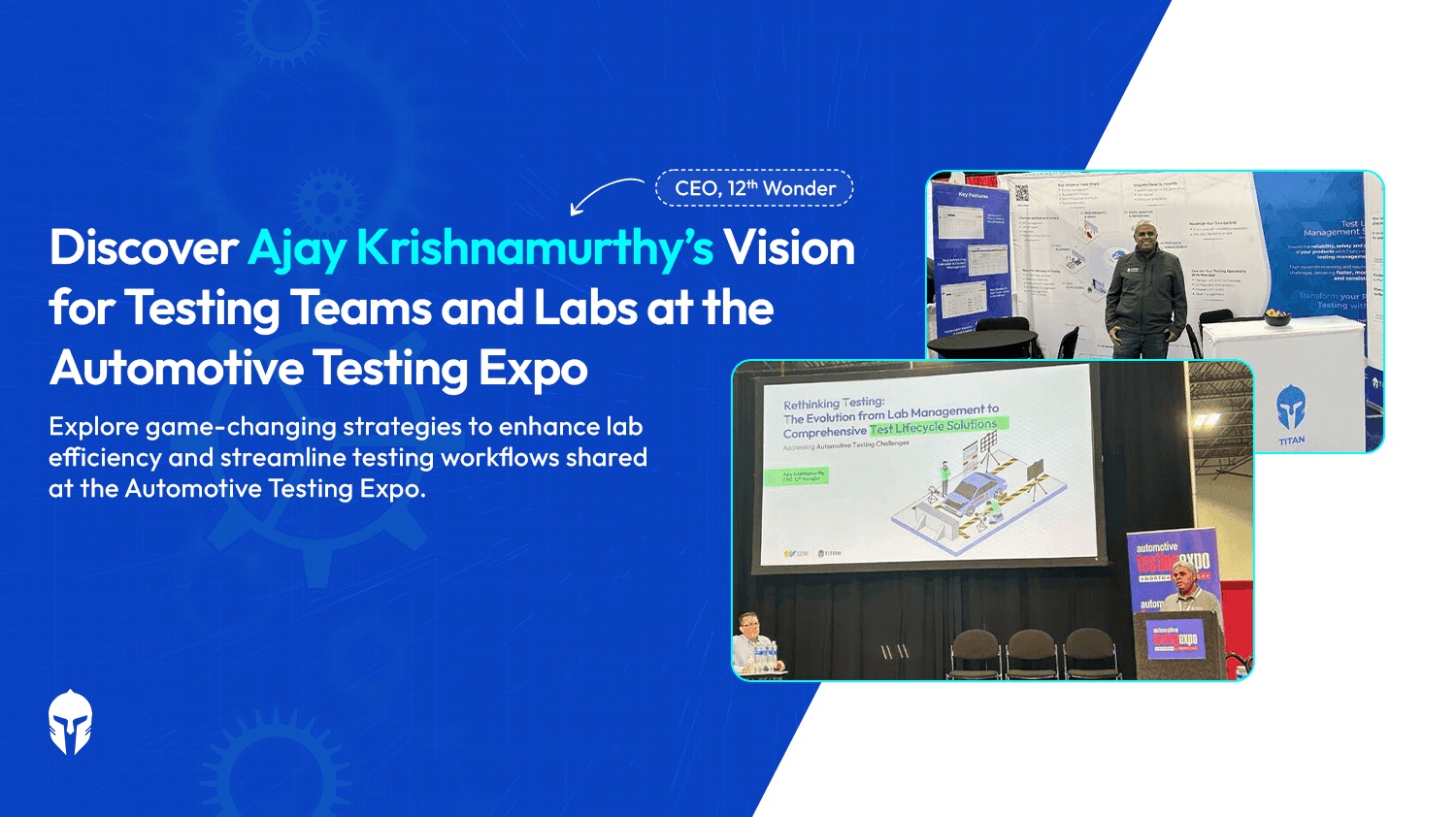
A year later, on October 23, 2024, he returned to the event’s programme with a presentation about moving from lab management to comprehensive test lifecycle solutions. The title widened the frame. Managing a laboratory is one part of the picture; following a product through its verification work asks for a view across the whole sequence.
The two appearances give his public professional story a clear thread. In 2023, he addressed the tools used in development. In 2024, he addressed the scope of the system connecting them. Both subjects concern how engineering teams coordinate their work, with the individual test placed inside a larger programme.
The 170-page reason to care
The practical consequences become clearer at Calspan, the vehicle testing business. In March 2025, Calspan described how its Mobility and Safety team had used TITAN over the preceding two and a half years. The work included test requests, resource planning and certification reporting.
Calspan reported that generating a 170-page report took over five hours less with the platform. Finalized reports reached customers within 24 hours of testing. It also described more than 950 test reports produced using the standardized workflows. These figures belong to that customer’s account of its own operation, a concrete example rather than a promise about every laboratory.
There is something pleasingly untheatrical about this measure of progress. A large document arrives sooner. Engineers spend less time compiling it. The improvement can be discussed in hours, pages and completed work, without requiring anyone to admire an adjective.
For Krishnamurthy’s business, that is a useful demonstration of where software earns its place. Calspan described electronic checklists and preconfigured templates that helped teams prepare and execute tests consistently. The final report reflected changes made earlier in the workflow. Its arrival was the visible end of a process that had become more structured along the way.
A booking has consequences
In April 2025, TITAN was selected to support the Automotive Research Association of India’s Passive Safety Lab. The announcement, published in June, covered crash testing, pedestrian safety and airbag testing. The assignment extended from customer requests through planning, scheduling, execution and reporting.
The proposed system included a customer booking portal, a shared calendar, planning checklists and approval workflows. During testing, technicians would use electronic checklists to capture information, with signoffs and issue records. Reporting would draw on structured templates and retain revisions. These are specific pieces of operational work, each with its own users and consequences.
- 01 / PlanRequests & readiness
- 02 / SchedulePeople & equipment
- 03 / ExecuteChecklists & signoffs
- 04 / ReportRecords & revisions
For the person leading the company, a project of this kind brings the product argument down to working scale. A calendar has to represent actual availability. A checklist has to collect useful information. A report has to retain the details needed by its reader. Each module has a modest name and a demanding job.
The ARAI announcement also described demand visibility and capacity planning as part of the problem. Knowing what has already happened is valuable. Knowing what is coming allows a laboratory to consider staffing, bookings and equipment before the diary turns into a dispute.
That makes the booking an early decision with effects much further along. It establishes expectations about time and capacity before execution begins. In the announced ARAI scope, planning and reporting belong to the same project, giving the administrative beginning and the documented ending a place in one connected workflow.
Following the work as far as the invoice
In May 2026, TITAN announced integrated invoicing and quotation management. The functionality linked customer requests and operational activity with quotes, invoices and usage-based billing. It was incorporated into both the Customer Booking Portal and the Operations Portal.
The addition brings a familiar subject from Krishnamurthy’s professional background into the current platform: invoice processing. It would be a stretch to turn that overlap into a private founding revelation. As a feature of his career, though, it is a concrete connection between earlier experience and the work his company now supports.
The release described configurable templates, pricing and tax settings, PDF delivery, and activity tracking. There is a business logic to following a request this far. A customer’s interaction with a laboratory continues through the quotation, the work and the bill. Each stage carries information that the next stage may need.
“Let’s build something great together.”
Ajay Krishnamurthy, on 12th Wonder’s partnership page
The colleagues beside the founder
Krishnamurthy’s current leadership team includes Neerav Singh in sales and marketing, Nitu Singh in business development and customer success, and Joseph Kanon in engineering. Their separate responsibilities place commercial conversations, customer relationships and technical development alongside the CEO’s role.
The arrangement matters to a business whose product crosses so many jobs within a customer’s organisation. Explaining a platform, implementing it and supporting its use involve different kinds of work. The founder appears on conference programmes, while the company’s continuing relationship with a laboratory also depends on the people around him.
As of October 26, 2026, another Novi visit is on the calendar. An October 9 announcement names Krishnamurthy, Neerav Singh, Nitu Singh and Joseph Kanon among the team scheduled for Automotive Testing Expo North America, running October 27 to 29. TITAN plans to exhibit at Stand T1328. The planned conversations concern test programmes, shared resources, digital checklists and reporting, familiar territory by now.
Room for something that grows outdoors
Away from work, Krishnamurthy enjoys gardening, hiking and camping. They are small personal details, but welcome ones in a professional life described so often through systems and processes. A garden offers its own appointments, although it rarely agrees to a product demonstration.
Those interests need no elaborate explanation to belong in his story. They put a person beside the job title: someone who works with software and also likes to spend time outdoors. The professional record supplies the central subject, and the spare time supplies a different setting.
Back at work, the task remains tangible. A team needs a resource, a technician needs a checklist, a customer needs a report. Krishnamurthy has built his company around helping those requests meet their answers. The crash may attract the audience; someone still has to finish the paperwork.