Thirty million lines of code is an awkward inheritance. Somewhere inside that mass of instructions are the rules that decide how a business works. Natsoft describes modernizing a student-loan processor’s application at that scale, moving from a DB2/CICS environment toward Hibernate, PostgreSQL, JBoss and AWS. The interesting part is the inheritance: how much of yesterday must survive for tomorrow to function?
- Natsoft combines enterprise IT delivery with products and business process outsourcing.
- Its Updraft subsidiary specializes in legacy modernization and automated testing.
- Buyers can choose staffing, consulting, complete delivery or defined outputs.
That question gives this sprawling technology company a readable shape. Natsoft sells application development, enterprise software implementation, cloud and data work, and ongoing support. It also offers blockchain products. The connective tissue is integration: getting different systems, people and records to cooperate without asking the customer to stop operating.
A business hidden in the old code
Founded in 2004 by Timmy Cheedala, Natsoft describes itself as a boutique provider. Its ambitions cover a wide territory: banking, manufacturing, insurance, healthcare, retail and telecommunications. Its own group-level figures exceed 500 clients and 2,000 associates. Those numbers describe Natsoft and its associated companies together, a useful distinction when assessing the size of the operation behind a proposal.
Updraft supplies one of its more specific capabilities. The business traces its origins to Motorola research and automated software development. Its explanation of why it understands customers’ challenges includes the wonderfully compact admission, “we were born out of one.” Natsoft acquired that specialist rather than relying solely on general consulting capacity.
Alongside the loan-processing example, Natsoft describes work on a telecom manufacturer’s billing application and an automaker’s factory-control system. These are systems where old code performs current work. A sensible modernization brief therefore begins with behavior: which calculations, decisions and exceptions must the replacement preserve?
The test before the celebration
Code conversion gives a project something visible to count. Testing asks a less comfortable question: does the result behave correctly? Natsoft’s automated test-generation offering examines system behavior and creates test cases. Its published example names Samsung as a proof-of-concept customer. That is a narrower claim than a production rollout, and a more useful one to keep intact.
A separate testing-services announcement describes Updraft’s Test Architect generating functional test suites from high-level system models. Execution can then use other testing technologies. For a buyer, the distinction matters: generating the tests and running them are separate pieces of the delivery plan. Both need owners, data and acceptance criteria.
Which business decisions must survive the move?
The practical lesson is to bring validation into the buying conversation early. Agree on representative workloads, troublesome exceptions and the evidence required for acceptance. That is an editorial inference from the offering, rather than a guarantee about any particular project. Automation still needs a meaningful definition of success.
A seed gets a paper trail
HI-TRACK makes Natsoft’s blockchain work easier to picture. A grower creates a sample. The sample receives a unique identifier and QR code. A testing agency receives it, changes its status and uploads results. The platform alerts the farmer and regulator. Behind those ordinary actions sits a private, permissioned blockchain intended to preserve a shared transaction history.
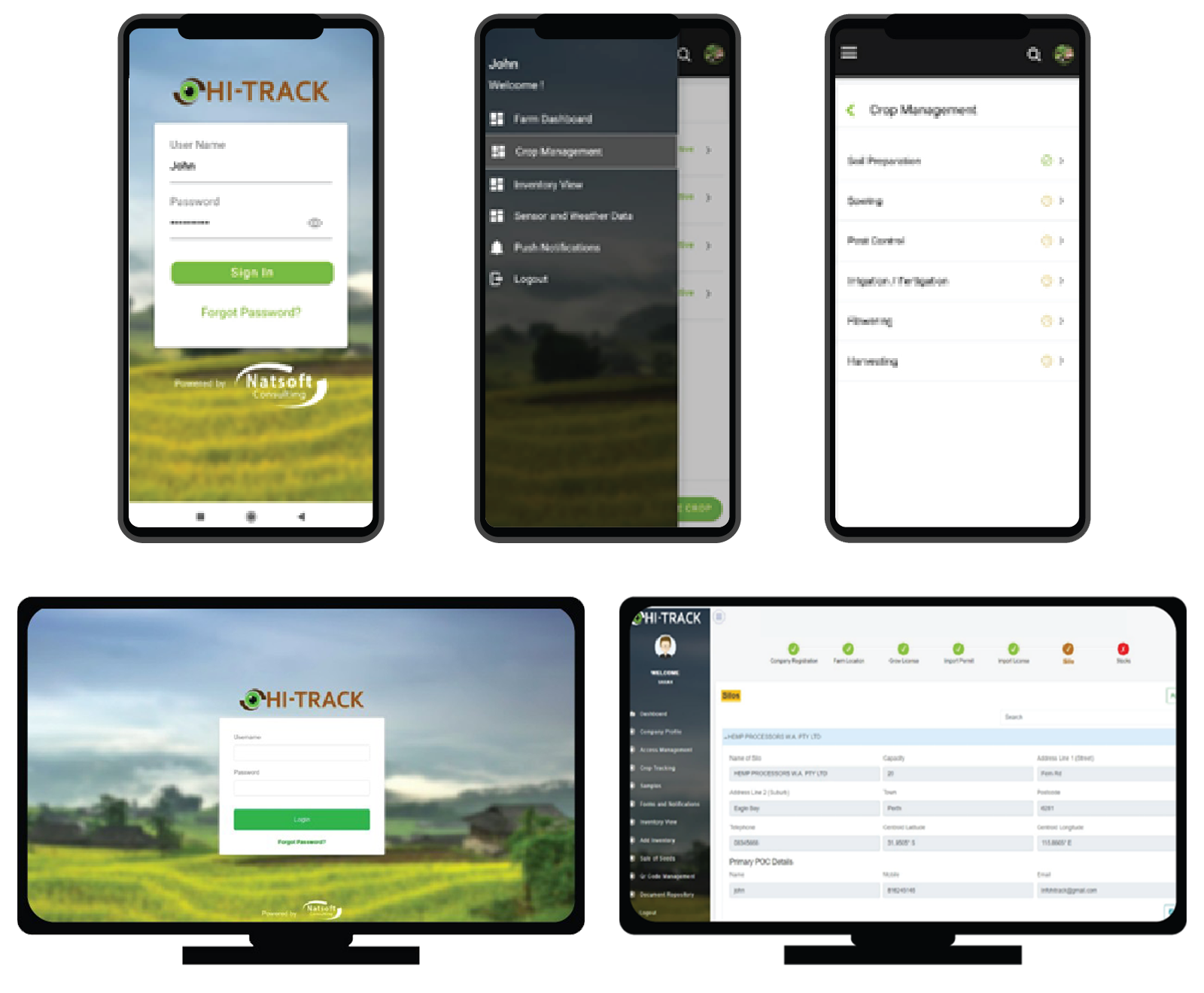
That is the product’s appeal: traceability expressed through work people already recognize. Natsoft says it has been used by a farming community in Australia. Its usefulness depends on participation and trustworthy inputs; preserving a record cannot, by itself, establish that an original observation was accurate.
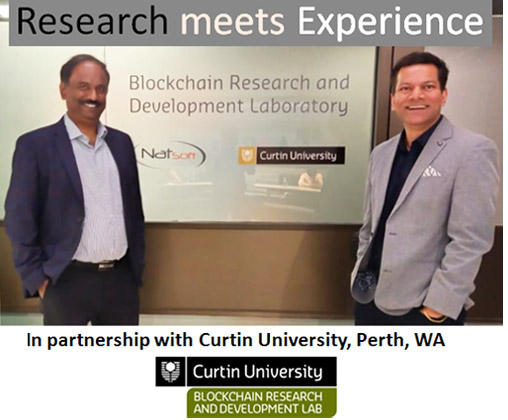
The research relationship is tangible, too. Curtin University announced its joint Blockchain Research and Development Lab with Natsoft in August 2019. Based in Perth and led by Dr Vidy Potdar, it was established for applied projects, education and industry collaboration.
NatCoin brings the same technology into student rewards: wallets on a private Ethereum network, with rules for earning and redeeming credits. Natsoft describes a Curtin deployment and offers the application for standalone rewards programs. This is a deliberately bounded use of tokens, with a recognizable administrator and purpose.
Who owns the work?
Other products follow the integration theme. Gauge aggregates operational information across locations and sits over existing systems; one version uses Microsoft’s Power Platform and SharePoint. Optio addresses hybrid cloud and on-premises infrastructure. Around them sit ERP and CRM projects, infrastructure support, technical staffing, customer-service operations and transaction processing.
The commercial choices reflect that range. A customer can buy people, advice, a complete project or measurable deliverables. Natsoft also describes licensing and subscriptions. Its deliverable-based model calls for defined outputs and quality checkpoints. Scope, dependencies and acceptance terms consequently belong beside price in any comparison.
There is a useful distinction between adding capacity and transferring responsibility. With staff augmentation, the customer still needs someone to set priorities and manage delivery. A turnkey brief gives the supplier a wider remit, including deployment and knowledge transfer. Natsoft publishes both options. Choosing between them means examining the customer’s own ability to supervise the work, as well as the skills a vendor can supply.
This puts Natsoft among specialist delivery firms and larger systems integrators. IBM’s partner directory lists it as both an integrator and managed service provider; Salesforce carries its consulting listing. The company competes for implementation work while also operating within other vendors’ ecosystems.
The value, and the argument over it
The modernization tools have also become the subject of litigation. Natsoft and Updraft sued Hexaware in 2025. In a November statement, Natsoft claimed more than $100 million in development spending. That is its assertion about investment, not a customer price.
On June 9, 2026, an Illinois federal court dismissed their patent infringement claims with prejudice on patent-eligibility grounds. It dismissed state-law claims without prejudice and allowed an opportunity to propose a federal trade-secrets claim. The ruling concerns the asserted legal protection; it does not measure customer outcomes.
The same discipline applies to a product demonstration. For HI-TRACK, ask who enters each record and who checks it. For Gauge, ask which existing systems provide the operational data. For a migration, agree how exceptions will be handled. These questions make the proposed work concrete enough to evaluate against an internal team or another supplier’s bid.
For prospective customers, the enduring question returns to that pile of old code. Specify what must keep working, establish how to prove it and decide who remains responsible after deployment. Natsoft’s portfolio offers several ways to commission that work. The buying decision begins with choosing which problem is actually yours.