In 2015, an intern at Uphold, the digital money company, had an unusually practical assignment: try the competition. Rubén Galindo Steckel later recalled receiving small amounts of bitcoin from Tim Parsa to test financial services. Another assignment followed: build an application using Uphold’s API. The application became Airtm. Its starting question was simple. What good was money on the internet if your country made it difficult to get dollars?
- A digital dollar account with routes back into local money.
- Built for online workers and companies paying them across borders.
- The useful comparison is the final cash-out amount, including fees.
The early answer combined a dollar wallet with a marketplace. Someone wanting dollars could trade with someone who wanted local currency. Airtm supplied the meeting place. The idea had a particular urgency in economies where currency controls and devaluation made an ordinary savings decision complicated. Bitcoin offered a way around some barriers. Its price volatility introduced another.
A $70,000 head start
Galindo’s 2017 account supplies a detail that startup folklore often edits out: Parsa provided a $70,000 loan. The team also borrowed something harder to price. Uphold supplied account infrastructure, conversions, compliance tools, and banking connections. Airtm could concentrate on finding people whose money was stuck between systems.
That arrangement bought speed. It eventually imposed limits. Galindo wrote that Airtm needed its own registration flow, bank connections, and financial infrastructure to improve efficiency and iterate faster. The constraint was architectural. A useful foundation had become something the company needed to outgrow.
There is a practical lesson here for builders. Start with infrastructure that lets you test the customer’s problem. Build more of it yourself when you can explain the specific constraint you are removing. Airtm’s sequence is more instructive than a blanket command to own every layer from day one.
The cashier behind the screen
Airtm’s distinctive character is the cashier. This is a person acting as a counterparty in its peer marketplace, helping exchange an Airtm balance for funds on an outside payment system, or the reverse. The machinery mixes software with people who can access local payment methods.
Airtm facilitates temporary escrow in its marketplace. The local transfer happens outside Airtm, between participants. That distinction matters: a digital balance and a completed bank payment are separate events. The company’s terms tell users to check actual deposits before confirming a transaction. A convincing screenshot is not money.
payer
dollars
or wallet
Direct integrations or peer cashiers connect the final leg. Availability varies by route.
For a freelancer, the attraction is access. Eligible users can receive US payments through virtual account details, then convert or withdraw using available methods. Additional identity checks apply to the US Virtual Account, which has its own country restrictions. A global network does not make every feature universal.
The savings idea meets a harder question
By 2023, Galindo was describing a change of mind. Access to stable money helped people protect earnings. It did little for someone who could not generate earnings in the first place. In his Circle interview, he called choosing the denomination of savings a partial answer.
“the freedom to choose the denomination of your savings, was a half solution to a huge problem.”Rubén Galindo Steckel / Circle, 2023
The company’s focus moved toward digital livelihoods and the businesses paying for them. Its business site now reports more than three million verified digital workers. That is a company-reported community figure, rather than a count of people actively using the service every month.
The customers become easier to picture: freelance contributors, creators, microtaskers, and enterprises distributing many payments. Sapien, an AI company, is a named enterprise customer. In December 2025, Airtm described its Digital Entrepreneur Portal, combining work discovery with profiles and payout histories as signals of experience. The wallet was moving closer to where work begins.
A payment company that connects to another
Payoneer illustrates Airtm’s place in the market. The two integrated in 2023. A worker can receive international earnings through Payoneer and move funds into Airtm for withdrawal. The alternative is also a partner. Customers already have accounts; connecting them can be more useful than demanding they start again.
Enterprise payouts add another layer. Bridge supplies stablecoin infrastructure, while Stellar carries USDC transfers. Airtm connects those flows with recipients and withdrawal options. A Stellar case study reports $1.2 billion in Airtm stablecoin transaction volume in 2024. Volume measures money moving, not company revenue.
Reported in Stellar’s Airtm case study
Investment helped finance that work. BlueYard led a $7 million Series A announced in August 2018. In May 2021, the Stellar Development Foundation announced a $15 million investment. Those are capital commitments, not evidence that any particular customer’s transfer will be cheap.
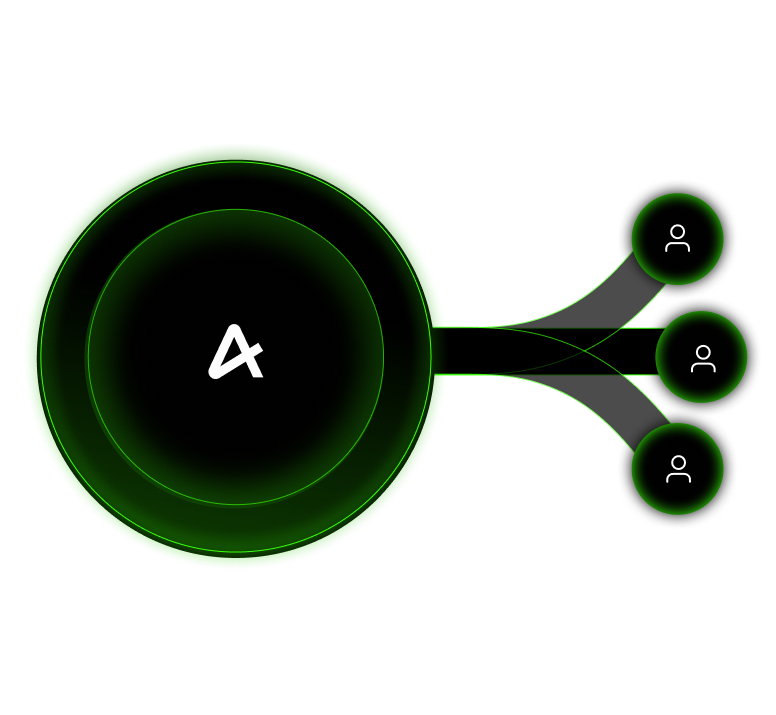
That puts Airtm between several familiar categories. It has a consumer wallet, a marketplace for conversion, and software for companies making payouts. Its expertise lies in making those pieces cooperate. A payer can care about a bulk payment arriving; a worker can care about a particular local wallet. A useful product must satisfy both definitions of done.
Follow the money all the way home
Airtm earns service fees and applicable escrow or transfer charges. Cashiers receive peer commissions. Its fee documentation distinguishes the market exchange rate from the net rate after charges. For the person paying rent, the net amount is the interesting number.
Internal sends also have conditions. The published general rule introduces a 1% charge after monthly activity thresholds involving three sends or 400 USDC; account history and certain countries can change the treatment. Inactive funded accounts can face a monthly charge after twelve months without a transaction. “Free” needs a calendar and some arithmetic.
A reader can copy the comparison method without copying the company. Choose the actual amount, destination, and withdrawal method you expect to use. Compare the local currency delivered after every applicable charge. Then check eligibility and timing. A low fee at one stage tells you very little about the cost of the complete journey.
Airtm fits people whose earnings and spending live on different financial networks. It fits less comfortably when the required withdrawal route is unavailable, verification cannot be completed, or another provider delivers more local money for the same payment. USDC also carries issuer and price risks. The transferable idea is to judge a payment from the recipient’s end: what arrived, when, and in a form they can actually use.