Fernando Terrés helped build a company with a name so practical it could almost pass for an instruction: DolarApp. Open the app. Get access to digital dollars. For a new financial product, there are worse introductions. Then came a familiar entrepreneurial inconvenience. The business developed interests beyond the thing printed on its T-shirts.
On March 2, 2026, DolarApp became ARQ. Terrés and his co-founders were setting out a wider brief: investing, credit and everyday spending alongside international payments. The company said it had more than two million customers. A name that had explained the first product was being asked to explain the next several. It had become a very small sign over an increasingly busy shop.
The change offers a useful way into Terrés himself. His career runs through industrial engineering, corporate strategy and the practical business of operating a fintech. Again and again, the interesting question is what happens between an attractive idea and something another person can actually use. A dollar balance is an idea. Paying for something with it is a rather more demanding examination.
A thesis about access
Before there was an app, there was a university project about who gets access to an education. Terrés studied industrial technologies engineering at the Universitat Politècnica de Catalunya from 2012 to 2016. His final project examined accessibility and competition in Spain's market for industrial engineering studies. It was submitted at Barcelona's industrial engineering school, ETSEIB, in September 2016.
The topic is an appealing early detail: a future financial founder studying a market in which institutions, choice and access meet. It would be too tidy to turn a dissertation title into a prophecy. Still, it supplies a more interesting starting point than a funding announcement. His work had a subject before his career had a company.
His professional profile records honours for that final project and recognition among the top ten students in the initial phase of his degree, out of roughly 500. It also lists English, Spanish and Catalan at native or bilingual proficiency. The engineering qualification came with a demonstrated capacity to do the work, rather than merely an enthusiasm for putting the word engineer in a biography.
The jobs before the job
Terrés's early working life included Strategy&, followed by BCG. At BCG, his assignments covered corporate strategy in retail, telecommunications, media and technology, and industry, across Spain and Latin America. These were businesses with customers, costs and competitive problems to untangle. His later move into financial technology would bring those commercial questions much closer to the product itself.
At Revolut, he worked across growth, profitability initiatives and product strategy before leading the crypto business's profit and loss. His responsibilities included work on the paid plans offering. That is a fairly varied apprenticeship: attracting people, deciding what they should pay for, and understanding what remains after the expenses have been met.
A subscription plan is also a compact lesson in customer judgment. A company can assemble an elegant list of benefits; the customer still decides whether the bundle deserves a place in the monthly budget. Terrés's operating background matters because ARQ would eventually ask a similarly broad question about a financial relationship. How much of a customer's working life can one product usefully serve?
Three founders and a deck
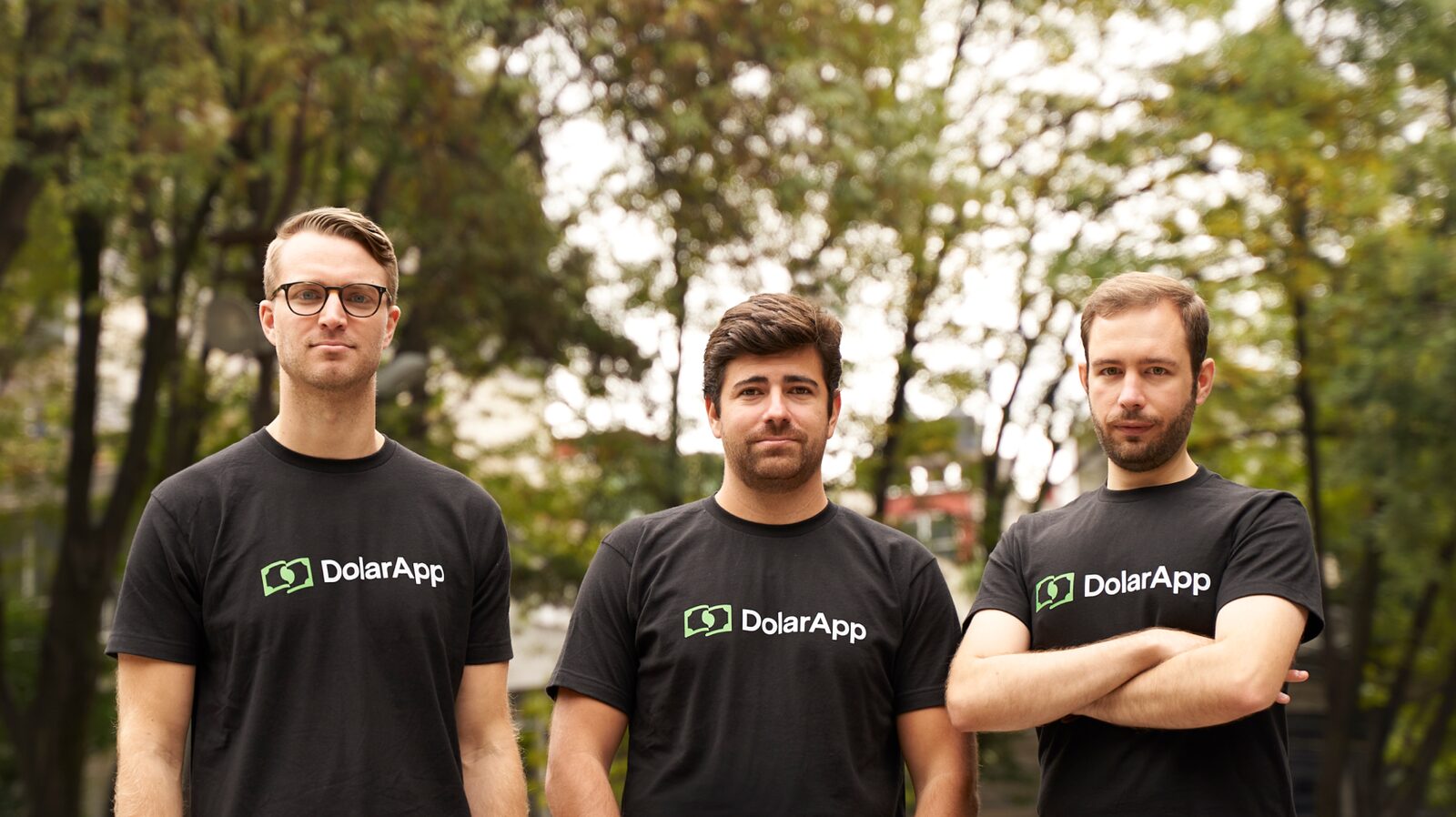
ARQ's founding team brought together Terrés, Álvaro Correa and Zach Garman. All three had worked at Revolut. Terrés became CEO; Correa took the chief operating role and Garman the chief product role. The company was founded in 2021 and joined Y Combinator's summer batch that year.
Kaszek's relationship with the business began when it was still called DolarApp and amounted to three founders and a PowerPoint deck. There is something reassuringly ordinary about that inventory. Even a business devoted to moving money across borders must begin with people trying to explain why another business ought to exist.
By September 2022, DolarApp had announced a $5 million seed round led by Kaszek and Y Combinator, with angel investors also participating. At that point, Terrés described operations with a small group of beta testers. The early proposition let customers exchange Mexican pesos for USDC, receive or send payments involving the United States, and use an international Mastercard. The practical unit of progress was a transaction someone could complete.
- 2016Engineering degree and final project at UPC
- 2021Co-founds DolarApp; YC Summer 2021
- 2022$5 million seed round announced
- 2026DolarApp becomes ARQ
The money must do something
The distinction between possessing dollars and using them became central to the company. A balance alone leaves a customer with further questions: how to spend it, how to receive earnings, how to connect it to the rest of life. An account that solves the first step still has work to do on the second.
At the Federal Reserve's Payments Innovation Conference in October 2025, Terrés described needs ranging from savings in Colombia to travel from Mexico and overseas payroll for an engineer in Buenos Aires. DolarApp was operating in Mexico, Argentina, Colombia and Brazil. His examples put different people, rather than a single technological use case, at the centre of the explanation.
He described combining local payment arrangements, card networks and blockchain infrastructure so the company could absorb the operational difficulty. His description sounded more like a kitchen mishap than a product strategy. It also makes a useful job description for anyone promising to make finance easier.
“swallow the complexity”
Fernando Terrés · Payments Innovation Conference, 2025
Reliability is part of the product
In an October 2022 appearance on the Fundadores podcast, Terrés discussed his Revolut experience, discovering crypto and the need for a solid financial product when handling other people's money. That last point deserves room. There is a difference between persuading someone to try an app and persuading someone to let it participate in payday.
The episode also covered fundraising and the strategies behind raising capital. But the reliability question gives the earlier conversation its staying power. Financial products get tested in the less theatrical parts of life: a payment arriving, a card working, an amount making sense. The customer has ample reason to prefer a dull success to an exciting explanation.
Two books appeared in the episode notes: Hans Rosling's Factfulness and W. Somerset Maugham's The Razor's Edge. A work about understanding the world through data beside a novel concerned with what makes a life meaningful: a pleasingly untidy pair for a founder's public reading list. The job may involve financial infrastructure. The bookshelf need not.
When the label became a constraint
The 2026 rebrand made the widening ambition explicit. In Mexico, ARQ's offering included digital dollars and euros, international payments, cards, investment tools and a credit offering featuring the Prestige metal card. Describing all that as DolarApp required the customer to look past the name almost as soon as they had learned it.
The financing announced alongside this period of change totalled $70 million, with Sequoia Capital and Founders Fund leading the investment. Terrés outlined plans to deepen customer relationships through more products, including wealth management, local currency accounts and credit. The significance lies in the intended relationship: more of the customer's financial activity passing through the same company.
Expanding the menu also expands the burden of explanation. Each additional product has to earn a reason to belong. A new name can make room for that work; it cannot perform the work itself. ARQ gives Terrés and his colleagues a wider canvas. Customers will judge the individual brushstrokes, which in this business arrive on a statement.
Customers reported by ARQ as the founders announced a wider brief for the company.
A founder's office, with the sleeves rolled up
Terrés's public search for a Founder's Office team in New York gives a more personal glimpse of how he wants the company to operate. He described work alongside him on product improvements, finance processes and fundraising. The remit crossed departments because the problems did.
His invitation included recent graduates, people early in careers at established firms, and founders whose venture-backed companies had failed. He asked for ambition, humility, attention to detail and a willingness to build things. Comfort with confrontation appeared among the requirements too. It was a candid advertisement for a demanding working relationship.
There is a revealing breadth to that hiring brief. The candidate could bring a distinguished employer or an unsuccessful company; the relevant question was what they could do next. For Terrés, the work ahead includes the unshowy machinery of a growing organisation as much as the products that get announced. A wider financial platform needs people who can make the internal processes keep pace.
DolarApp's first name made an immediate promise. ARQ leaves more of the sentence unwritten. Terrés has spent his career moving closer to the responsibility of completing it: from studying markets, to advising businesses, to running products, to putting his own company's name on the result. The useful question remains disarmingly concrete. What can the customer do now?