The trouble with calling your company DolarApp arrives when the dollar becomes only part of the conversation. A customer comes to move money across a border. Later, that same person wants to buy shares, earn a return, or pay for dinner without selling an investment. Suddenly, a perfectly serviceable name starts behaving like a very small apartment.
On March 2, 2026, DolarApp announced it was becoming ARQ. It reported more than two million customers; accompanying coverage put its annualized transaction volume above $10 billion. A $70 million financing backed by Sequoia Capital, Founders Fund, and Kaszek gave the expansion fresh capital. The interesting question was how much more of those customers’ financial lives it could earn.
- The opening: international payments and spending for Latin Americans with global lives.
- The expansion: investing, earnings accounts, and secured credit alongside the original account.
- The calculation: fees, reward caps, and collateral rules matter as much as the headline rate.
A name with a ceiling
ARQ’s founders, Fernando Terrés, Zach Garman, and Álvaro Correa, brought experience from Revolut. Terrés is CEO, Garman leads product, and Correa is COO. The company belongs to Y Combinator’s Summer 2021 batch, and a $5 million seed round led by Kaszek and YC was announced in 2022. Its expertise began with the awkward plumbing between local money and international financial life.
In their YC launch account, the founders described friends in Latin America facing inflation, obstacles to dollar saving, and expensive international spending. Those problems made a focused proposition attractive: receive money from abroad, hold digital dollars, and spend internationally through one app. You could understand the pitch before finishing the name.
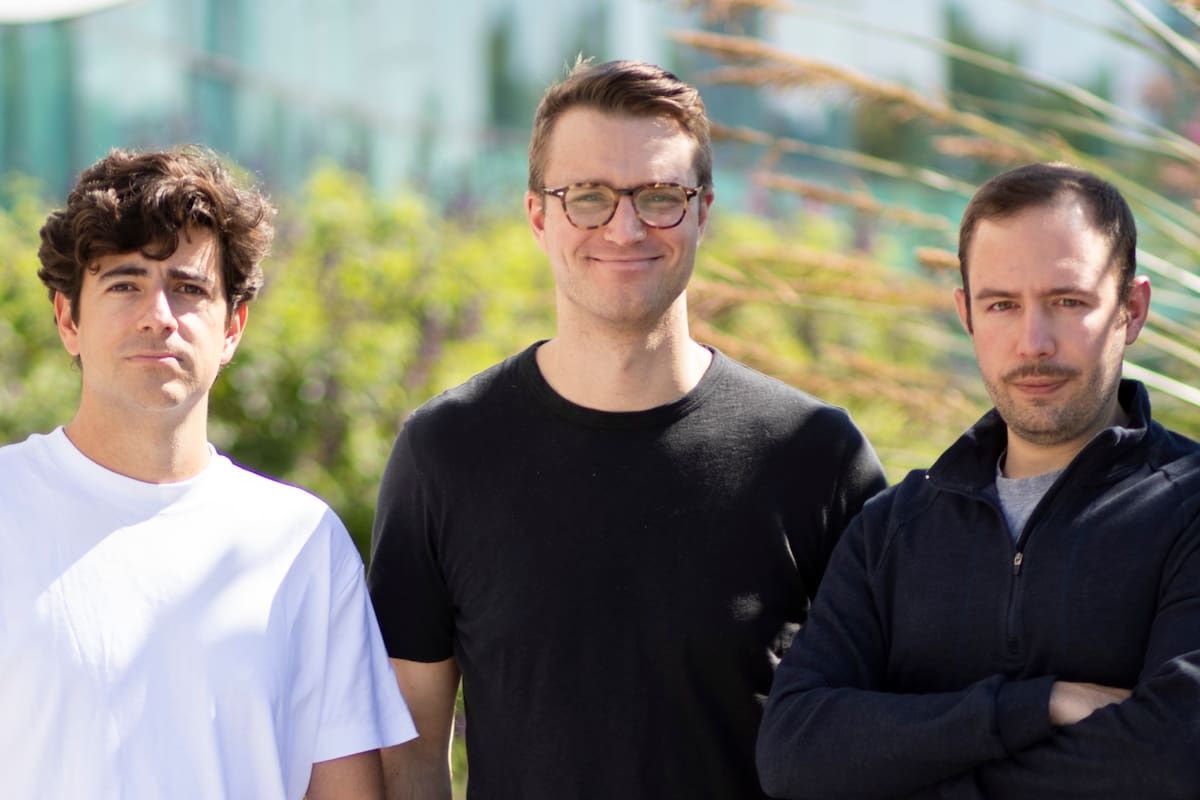
By the rebrand, the stated ambition had widened to everyday spending, investing, and credit. The founders said the old name had become too narrow. The documented turning point was a mismatch between the label and the intended offering. Customers updated the existing app; ARQ said accounts and legal entities continued. A new name did not mean starting everyone’s financial life again.
“Our name no longer reflects the scope of what we are building.”ARQ co-founders · March 2026 announcement
The small letter doing the heavy lifting
Consider a remote professional in Mexico paid by a US client. ARQ offers US account details for receiving payments, digital currency balances, and cards for spending. Its euro account details extend the idea to Europe. A traveler, freelancer, or investor can keep several financial tasks close together instead of treating every border crossing as a separate errand.
But the small “c” in USDc matters. ARQ describes USDc and EURc as virtual assets, not fiat currency. Its Mexico disclosures say incoming payments are converted into digital dollars or euros, and outgoing payments represent their sale. Bank-style account details are the access point; the underlying balance has different mechanics from an ordinary bank deposit.
Illustrative flow. Products and eligibility vary by country.
Investing adds another layer. ARQ’s investment account offers US stocks and ETFs, including fractional purchases from $1, through brokerage partner Alpaca Securities. The interface brings international assets within reach of an existing wallet customer. Brokerage protection does not make share prices safe: ARQ’s protection guidance explicitly distinguishes broker insolvency from market losses.
The metal card meets the calculator
The business model starts with a free account and adds selected transaction charges and paid memberships. Premium is advertised at 6.99 USDc monthly or 69.99 annually. Prestige, introduced in March 2026, is advertised at $199.99 annually, with a monthly option in Brazil. A subscription buys a package of allowances and benefits, rather than a universal escape from fees.
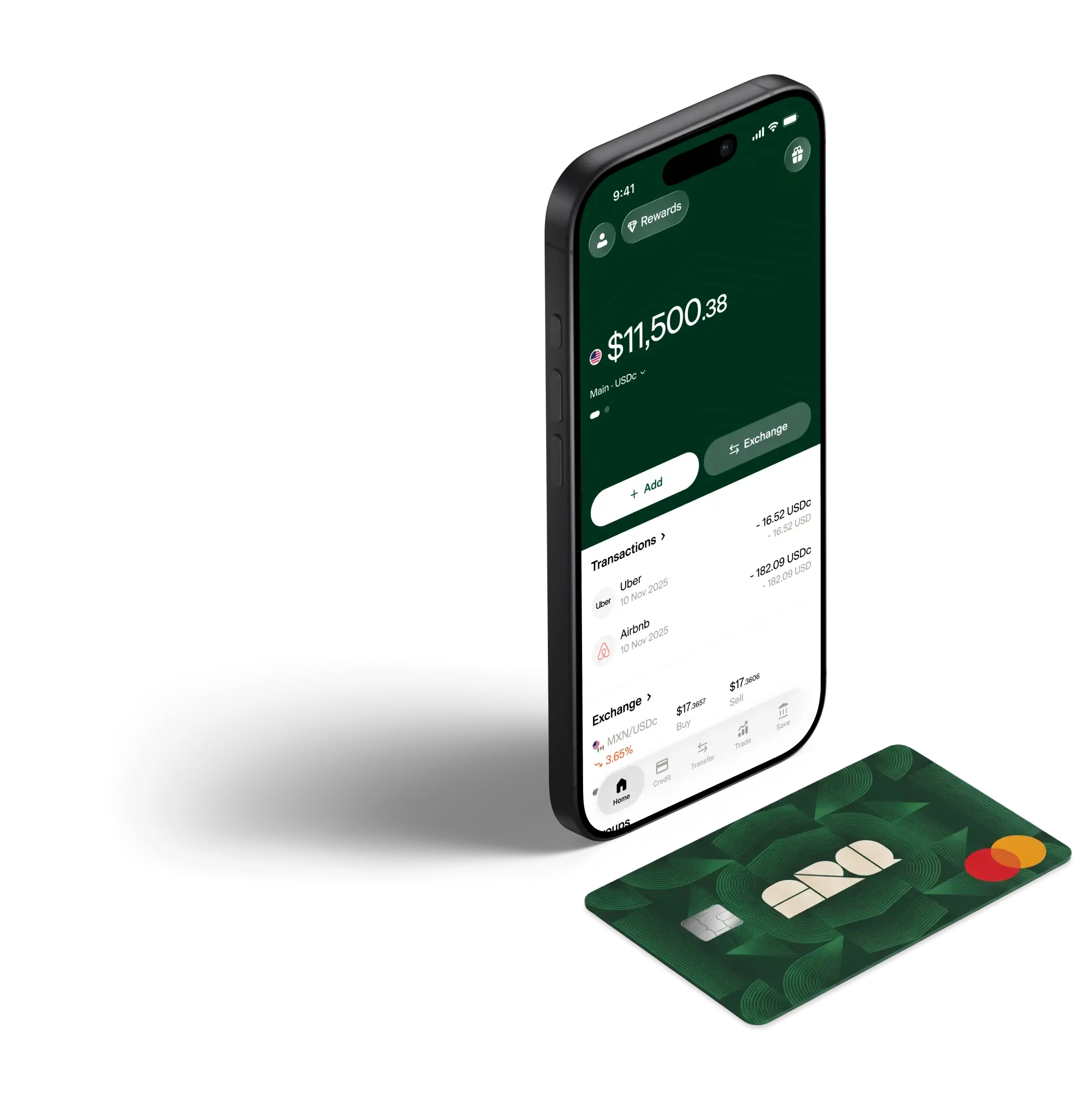
There is a useful way to shop this bundle: count the international transfers you actually make, the card spending you expect, and the balance you would keep anyway. Compare the annual subscription with those benefits after the caps. Paying for a better rate on money you would not otherwise hold can turn a tidy product feature into an expensive habit. The right membership depends on your existing routine.
The caps deserve attention. Prestige’s published 2% cashback applies to the first 500 USDc spent monthly, then drops to 0.5%. Its 4.5% annual USDc earnings rate applies to the first $2,000 in the earnings account, with 3.5% thereafter. Large balances and heavy spending therefore produce a different result from simply multiplying everything by the advertised headline percentage.
Investing has changed, too. From July 20, 2026, Standard-plan stock and ETF orders incurred a 0.2% conversion fee, with a 1 USDc minimum; Brazil followed on September 15. Premium and Prestige avoid that conversion charge. A $200 order therefore costs 1 USDc, or 0.5%. On a $2,000 order, the charge is 4 USDc. Small orders make the minimum conspicuous.
Same schedule. Different bite.
Standard-plan conversion cost as a share of order value. Calculated from ARQ’s published 0.2% fee and 1 USDc minimum.
Prestige credit has its own bargain: borrowing is backed by assets in Save and Trade accounts. Investments can remain invested while securing spending, but credit use can restrict withdrawals. Collateral can be liquidated under the applicable contract. Someone seeking unsecured borrowing, or immediate access to every invested dollar, should not mistake the attractive metal card for a solution to those needs.
The finance department wants in
ARQ Business takes the same border problem into companies. It offers digital currency treasury, international collections, bulk payouts, and corporate cards with spending controls. Its business page features testimonials from Kaszek, 99minutos, Tapi, Strike, and Rintin. Paying an overseas software bill or contractor is less glamorous than a holiday, but considerably more likely to recur.
The market position sits between international money services, banks, and investment platforms. Wise and Revolut are functional alternatives for parts of the journey; Brazilian global-account specialists such as Nomad and Avenue compete for related needs. ARQ’s case is the combination, aimed at mass-affluent consumers and businesses in Mexico, Argentina, Colombia, and Brazil. Eligibility and country coverage make comparisons personal.
Its hiring announcement listed seven cities, from New York to Krakow, and framed the work as building a financial institution for the long term. The transferable lesson is an interpretation of that journey: begin with a recurring inconvenience, earn repeat use, then expand into adjacent tasks. That approach depends on reliable execution and customers actually wanting the next product. ARQ has shortened its name. The relationship it is asking for has grown.