Consider the life of a hospital scan. First, somebody orders it. Then somebody takes it. Then it joins a queue. The picture may already contain something urgent, but the picture cannot summon a specialist. That requires people, software and a sequence of handoffs. Aidoc has spent much of its existence working on this peculiar gap between having information and using it.
- The job: flag suspected findings and connect the people who need to respond.
- The machinery: CARE supplies the model; aiOS puts applications into hospital workflows.
- The test: whether an alert changes the time to review, treatment or follow-up.
Aidoc reported deployment in nearly 2,000 hospitals in 2026. Its customers include Mercy, Sutter Health and Yale New Haven Health. Radiologists use its tools, but so do teams managing strokes, blood clots and vascular disease. The buyer is an institution with existing systems, established habits and very little appetite for another disconnected screen.
A good answer can still get stuck
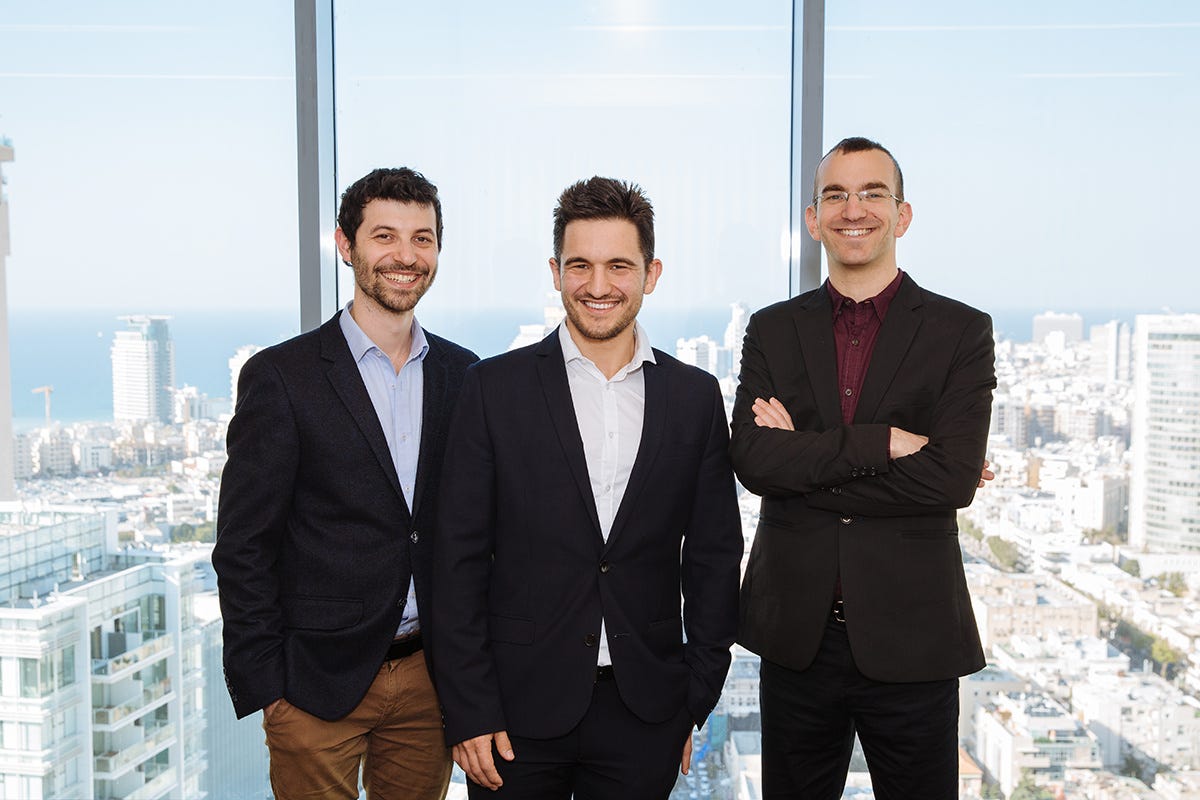
Elad Walach, Michael Braginsky and Guy Reiner started Aidoc in 2016. Their backgrounds included Israel’s Talpiot technology program. Their chosen problem was radiology: an abundance of images meeting a finite supply of expert attention. An algorithm that spotted a suspected brain bleed could help a radiologist find an urgent case sooner.
Then came the less photogenic problem. In Walach’s account of the company’s development, hospitals could not comfortably adopt AI disease by disease, stitching together vendor after vendor. The obstacle was integration friction. A collection of clever detectors could become a collection of separate obligations for the hospital buying them.
That recognition widened the product. Aidoc introduced aiOS in 2021 as an operating layer for imaging AI. It now connects applications with imaging archives, electronic records and clinical workflows. It can support third-party algorithms alongside Aidoc’s own. The expertise required stretches from image analysis to regulation, implementation and the mundane business of getting systems to talk.
The pulmonary embolism workflow makes the idea tangible. A clot in the lung may require several specialties to confer. Aidoc worked with Yale radiologists on software that flags suspected high-risk cases and notifies relevant clinicians simultaneously. Images, messages and patient information can travel together. The useful unit of work becomes a clinical response, extending beyond the highlighted spot on a scan.
- 01ScanExisting imaging workflow
- 02FlagSuspected finding identified
- 03ConnectRelevant clinicians notified
- 04ReviewTeam assesses and acts
One scan, a wider search
Aidoc’s newer bet is CARE, short for Clinical AI Reasoning Engine. A foundation model lets the company reuse learned representations across tasks, rather than build every application from scratch. The distinction matters to a hospital: broader coverage is easier to contemplate when it arrives through infrastructure already connected to its work.
In January 2026, Aidoc announced a CT triage workflow combining 11 newly cleared indications with three existing ones. The newly cleared set includes appendicitis, bowel obstruction and injuries to abdominal organs. Eleven additions might sound like a catalog update. Operationally, it means looking for more possible problems while the same examination passes through the system.
The regulatory language is deliberately narrower than the ambition. The FDA documentation describes a triage and notification device. Clinicians must review full images and use their judgment. An alert is a reason to look; its absence cannot certify that a patient is well.
The useful unit of work becomes a clinical response.YesPress analysis
Aidoc’s radiology materials describe a conference-reported pulmonary embolism result in which turnaround time fell from 58.8 to 34.5 minutes. That is a meaningful difference for the examined workflow. It is also a specific result, rather than a promise that every hospital will save the same amount of time.
The price of getting connected
This is enterprise software sold to hospitals. Aidoc’s AWS Marketplace listing offers one unusually concrete clue to the economics: a $6 pricing dimension per scan, per Aidoc algorithm, per hospital site. The offering requires a private offer, and infrastructure charges may apply. That line item is not a quote for installing the entire platform across a health system.
The company itself has required substantial capital. It announced a $110 million Series D in 2022. A $150 million financing package in July 2025 included a $40 million revolving credit facility. Hartford HealthCare, Mercy, Sutter Health and WellSpan participated alongside investors. Customers were helping finance the supplier.
Another $150 million arrived in April 2026, led by Growth Equity at Goldman Sachs Alternatives. Aidoc said total funding had exceeded $500 million. The money supports model development and wider deployment. It does not settle whether an individual hospital’s savings will exceed its contract, integration and ongoing operating costs.
Competition makes that distinction useful. Viz.ai and RapidAI also sell clinical AI and care-coordination platforms. Aidoc’s proposition combines broad imaging coverage, its own model and an operating layer for multiple applications. Buyers still have to compare the actual indications, integration requirements and local results. Calling something a platform is the start of that conversation.
Who owns the next step?
In August 2026, Aidoc and 12 U.S. health systems formed a Diagnostic AI Consortium to develop workflows and share evidence and implementation practices. Initial results are expected in 2027. Separately, qualifying inpatient use of CARE Body CT Multi-Triage became eligible for Medicare add-on payments from October 1, 2026. Payment eligibility helps adoption; it does not cover every patient or use.
The practical lesson is available to builders well outside medicine. Map the handoff. Name the person who responds. Measure the delay you remove. An institution without reliable integration, trained users or capacity to respond can receive excellent predictions and still accomplish little. Aidoc’s most interesting wager is that the work surrounding the answer can become a business worth buying.
Follow the work
Aidoc website ↗ · Company news ↗ · Blog ↗
LinkedIn ↗ · X ↗ · Facebook ↗ · More social profiles ↗
Watch: a clinician’s radiology workflow account ↗
Watch: Tom Valent on building clinical AI infrastructure ↗
Arrange a product demo ↗