The doctor who chose boardrooms over bedsides - and spent twenty years making impossible medical technology feel inevitable.
At RapidAI, the clinical-AI company headquartered in San Mateo, California, David Stoffel holds the title of Chief Business Officer. The title undersells the footprint. He runs marketing, customer retention and success, clinical affairs, training and education, corporate development, and finance - a stack of functions that most companies split among four or five executives. He took the seat in February 2023.
RapidAI is not a company that sells gadgets. It sells judgment, delivered by software. Its algorithms read CT and MRI scans of the brain and flag the patients most likely to benefit from urgent intervention - a large vessel occlusion, an intracranial hemorrhage, a stroke racing against the clock. The technology grew out of iSchemaView, and its imaging analysis sat at the center of the DAWN and DEFUSE trials, two studies published in the New England Journal of Medicine that changed how stroke gets treated. After those results landed, the treatment guidelines were rewritten inside a month.
That is the product Stoffel is responsible for commercializing. And his pitch is less about pixels than about people. He frames AI adoption as an organizational challenge rather than a technical one - the hospitals that get the most out of clinical AI are the ones that treat it as a strategic capability, not a plug-in. The software is the easy part. Getting a neurologist, an ER physician, an interventional radiologist, and a CFO to agree on what good looks like is the hard part. That is the work.
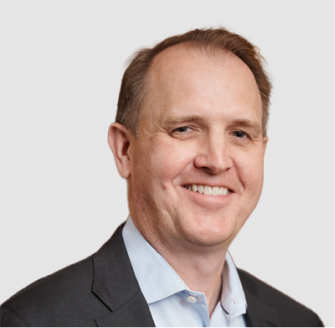
Look at where David Stoffel has spent the last two decades and a single thread pulls the whole thing together. Surgical robotics. Cardiac monitoring. Point-of-care EEG. Stroke AI. Different organs, different machines, the same dare: convince a clinician to hand part of a life-or-death decision to a device.
At Intuitive Surgical he led marketing and corporate development for the da Vinci system, the robot that turned keyhole surgery into a routine expectation rather than a novelty. At iRhythm he helped launch and lead the mobile cardiac telemetry business - a tiny patch that watches a heartbeat for two weeks and phones home when something is wrong. At Ceribell, as Chief Business Officer, he scaled a point-of-care EEG headband that lets an emergency team catch a seizure without waiting for a specialist. Now, at RapidAI, the machine reads the brain.
Four companies, four frontiers, one job description that never really changed: take a technology that sounds like science fiction and make it feel like the obvious choice.
Helped establish the da Vinci surgical robot as a new standard of care over a roughly ten-year run.
Helped launch and lead the mobile cardiac monitoring business - heart rhythms, watched remotely.
Scaled a point-of-care EEG solution that brings brain monitoring to the bedside.
Commercializing the stroke- and vascular-imaging AI used in hospitals worldwide.
Invested in and helped build early-stage healthcare companies for half a decade.
Started on Wall Street's healthcare desk before moving to the building side of the business.
Most operators start by building and end up investing. Stoffel ran it the other way - banking, then venture, then twenty years of his hands on the machine.
Associate in the healthcare division. The view from the money side.
Backing and building early-stage healthcare companies.
Leading marketing and business development as the da Vinci robot went mainstream.
VP of Mobile Cardiac Telemetry - a heartbeat, watched from afar.
Point-of-care EEG, brought to the bedside.
The brain, read by software - and sold to the hospitals that need it most.
Three degrees that explain three different vocabularies. He can talk to the clinician, the investor, and the customer without changing rooms.
RapidAI has put Stoffel in front of the camera at industry showcases and on healthcare podcasts, walking through what clinical AI actually changes inside a hospital.
▶ David Stoffel, MD - Rapid's Chief Business Officer ▶ ISC25 Interview - AI in Stroke CareHe holds a medical degree from one of the country's top programs - and built an entire career on the business side of medicine instead.
Banker, then venture investor, then operator. He moved toward the machine while most of his peers were moving away from it.
Robots, patches, headbands, algorithms - every product he has scaled asks a clinician to trust a device. He keeps placing the same wager.