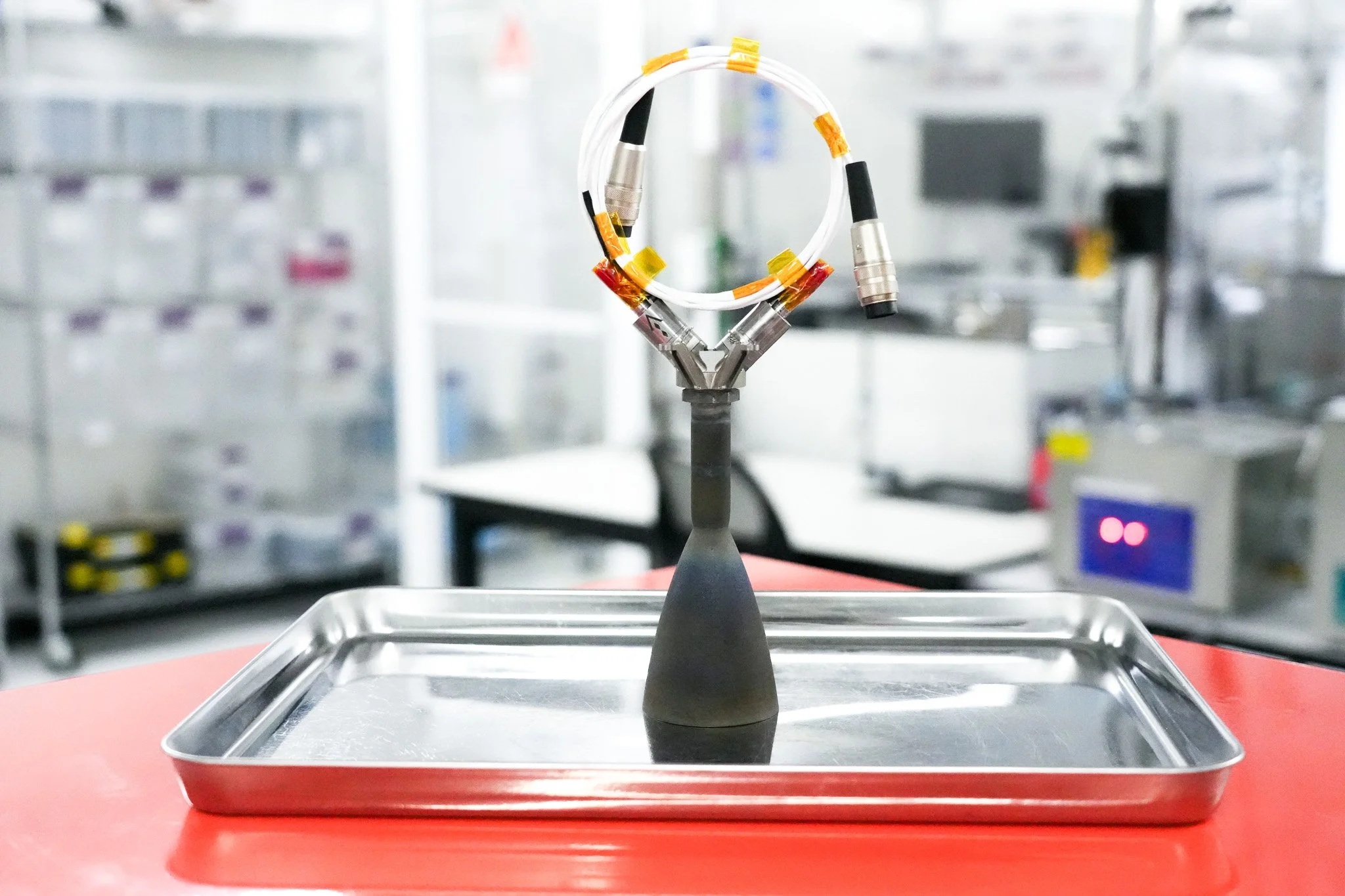
The awkward detail was where the engine had to live. The Exploration Company wanted thrusters inside the outer shell of Nyx, its European cargo capsule. Usually, a thruster can radiate heat into open space. Here, the spacecraft wrapped itself around the problem. Agile Space Industries was asked to design, manufacture, and hot-fire a first version within three months. It took ten weeks.
- Design, metal printing, and hot-fire testing within one company.
- Nyx thruster: first iteration demonstrated in ten weeks; qualification remained ahead.
- $17 million Series A in 2026 to expand production and testing.
- ispace replaced the planned lunar engine after development delays.
That result, announced in August 2025, offers a useful way into this Colorado company. Agile makes the equipment that lets spacecraft turn, reposition, and approach other vehicles after launch. The spectacle happens on the launchpad; the delicate business of getting somewhere useful continues long afterward.
The ten-week demonstration covered thrust, pulsing, longevity, and operation inside that enclosing shell. Qualification was still ahead. That distinction matters: a working prototype answers whether an idea deserves further investment. Flight qualification asks whether a mission can depend on it.
02The test stand came before the engine
Agile's history begins with Daudi Barnes and Advanced Mobile Propulsion Test, founded in 2009. The business tested engines for others. It received a NASA contract in 2010 and supported Missile Defense Agency thruster qualification in 2011. By 2014, it had performed thousands of tests for government and defense contractors.
In 2019, Barnes, Jeffrey Max, and Julian Miller established Agile Space Industries as a propulsion manufacturer. Testing became part of a larger business: design the engine, make it, fire it, inspect the evidence, revise. Acquiring metal-printing specialist Tronix3D in 2021 brought another important operation under company control.
This sequence makes the company interesting. It accumulated ways to measure engines before selling its own. Today, Agile reports more than 8,000 hot-fire tests. The test infrastructure is both a development tool and something customers can buy access to.
Test data feeds the next design. Flight qualification remains a separate milestone.
03A factory that sells answers, too
Metal additive manufacturing is central to Agile's thruster designs. Its Pennsylvania operation prints chambers, injectors, nozzles, and other structures; Durango adds machining, assembly, inspection, and testing. Keeping those operations within the company reduces the number of outside schedules a development program must negotiate.
The catalog spans small corrections and larger maneuvers. The M4 is a four-newton hydrazine thruster for small-spacecraft attitude and position control. The DS110 is a 110-newton bipropellant thruster for attitude control and changes in velocity. Piston tanks address another unglamorous problem: liquid propellant moving around during a maneuver.
Customers purchase hardware, custom engineering, and testing services. True Anomaly's Jackal program illustrates the breadth: Agile's announced work includes main engines, attitude-control thrusters, tanks, and fuel-handling support. Firefly buys testing for its Spectre engines. An engine supplier can earn business even when another company designed the engine.
There is evidence beyond Nyx for the development method. Agile designed, manufactured, tested, and delivered an experimental AX19 preburner for Sierra Space in 19 weeks. The component generates hot gas to drive engine pumps. It subsequently operated with Sierra's full engine during testing in 2023.
“Both Agile and True Anomaly are investing in the mission - it’s a true collaboration.”
Chris Pearson · April 2024 partnership announcement
04The lunar customer who changed course
The uncomfortable example is ispace-U.S. Its APEX 1.0 lunar lander originally planned to use Agile's A2200 engine. In May 2025, ispace said that engine could not arrive within the procurement schedule. The partners pivoted to VoidRunner, a simpler design with one-quarter as many individual parts, and moved the mission from 2026 to no earlier than 2027.
Then, in March 2026, ispace announced another change. Agile had reported delays demonstrating the engine efficiency required by the specifications. ispace chose an alternative supplier's engine with previous lunar-mission experience. Alongside a redesign combining its Japanese and American landers, it proposed moving its first U.S. mission to 2030, pending NASA approval.
The first problem was delivery timing; the subsequent problem was demonstrating required efficiency. Those are development setbacks, not evidence of an Agile engine causing a lunar crash. They show why fewer parts and faster prototypes cannot settle every procurement question. A buyer may value flight experience more than a new design’s potential.
05The bill for shortening the wait
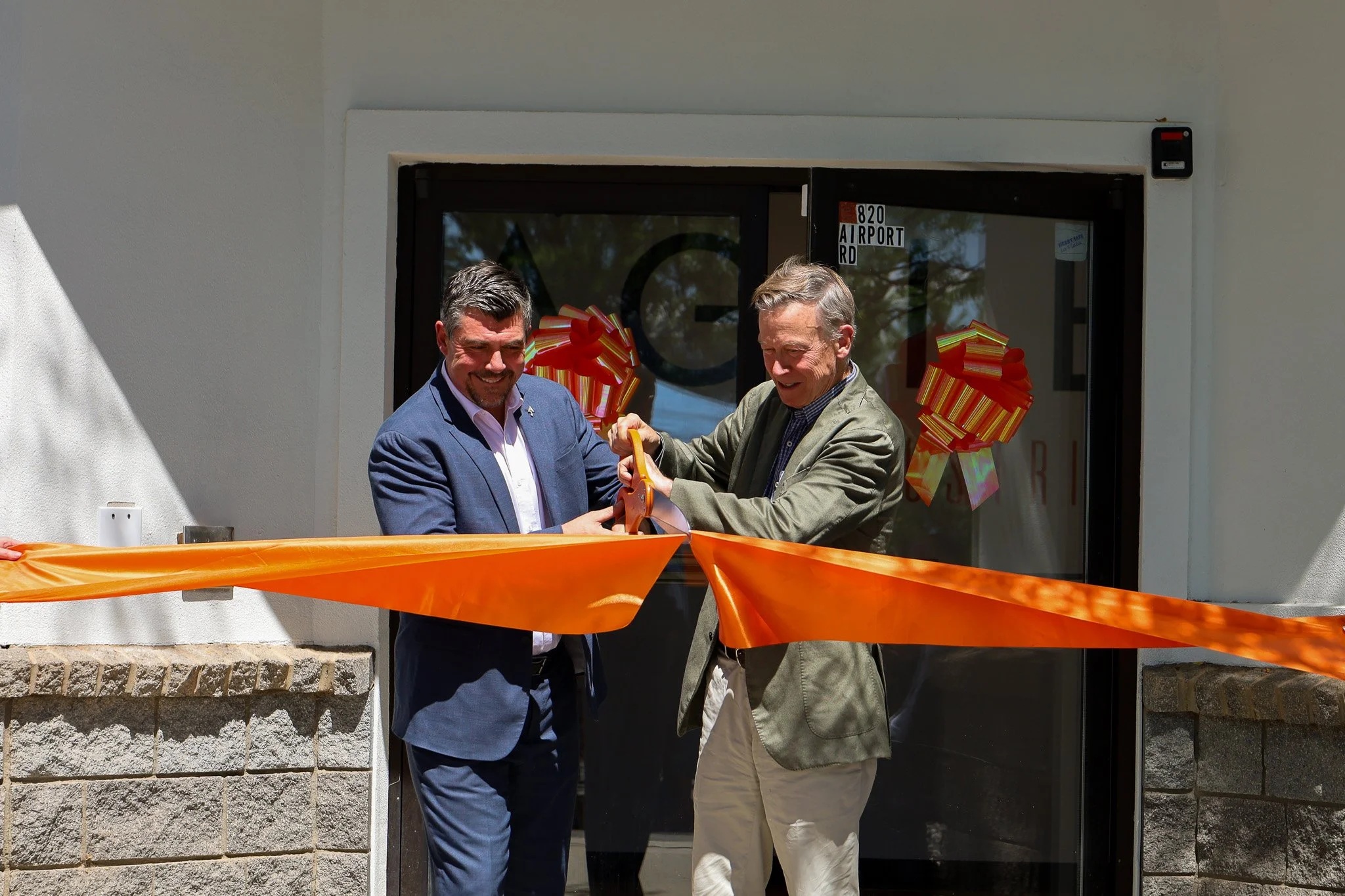
Agile raised a $13 million seed round in 2023, followed by a $17 million Series A announced in February 2026. Caruso Ventures and Howdy Partners led the latter; more than 70 percent came from existing investors. The company reported revenue had more than tripled and bookings had grown more than sixfold over roughly three years.
Capacity consumes money. Agile broke ground in January 2026 on an initial $20 million phase of its Tulsa Space Test Center. That is a facility investment, separate from the financing round. In Durango, a completed expansion brought headquarters to approximately 40,000 square feet. The September announcement counted 167 employees companywide, including 124 locally.
The expansion also makes room for inspection and planned vibration-testing capabilities. On October 5, Agile announced board and corporate-development appointments, and said SpaceWERX STRATFI selection supported its move toward complete propulsion subsystems.
February 2026
Groundbreaking: January 2026
Financing and project investment are separate figures, not a combined funding total.
06Copy the loop, question the clock
Agile competes with established suppliers such as L3Harris and ArianeGroup. Printing alone cannot distinguish it: L3Harris is also expanding additive production of in-space thrusters. Agile's proposition combines that manufacturing approach with accessible testing, customization, and a tight development loop. Buyers should compare qualification evidence and mission requirements alongside delivery estimates.
The transferable lesson: put the expensive experiment close to the people who can change its design. Measure early, and make the next version while the result is still useful. Agile's careers page promises employees work tested in weeks and lists more than fifteen office dogs on rotation.
For spacecraft teams, Agile offers a route from propulsion requirements to hardware and test data without assembling every capability themselves. That route is most persuasive when the customer needs rapid iteration and can accommodate qualification work. When the schedule leaves no room for unproven performance, ispace's decision supplies a rather expensive reminder to ask what has actually been demonstrated.
Follow the hardware
Visit Agile’s website, product catalog, news and engineering blog, and careers. Follow the company on LinkedIn, X, and Instagram.
↗ Watch: AX19 preburner testing with Sierra Space↗ Watch: Inside Agile’s propulsion operation