The pager went off in the middle of the night. Somewhere above the atmosphere, a military communications asset worth roughly $250 million demanded attention. Chris Pearson was early in his career, working on a large Ministry of Defence satellite program, and suddenly the romance of space had been edited down to a live problem, a ticking clock and the quality of the next question.
He remembers it as an unusually good first job. Pressure made people direct. The work required him to separate urgent facts from ambient noise, ask what mattered and make a decision before comfort arrived. Space hardware is unforgiving in a wonderfully clarifying way: once it is aloft, no one can stroll over with a screwdriver. Reliability ceases to be a value printed on a wall. It becomes the wall.
More than 25 years later, Pearson is still occupied with the machinery beyond easy reach. As chief executive of Agile Space Industries, he leads a Colorado company that designs, prints, assembles and hot-fire tests chemical-propulsion hardware. Launch may own the countdown, the plume and the applause. Agile works on what happens next - the burns that let a spacecraft change orbit, approach the Moon, rendezvous, evade or simply get where its mission requires.
Pearson’s career has moved through mission operations, spacecraft systems and components; through large organizations and small companies; through Britain, Europe and the American West. Its recurring subject is not invention alone. It is the awkward, absorbing business of making invention commercial: converting a clever device into something a customer can buy, qualify, receive and trust.
A mathematician takes the long route to the shop floor
Pearson grew up in the United Kingdom and studied mathematics at the University of Manchester. He then added a master’s in astronautics and space engineering at Cranfield University and another in control engineering at Imperial College London. Years later, after moving to Colorado, he completed an executive MBA at the University of Colorado Boulder. The sequence reads like a gradual widening of the aperture: equations, spacecraft, systems, then the organizations required to build them.
His operating experience widened in the same fashion. Senior roles at Airbus and Moog gave him the scale and habits of established aerospace. Smaller ventures supplied the opposite education: cash constraints, commercialization, hiring and the need to make a market notice. At ABSL Space Products, he helped grow a lithium-ion battery business before EnerSys acquired it in 2011. Surrey Satellite Technology US, another Colorado chapter, was later acquired by General Atomics. At Roccor, a maker of small-satellite components, he served as chief executive before Redwire acquired the company in 2020.
After that transaction, Pearson became Redwire’s executive vice president for critical components, overseeing divisions in Massachusetts and Luxembourg. It was a view across several kinds of space hardware and several corporate cultures. By late 2022, he planned to take a break. Then an adviser from one of his earlier startups pointed him toward a propulsion company in Durango.
The logos on business cards change but the core group of people you interact with over the years stays the same.Chris Pearson, recalling advice from a mentor
The proposition at Agile was familiar enough to be tempting. The company possessed deep test experience, had acquired metal-additive manufacturing capability and was qualifying its first engines. What it needed next was a commercial transition. Pearson saw talent, useful infrastructure and a category that had received less new-space attention than launch or electric propulsion. He joined as CEO in 2023.
The engine loses its pieces
Chemical propulsion is an old idea with newly urgent jobs. Electric systems can move spacecraft efficiently over time, but some missions need force now: a lunar landing, a rapid orbital change, a rendezvous or a defensive maneuver. Pearson’s case for Agile begins there, then moves quickly from orbital mechanics to manufacturing.
A traditional engine may contain 300 or 400 individual pieces. Each piece must be made, inspected, joined and tracked. Additive manufacturing changes the geometry of the problem. Instead of removing material until a complex form remains, a printer builds metal in layers. Internal channels and intricate shapes can become part of a single assembly. Pearson has said Agile can bring that traditional tally down to roughly 20 pieces, turning work that once took weeks or months into an assembly that may be completed in an afternoon.
Complexity, folded inward
A visual shorthand for Pearson’s manufacturing argument. Counts vary by engine; the comparison describes the traditional and additively manufactured assemblies he discussed publicly.
Part count is not glamorous, which may be precisely why it matters. Every eliminated joint removes a place to leak, a task on the assembly plan and an opportunity for delay. Printing also permits features that conventional machining struggles to produce. But a printed engine is not a finished argument. It must be fired.
The factory is a conversation
Agile began with propulsion testing. For about a decade, its people tested other organizations’ devices, building an intimate knowledge of hardware, users and qualification standards. The company later added propulsion design and metal printing. Put those capabilities together and the factory becomes less a line than a conversation: engineers draw, printers make, technicians assemble, test stands fire, and the result returns to the drawing.
In one example Pearson discussed in 2026, Agile designed and hot-fired a new propulsion engine within ten weeks. The point is not merely haste. Keeping these functions close shortens the distance between a failed assumption and a corrected design. It also eases a chronic industry bottleneck: access to test infrastructure.
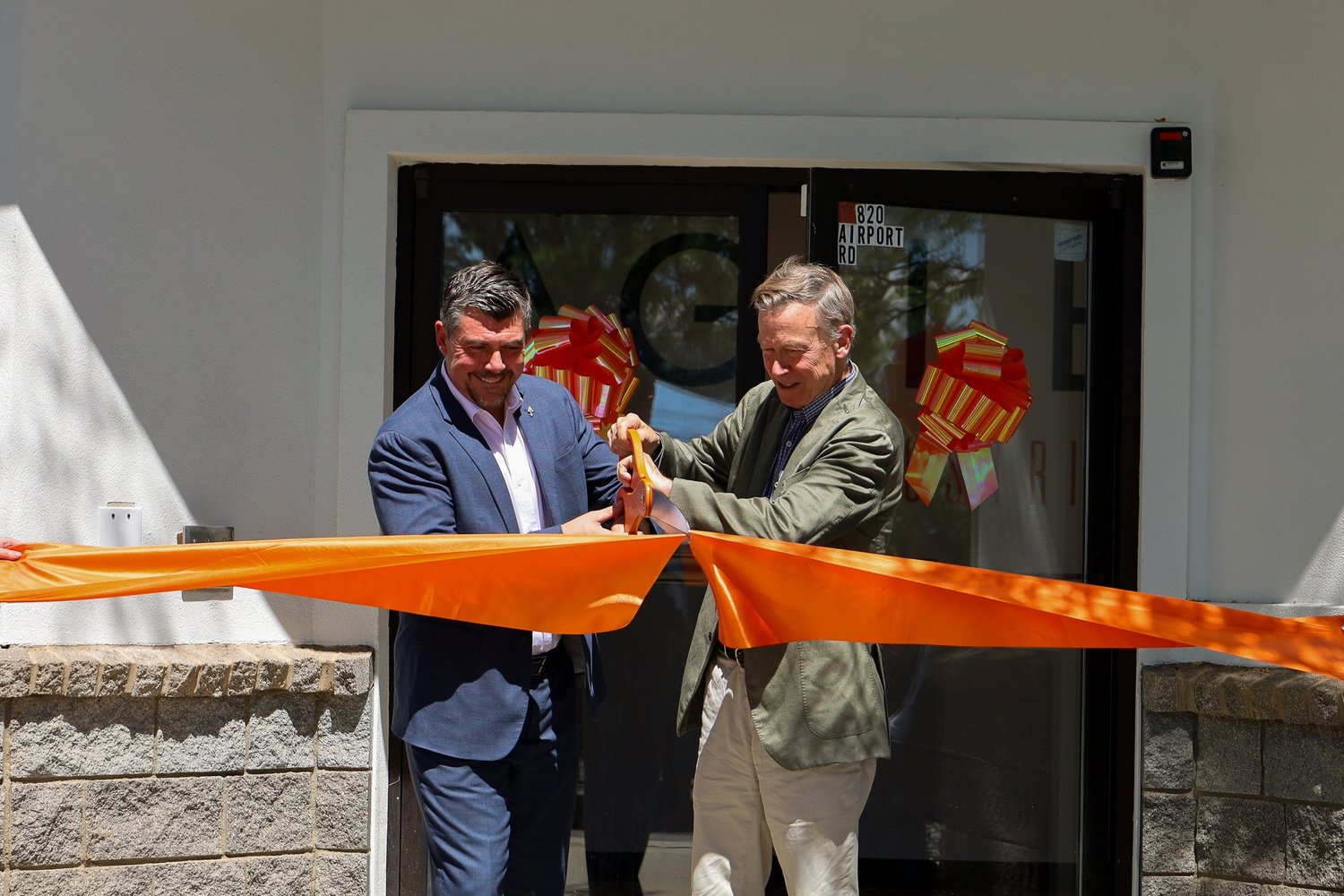
That bottleneck explains Agile’s planned Tulsa Space Test Center, next to Tulsa International Airport. The facility is intended to support government and commercial engine testing while helping build a regional workforce. Back in Durango, the company’s 2026 headquarters expansion added 20,500 square feet, bringing its combined office and manufacturing footprint to about 40,000 square feet. More room sounds prosaic until the room contains clean facilities, inspection equipment and the people responsible for flight hardware. Then square footage becomes schedule.
Scale, without the costume of certainty
The financial arc has steepened. Agile reported $8 million in 2022 revenue and expected roughly $15 million in 2023. In a March 2026 conversation, Pearson described $28 million in prior-year revenue, a $60 million backlog and an expectation of about $50 million in 2026 revenue. The company announced an oversubscribed $17 million Series A in February 2026. Pearson has framed the funding story as a mix of government programs, strategic investors, customer revenue and internal research spending, a combination intended to preserve both momentum and useful intellectual property.
Growth brings a less photogenic test than any flame plume: can a startup become a manufacturer without slowly embalming itself in process? Pearson speaks candidly about the cultural passage from a garage-like operation to repeatable production. Speed matters, but flight hardware punishes shortcuts. Process matters, but unchecked process can become analysis paralysis. The job is to add discipline while keeping the loop between maker, test stand and customer alive.
The beauty of now being an established supplier is that any future investment is at reduced risk. We are scaling up, not starting up.Chris Pearson
His skepticism about extravagant claims belongs to the same philosophy. Pearson has worried publicly that conspicuous business failures could tarnish the genuine promise of the space economy. The antidote is not modest language alone. It is transparent discussion of first-of-kind risk, evidence from testing and successful deliveries. When he arrived at Agile, his stated first priority was to repay customers’ faith with hardware.
The company’s ambitions now extend beyond individual thrusters. Agile is moving toward complete propulsion systems, including tanks, fueling support and launch-site logistics. It has been selected for lunar work and for propulsion on The Exploration Company’s Nyx cargo vehicle, which is targeting a mission to the International Space Station. The market Pearson describes is no longer only about placing an object in orbit. It is about what that object can do once it is there.
The intimate industry
For an industry measured in astronomical distance, Pearson’s account of space is strikingly close-up. A mentor told him that the logos change while the core people remain. He has watched that happen through acquisitions, executive roles and ventures that reassembled familiar experts beneath new names. Specialized knowledge is scarce. Trust accrues across programs. A supplier’s reputation may arrive in the room before its slide deck does.
Pearson became a naturalized American citizen in 2016 and lives in Boulder with his wife, two daughters and, as Agile’s biography cheerfully concedes, three badly behaved dogs. The line is a small puncture in the pressure vessel of an aerospace biography. At home, at least, not every moving object obeys control engineering.
The larger aspiration is plain. Pearson wants Agile to occupy more of the propulsion system, shorten the trip from design to verified hardware and build enough capacity for a busier, more maneuverable orbital economy. Yet his story still returns to the first lesson: when the valuable thing is already in motion and the hour is inconvenient, ask the right question. Then make the decision. The second burn cannot wait for applause.