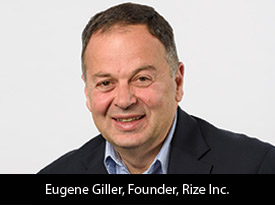
The useful question arrived before the polished machine. Eugene Giller had left Z Corporation, the Massachusetts company whose powder-bed printers helped give the young 3D-printing industry its vocabulary, and was working at home. In his attic, beginning in 2011, he returned to a problem that would occupy the next stretch of his career: a printer could lay down thermoplastic, certainly, but what if it could also place a second material exactly where that layer needed help?
The answer became a process in which an extrusion head deposits polymer while inkjet heads add other properties. One ink might color the part. Another might sit between the object and its temporary support, weakening that particular bond so the support can be peeled away. An image, warning, serial number, or wear indicator could become part of the object instead of a sticker applied afterward. Giller called the platform Augmented Polymer Deposition, or APD. The word augmented did a lot of work.
This was not a software founder discovering matter. Giller had been arguing with matter for years. He earned graduate degrees in chemical engineering at Moscow's Academy of Fine Chemical Technology and chemistry at the University of Manitoba. A former colleague at Teknor Apex remembered the breadth of his analytical and polymer knowledge, along with his careful reports. At Z Corporation, he worked on inkjet approaches to rapid manufacturing and prototyping. Patent filings bearing his name reach back to particulate materials activated by electromagnetic energy and to thermoplastic powder systems bonded with liquid.
The chemistry hiding inside convenience
Industrial technology is often sold through a pageant of speed, size, and resolution. Giller's work kept returning to what happened around the print. Supports are essential while an overhang is being built and an irritation once it is finished. Materials absorb moisture. Files arrive damaged. A strong part can still be a nuisance if it requires a chemical bath, a ventilated room, or an afternoon with pliers.
APD made the interface between support and part chemically negotiable. Put a release ink at that boundary and the same layers that must hold during printing can separate afterward. In demonstrations, supports popped away by hand. There is a faintly comic dignity in devoting sophisticated chemistry to making something easier to peel, but manufacturing lives or dies in such minutes. An engineer who needs a fixture cares about the fixture. The ritual required to free it from the printer is overhead.
Color, too, became more practical when treated as a material operation. A printed label can identify a tool. A warning can remain attached to the thing it warns about. Giller discussed burying an image inside a component so normal wear would eventually expose it, giving the user a visual cue to replace the part. This was color behaving less like lipstick and more like a dashboard light.
Color, in Giller's work, is not merely what the object wears. It is one more thing the object knows how to do.
A company assembled from the neighborhood
The attic idea became File2Part and then RIZE, founded at the end of 2013 and commonly dated to 2014. Giller recruited Tom Davidson, a former Z Corporation colleague, to help make the invention into a machine. The wider team drew heavily from veterans of Z Corporation and Objet. Giller had a geographic theory about this. When additive-manufacturing companies around Boston were acquired, he observed, many of their people stayed nearby. The company names traveled; the know-how remained in traffic on Route 128.
RIZE received $4 million in seed funding in late 2014 and worked in stealth. It emerged in 2016 with the RIZE One, an office-oriented industrial printer built around APD. Commercial shipments began in June 2017. A visitor to the Woburn operation that year saw the evolution standing in the lab: an early, boxy idea; a beta machine; a production unit intended to look at home beside ordinary office equipment.
The company initially emphasized functional parts, tooling, jigs, and fixtures. The RIZE One could put durable blue markings into parts. The XRIZE later extended the same platform into cyan, magenta, yellow, and black. In 2019, RIZE announced a $15 million Series B backed by four partners, including Dassault Systèmes. By 2021, Giller was describing four machines on the market and talking about collaborations that made customized figurines without requiring a small creative business to own industrial equipment.
He was also frank about the education supplied by paying customers. Once machines shipped, he said, the team learned where it needed to concentrate. Requests arrived for softer materials. The interface needed cleaning up. File repair had to improve. The romance of invention met the file that would not slice on Tuesday morning.
Giller briefly served as RIZE's president in 2017, after a leadership change, while remaining the technical founder. He also appeared on conference programs discussing voxel-level polymer modification and polymer materials. Those subjects reveal his preferred unit of attention. A voxel is the tiny three-dimensional counterpart of a pixel. Thinking at that scale means asking not only what the entire part is made from, but what a precise location inside it ought to be made from or marked with. The grand pitch for digital manufacturing came down to control over a very small address.
Powder, energy, and early patents
Giller appears on a Z Corporation patent family for producing objects from particulate material.
Polymer meets ink
The foundational patent family for printed polymer and ink layers takes shape; attic development follows.
RIZE leaves stealth and grows
The RIZE One ships, XRIZE adds full color, and the company raises its Series B.
The Palitra chapter
A smaller company carries the materials, services, support, and licensing work forward.
What survives a startup
RIZE did not become the global additive-manufacturing leader it once planned to be. By 2022, it was no longer operating. Palitra3D, founded in Wellesley in 2021, became the next chapter. Its offer was narrower and unusually concrete: help owners of RIZE machines, provide their software and firmware downloads, sell the familiar filaments, print full-color parts, develop composite materials, and license the underlying technology.
There is a temptation to make every second company a triumphant rebirth. Palitra is more interesting at its actual scale. It is listed as a team of two to ten. Its website speaks to stranded equipment owners in the direct language of a service desk. The founder who once spoke about global leadership was now preserving continuity one filament order and support request at a time. A machine company had become, in part, a promise not to abandon the machines.
The technical ambition did not disappear. Palitra describes durable composite thermoplastics, full-color printing, and materials designed to behave well even in humid conditions. Giller's public posts show commercial fixtures marked with instructions, a 3D interpretation of the Mona Lisa, and a pair of AI-generated tiger characters printed for comparison. The objects move freely between engineering and play, which may be the natural territory of a chemist who learned to put a palette inside a machine.
That range is not accidental. A colored topographic model can teach. A marked fixture can instruct. A customized figurine can turn a digital character into merchandise. Giller has argued that safe, low-emission printers should become common in schools, where the machine would be both workshop and visual aid. It is an aspiration with chemistry underneath it: classroom access depends on what a material emits, how much cleaning it demands, and whether an ungloved hand can remove the support without a secondary apparatus waiting nearby.
The prompt still has to become a thing
At the 2024 AMUG technical competition, Giller entered a Palitra project about artificial intelligence and 3D production. The team generated digital models, checked and sometimes repaired them, converted the files, added supports, sliced them in Palitra's OneTouch software, and printed them on XRIZE. The material was a glass-fiber composite based on a cyclic olefin polymer. CMYK inks supplied color. A release ink helped the support leave cleanly.
AI was the fashionable guest in this experiment, but the old concerns ran the house. Was the mesh sound? Could the software interpret it? Would the material bond? Would the support do its temporary job and then depart without a scene? A prompt might make a tiger in seconds. It still had to survive gravity.
That makes the project a neat summary of Giller's career. Digital tools keep accelerating. Physical objects continue to insist on chemistry, heat, adhesion, moisture, tolerances, and time. His work sits at that border. It asks a new idea to pass through an ordinary layer, then another, until it can be held.
The future arrives as a file. Engineering begins when the file meets matter.
Giller's public record is not a tidy hero's march. It is a sequence of formulations, patents, machines, capital, customers, a closure, and a smaller continuation. That unevenness gives the story its value. Companies are temporary arrangements. Useful technical questions can outlive them.
In Giller's case, the question has remained almost modest: what else can be placed in the layer? The answers accumulated. Strength. Release. A serial number. A patch of cyan. A warning. A hidden sign of wear. Finally, perhaps, the evidence that persistence itself can be printed - thinly, repeatedly, and with enough adhesion to hold.