At seventeen, Adriana C. Vazquez Ortiz went from Mexico City to Philadelphia for a summer of robotics. She spent a month at the University of Pennsylvania, trying out the sort of work that makes the future seem less like a distant promise and more like something with loose wires. Years later, when she returned to Penn for graduate school, the city already felt familiar. A summer excursion had quietly become a route back.
The return would eventually produce Lilu, the company she co-founded and now leads alongside Sujay Suresh Kumar. But the interesting part of her story happens before the title settles into place. There is a mathematics degree, a job in New York finance, a change of direction, and a series of experiments that kept asking for another attempt. Her route into entrepreneurship was gradual enough that she has described it as almost accidental.
A familiar city, a different assignment
She enrolled in Penn’s integrated product design master’s program in 2014. The attraction was its combination of business, design and technology. After working in software, she wanted to make physical things. A person can enjoy an intellectually demanding job and still wonder whether the work is taking her toward the life she wants. For Vazquez Ortiz, graduate school offered a practical way to explore that question.
Her earlier work had already crossed several boundaries. At BMW Car IT in Munich, she researched scheduling and online services for automotive applications. At Morgan Stanley, where she worked from 2011 to 2014, she built technology for corporate treasury. Later, at Farmivore, she worked on customer experience, web pages and packaging. A screen, a financial model and a box of produce present rather different design problems. All have someone on the receiving end.
That range matters to the way she talks about making things. A clever system still has to make sense to its user. The person operating it should not need to admire its technical sophistication before getting anything done. In an embedded-systems class at Penn, she watched a video of a soft robotic arm picking up fruit. The movement suggested an application for an idea she had been exploring. A classroom demonstration became a useful connection between research and a possible product.
The robot that changed its customer
Lilu was not her only experiment at Penn. She also worked on Cobi, an office robot intended to boost employee morale. The team initially thought startups would be the natural customers. Interviews through Penn’s I-Corps program changed that view: those businesses were the wrong size for what the team had in mind. Vazquez Ortiz was Cobi’s design engineer, learning how quickly a plausible audience can disappear once you actually talk to it.
It is an appealingly awkward lesson. Before an interview, a hypothetical customer can be wonderfully agreeable. They have the right budget, the right problem and no inconvenient questions. An actual customer has a calendar, an existing way of doing things and opinions of their own. Cobi’s team had to revise its assumptions. The exercise made listening part of the engineering work, with the power to change where the project went.
The same discipline runs through her account of Lilu’s early development. The team asked questions, made prototypes and asked people to try them. By her March 2017 retrospective, it had collected feedback from more than 1,000 mothers and experts and built dozens of prototypes. After graduation, the founders worked from Penn’s WeissTechHouse. The project had acquired a company name, but it still depended on people willing to point out what needed fixing.
A prize buys the next attempt
In April 2016, Lilu won Penn’s $50,000 iDesign Prize. The named team was Clementine Gilbert, Adriana Vazquez, Allie Looney and Sujay Suresh. Five finalists had emerged from 31 submissions. They pitched at Meyerson Hall to a jury drawn from design, entrepreneurship and venture capital. The prize supported launching a venture after graduation, making the transition from student project to business a little more possible.
There is a useful distinction between winning a competition and getting a product into someone’s hands. The first has an evening, a jury and a result. The second continues after everyone goes home. Suppliers must be found, designs refined and money raised. By 2019, Vazquez Ortiz described the journey from initial prototyping to production as almost three years. Hardware had supplied its own calendar, apparently without consulting the pitch deck.
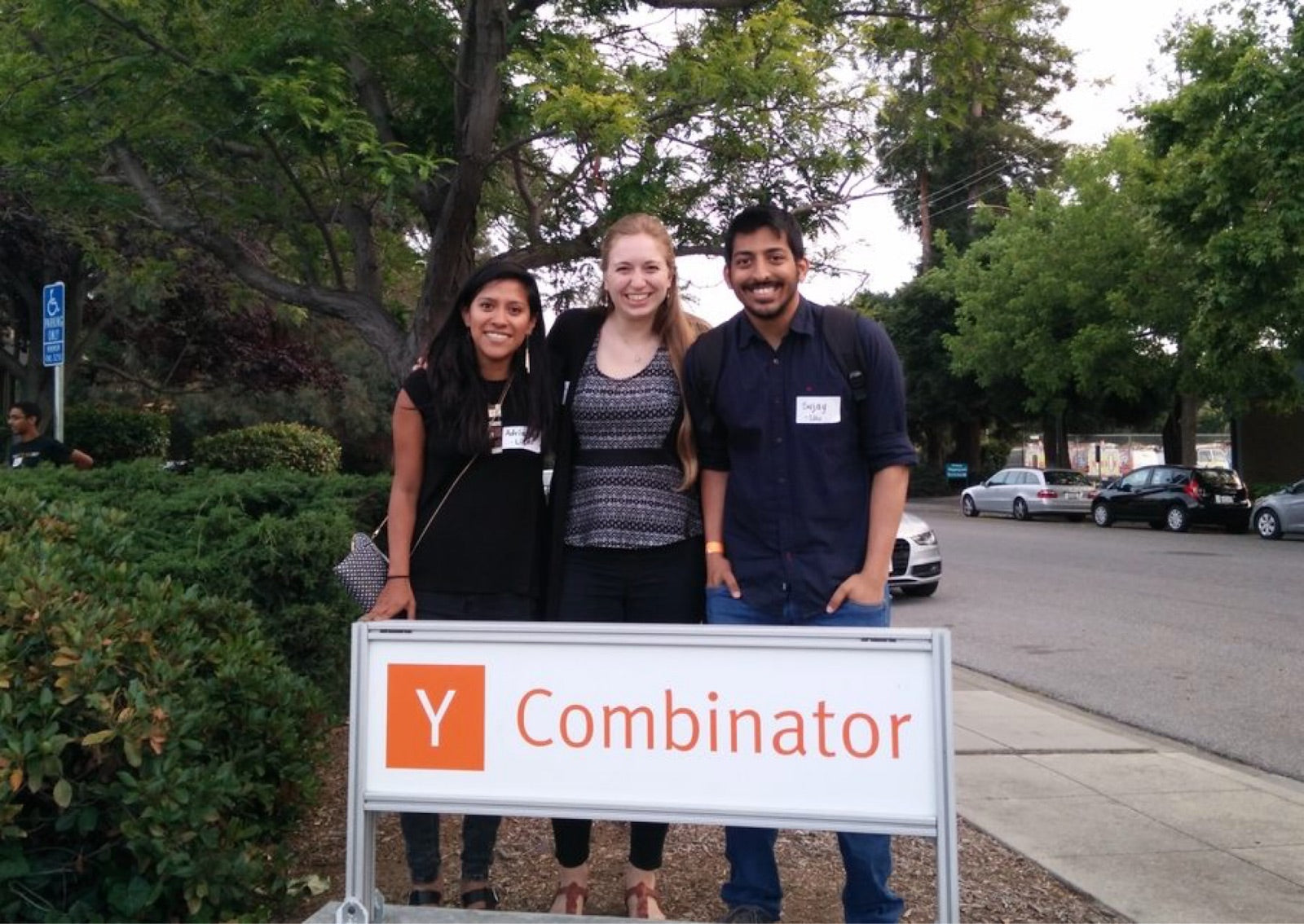
The company drew support from several places along the way. Its early network included the Y Combinator Fellowship, Dreamit and the National Science Foundation’s I-Corps program. HAX invested in 2017. These were distinct programs, arriving at different stages. Together they show a founder assembling the practical support needed to keep working. A grant or fellowship could make the next stretch possible without answering every question beyond it.
Six months is a usable horizon
In a Spanish-language conversation in 2021, Vazquez Ortiz recalled deciding with her collaborators to give the project six more months: finish prototypes, see whether they could secure financing, then reassess. The company advanced through successive commitments of that kind. It is a more manageable unit than a lifetime. Six months gives an experiment enough room to produce something and leaves a date on which to examine what happened.
That account also leaves room for the people who made the decision matter. Early participants had given the team time and candid feedback. She felt a responsibility to take their contributions seriously. Continuing became a response to that investment of attention. In a startup story, money is usually the resource that gets counted. The willingness of strangers to spend an afternoon on an unfinished idea can be just as consequential.
“I made a mistake, or I changed my mind”
A permission her parents taught her to give herself
Her approach to decisions includes permission to revise them. She has credited her parents with teaching her that changing course is valid. There is something generous in that advice for an ambitious student: a choice can be made carefully and still need changing. It makes a career less of an examination with one correct answer. It also fits a working life that has moved among software, research and physical products.
Two founders, plenty of questions
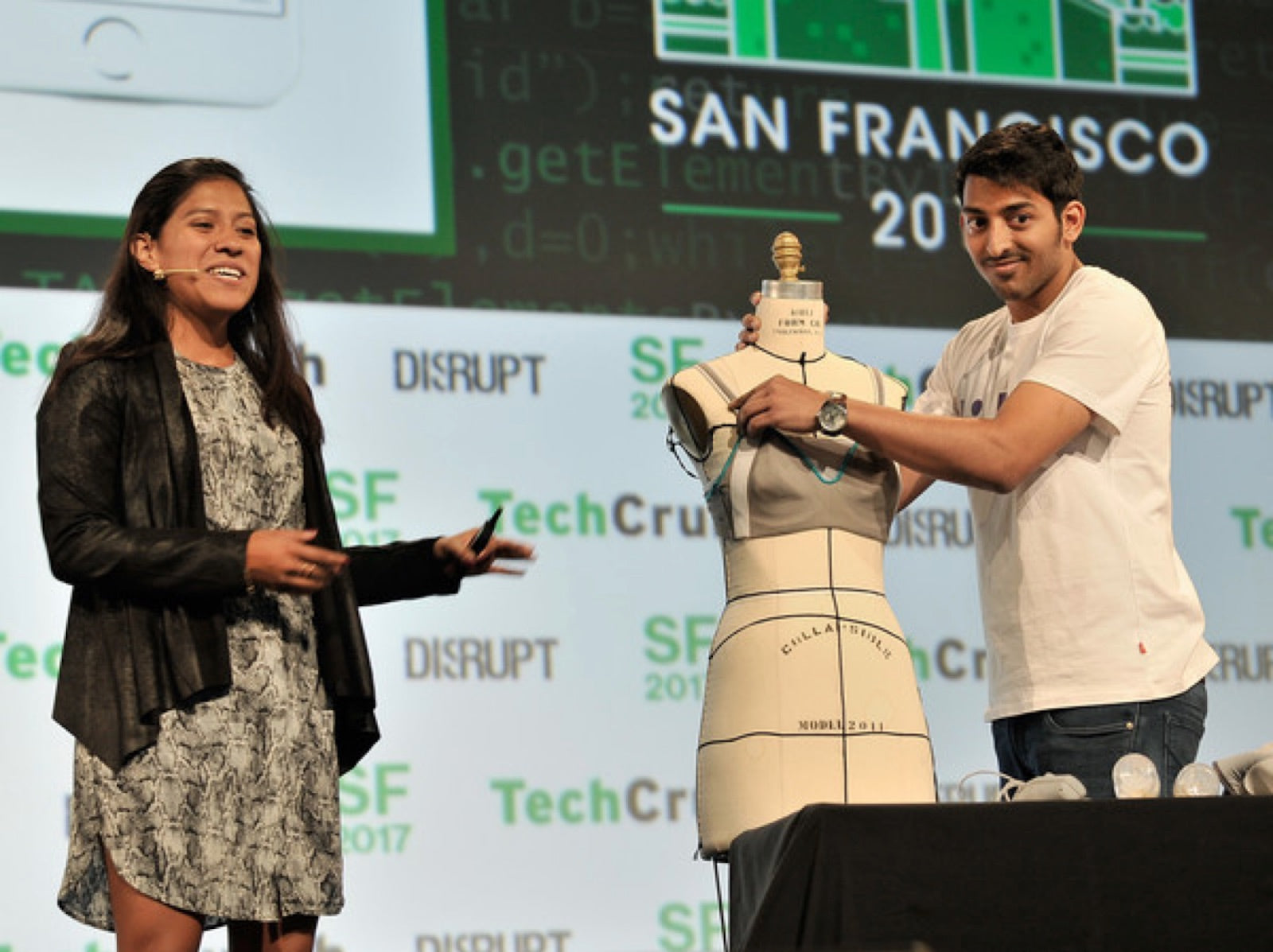
Vazquez Ortiz and Suresh Kumar met during graduate study at Penn, working together on robotics. She came from Mexico; he came from India. Their current account of the partnership emphasizes candor, questioning assumptions and testing ideas with users. It is a description of a working relationship rather than a ceremonial pairing of titles. Each brings technical experience, and neither gets to make an idea convincing simply by liking it.
Other people helped shape the work. Lilu’s early advisers included designer Angie Kim, supply-chain specialist Sharrie Lister-Booker and entrepreneur Kara Forney. The company now identifies that group as advisers from its earliest years. The distinction gives the history a human scale: people contribute at a particular moment, lend knowledge the founders need, and sometimes move on. A company’s network has a chronology of its own.
Her MIT friendships also became part of her support system. She has described college friends as early supporters and mentors, and met regularly with other women founders. Later, she took part in conversations for the next group of entrepreneurs, including a Penn-supported panel in September 2020 with Jessie Garcia and Peggy Robinson. The questions that once arrived across a classroom table were now being asked by an audience.
The chief email officer
For all the public speaking, she has described herself as introverted. Asked which book she would be, she chose House of Leaves, explaining that getting to know her takes time and patience. It is an unexpectedly literary answer to a business interview. Founders are regularly asked for an elevator pitch; she offered a book that gives its reader rather more work to do.
In a 2020 snapshot of her New York routine, she described cycling across the Brooklyn Bridge, a coffee-and-almond-croissant stop and time with a cat and dog. She preferred carrot cake to chocolate cake. Her assessment of her language skills was cheerfully qualified: she “kind of” spoke four languages. Her résumé supplies the less whimsical version: English and Spanish fluently, French and German conversationally.
Then there was the inbox. She joked that CEO meant “chief email officer,” and described aggressive filtering and the snooze button as tools for managing follow-ups. It is a small detail, but an apt one. Running a company includes explaining an idea onstage and remembering to write back on Tuesday. Her account makes room for the administrative work that a photograph of a founder holding a prize conveniently leaves outside the frame.
Still enrolling
The public milestones continued. HAX recognized her among the 2020 AnitaB.org PitcHER winners. Lilu later listed NSF SBIR support in 2021 and 2023. Her professional profile records an applied data science program in 2022, further study in efficient deep learning systems in 2023, and an AI Agents Fundamentals credential in February 2025. The subjects have changed since that first robotics summer. The habit of finding another thing to learn has persisted.
Her ambitions have included expanding Lilu’s team, products, sales channels and international reach. Those are substantial tasks, each containing smaller decisions about what to build and whom to work with. The teenager who spent a summer trying robotics could hardly have itemized all of them. She did, however, find a place she wanted to return to. Sometimes a month is enough to start a route. The next six months can take care of the next six months.