He spent his twenties learning how a billion phones get a signal and how a single circuit survives a particle collision. Then he built a company for an audience of one - the new mom.
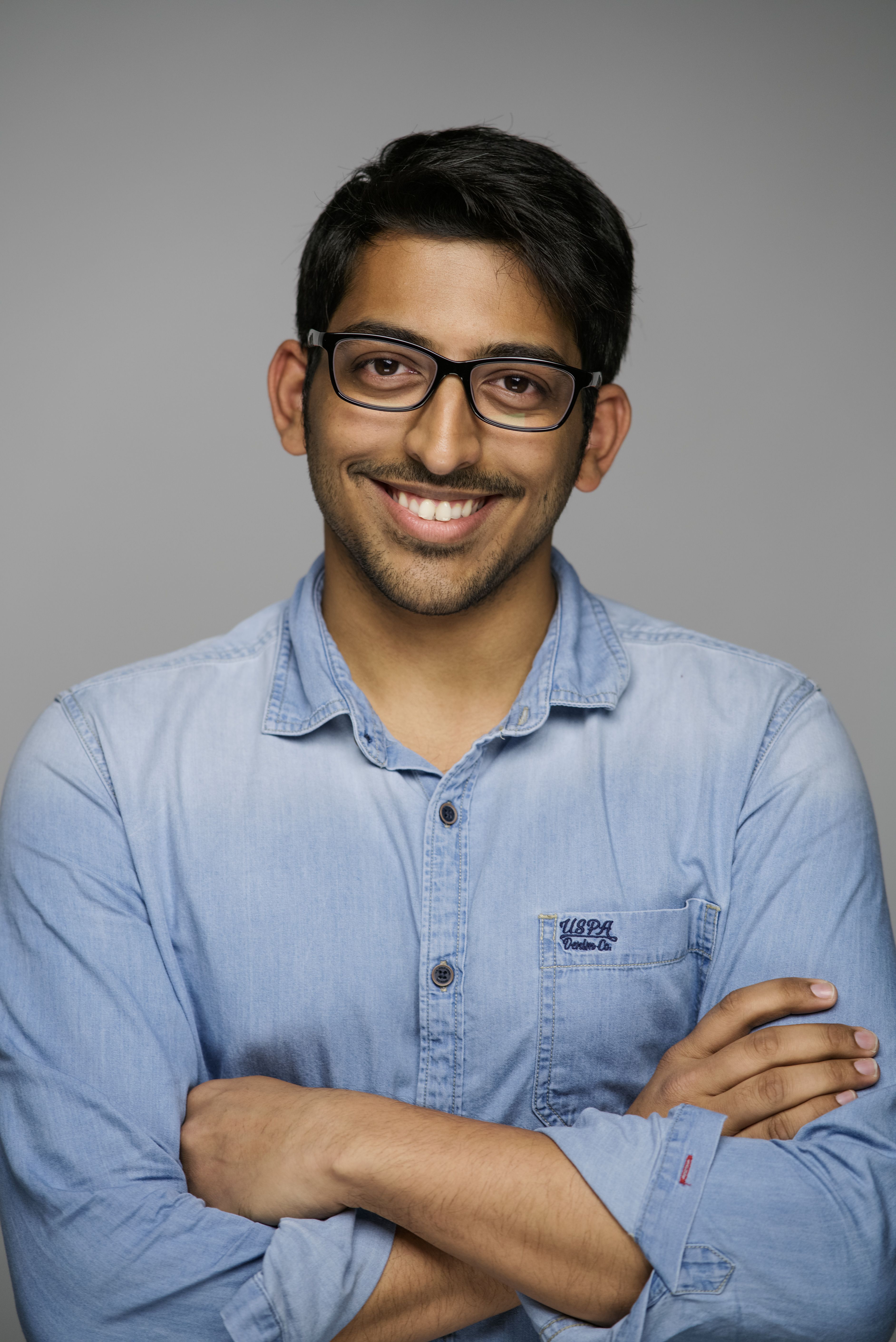
Today Sujay Suresh Kumar runs Lilu, a women's health hardware company headquartered in Brooklyn, where he is cofounder and co-CEO alongside Adriana Vazquez Ortiz. The company builds smart wearable products and software for new mothers, and Sujay owns the part most founders outsource and most engineers never see up close: turning a circuit diagram into a thing that ships in a box.
That is the through-line of his career. He likes the unglamorous middle - the gap between a clever idea and a finished product that someone unboxes at 3 a.m. Most of his stories happen there.
He earned a Master's in Electrical Engineering at the University of Pennsylvania. Inside the university's High Energy Physics Group, he designed circuits for the ATLAS experiment at CERN - the kind of electronics that have to keep their nerve next to one of the most violent environments humans have engineered. It is a long way from a wearable for new moms, and that distance is the whole point.
What connects the two is a habit: find the hard, overlooked problem, then do the homework nobody else bothered with.
Resilience. That's the biggest quality that I have.
Lilu did not begin with a pitch deck. It began with a robotics class at UPenn, where Sujay met Adriana Vazquez Ortiz. They were labmates. They built robots together because building robots together was fun, and the partnership outlasted the syllabus.
When they went looking for a real problem, they landed on one that was hiding in plain sight: the technology around breastfeeding and pumping had barely moved in decades. So they did what engineers who respect their users do. They asked.
They spoke with hundreds of mothers in person. They surveyed thousands more. They treated the lived experience of new parents as primary data, not an afterthought, and let that research shape the product instead of the other way around.
The result became Lilu - a company organized around a blunt mission the founders print plainly: build smart tech for new moms. Two engineers, one overlooked customer, and a refusal to accept that "this is just how it is" counts as an answer.
Sujay's job in the partnership skews to the hard edges of hardware: the wearable's guts, the firmware, the supply chain, the unforgiving distance between a prototype on a bench and a unit produced at scale.
It is the same instinct that took him to a physics lab and a telecom rollout. Find the thing everyone treats as solved, look closer, and discover it is not solved at all.
Most founder stories list the mission as a tagline. Sujay's mission predates his cap table. In India, before any of the Lilu story, he co-founded Jyothi, a nonprofit built to support survivors of harassment and assault. That is not a line you add to a deck to look good. It is a thing you do because you mean it.
Then came Reliance Jio, where he worked on the launch of 4G in India - a project measured not in users but in fractions of the population of a continent. After that, two years in Shenzhen, the manufacturing capital of the world, where ideas go to either survive contact with reality or quietly die.
Put those together and you get a founder who has seen scale from both ends: the billion-user rollout and the single-unit yield problem on a factory line. He knows what it costs to make one thing well, and what it costs to make a million.
So when Lilu set out to modernize the experience of new motherhood, it was not a marketing exercise. It was an engineering problem handed to someone who had spent a decade learning to respect engineering problems.
He built electronics rugged enough for a CERN experiment, then aimed that rigor at consumer wearables.
Two years living near the factory. Founders talk supply chains; he stood on the line.
A nonprofit for survivors in India came years before his first venture round.
Asked for his single greatest quality, he didn't hedge. He said resilience and moved on.
Off the clock, he sketches and builds small electronics projects. The hands never really stop.
Sujay on building consumer hardware for an audience the industry overlooked.
The pitch, in his own voice - resilience as a product strategy.