In April 2021, an invoice exposed an awkward assumption. The buyer had an Indian tax identification number. The delivery recipient did not. ERPNext’s validation treated that missing shipping detail as a reason to stop. Yet a developer checking Adaequare’s gateway found that its API accepted the arrangement. The business transaction made sense. The software surrounding it needed a correction.
- Adaequare engineers the connections between enterprise applications, data and business processes.
- Its work spans legacy modernization, analytics, governance and automation.
- The buying lesson: test an awkward real transaction before expanding the project.
A fix removing that shipping-address requirement was merged into ERPNext on April 2. This was an ERP validation problem, resolved in the open-source project. Adaequare’s role was the gateway against which the assumption could be tested. It is a small episode, but it gives this otherwise sprawling technology business a useful point of entry.
A business built between systems
Adaequare sells software engineering and IT services. Its menu includes cloud migration, application modernization, product development, testing, data engineering and process automation. The customers it describes include startups and technology companies, alongside businesses in retail, banking, manufacturing and e-commerce. Much of the work concerns systems already carrying a company’s daily load.
That makes its market rather different from the market for a single application. An enterprise can purchase a platform and still need someone to rebuild an old workflow, translate its data or test what happens at the boundary. Adaequare offers engineering across those boundaries. The practical unit of value is a business process that can finally run through them.
The company’s service summaries describe a large technology firm replacing a legacy Java workflow with a low-code or no-code application. Another describes moving a COBOL extraction, transformation and loading system to T-SQL. These are specific, slightly dusty jobs. They also explain why product engineering and modernization belong together here: changing the language is only useful if the required behavior survives.
The argument inside the dashboard
Adaequare’s data practice covers pipelines, business intelligence, master data management and governance. In its published project summaries, an unnamed property-data business received Looker applications intended to establish a common reporting foundation. A mortgage division’s project is described as rationalizing 80% of its Looker reports. That is the company’s reported result for one engagement, rather than a general promise.
The interesting possibility is subtraction. Reporting projects are often imagined as an exercise in adding visibility. A report-rationalization project asks whether the accumulated views are helping anyone see. For a buyer, that changes the brief: count the decisions a report supports before counting the dashboards a supplier can build.
Governance makes that question less abstract. Adaequare describes assigning owners and stewards to data assets, building centralized catalogs and training the people responsible for quality. Its explicit Collibra partnership supports that work. The proposition involves organizational responsibility as well as software configuration. A catalog can help locate a dataset; somebody must still answer for its meaning.
“equal to requirement”
Adaequare’s explanation of its name
That phrase supplies a useful standard for judging the whole business. A requirement can sound tiny: let this invoice through, reconcile these records, preserve this rule. Meeting it can reach across several systems. A supplier earns its place by understanding how far the requirement actually extends.
Software with a day job
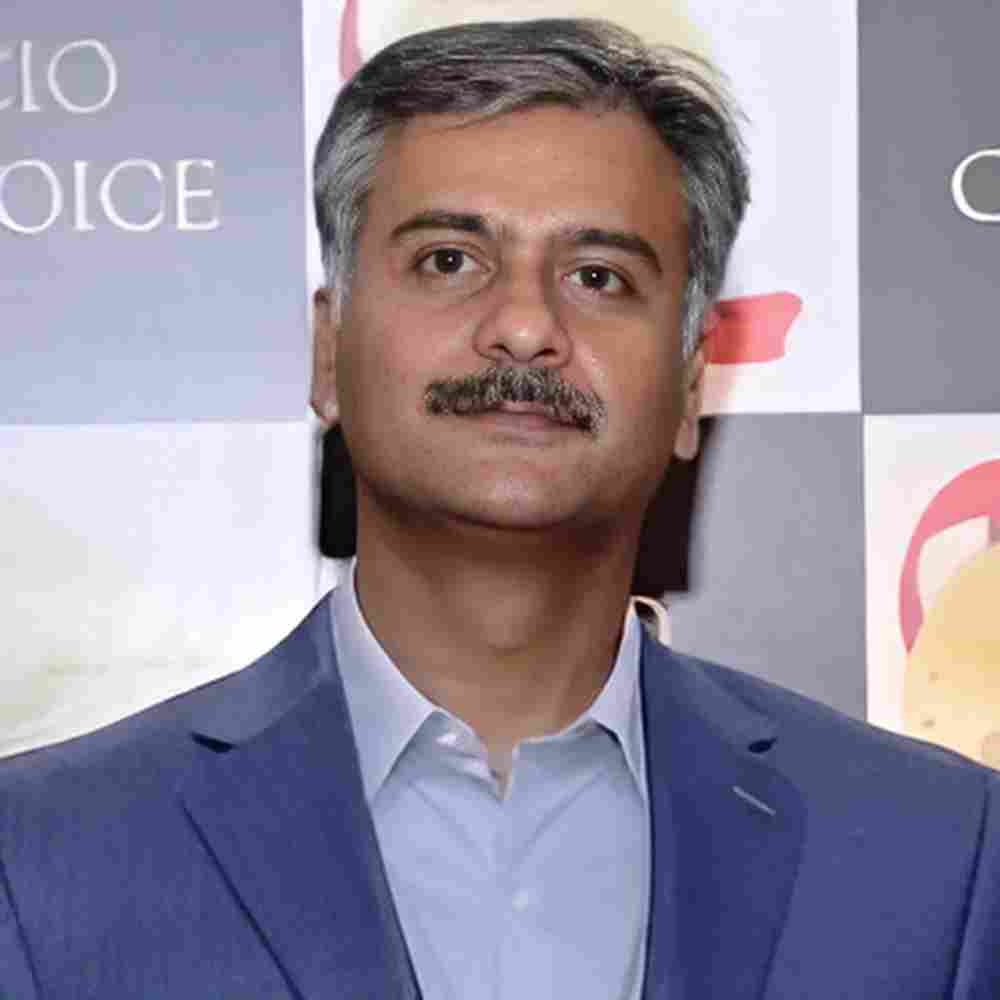
Pavan Peechara, identified by TiE Hyderabad as Adaequare’s founder and CEO, also appears in the organization’s product story. Adaequare lists Taxilla, Tracet, Udyog Software and Listany among its brands. Its brands page emphasizes engineering work on architecture, integrations, security, support and cloud optimization. Products give those engineering disciplines a recurring business setting.
Taxilla covers financial operations and regulatory technology. Tracet addresses fixed assets, IT assets and mobile auditing. Udyog’s e-way bill application, announced in January 2018, supported document validation and workflows involving consignments and transporters. These offerings make the company’s interests tangible: invoices, assets, reconciliations and the records that businesses must keep straight.
The current finance-services pitch extends toward agentic AI, combining automated data pipelines with software execution. Its proposed progression starts with a parallel run, moves toward people handling exceptions, and then expands software’s execution role. Policy, judgment and audit interaction remain human responsibilities. That division of labor matters more to a prospective customer than the fashionable vocabulary attached to it.
Buy the awkward test first
There are several ways to engage Adaequare: consulting, rapid prototyping, outcome-based projects, staff augmentation, process outsourcing and onshore-offshore delivery. These options place it alongside specialist engineering consultancies and broader IT services firms. Its differentiation rests on the combination of data, product and operational work; a buyer should evaluate that combination against a defined problem.
The 2021 implementation account by Tacten offers a rare concrete price: roughly ₹10,000 for a package of 20,000 annual API calls. That historical gateway charge covered access, rather than the full cost of implementing an enterprise workflow. Tacten also described documentation, Postman collections and a sandbox. The price of calls and the effort required to make useful calls are separate budget lines.
Gateway package reported in April 2021. Implementation cost was separate. This is historical context, not a current quote.
A practical brief follows from that distinction. Choose one troublesome process. Identify its owner, its current manual steps and the exceptions that consume time. Test a representative sample before expanding the scope. Ask how success will be measured and who maintains the result. This is editorial advice drawn from the integration example, rather than a claim about every Adaequare engagement.
The approach depends on access to real business rules and people able to resolve exceptions. Without them, a cleaner interface can preserve the same confusion. The shipping-address episode is worth remembering because its resolution was so precise: change the check that misrepresented the transaction. For a company called “equal to requirement,” that is a fitting place to begin.
Follow the work
Explore Adaequare, its project library and blog. Follow the company on LinkedIn, X and Facebook. Meet the products at Taxilla and Tracet.