A bookmaker can buy the same customer twice without noticing. One person opens accounts across several brands; an affiliate collects acquisition payments; the database records what look like separate arrivals. The marketing numbers look busy. The money leaves anyway. In a published case study, BizAcuity describes helping a British gaming company find those duplicates. The reported saving: approximately £80,000 a month. The useful question is how something so ordinary became so expensive.
- Builds the warehouses, pipelines and reports behind business decisions.
- Brings particular experience in gaming, alongside banking, events and telecom.
- Sells consulting and ongoing engineering, plus products such as GAMWIT.
The customer who kept arriving
BizAcuity’s answer began with names and addresses. Its team cleaned customer data, weighted biographical and demographic attributes, and tested text-mining techniques, machine-learning algorithms and fuzzy matching. The company reports 93.7% accuracy in identifying duplicate accounts. Suppressing the associated affiliate payments produced the monthly saving. This was a specific operational repair: establish whether two records describe one person before rewarding somebody for delivering a new one.
Reported affiliate-payment savings in BizAcuity’s bookmaker case study. A client result, not a guaranteed return.
That is a useful entrance to a company whose service menu includes much grander vocabulary. BizAcuity builds data architectures, business intelligence systems, cloud platforms and AI applications. Its recurring subject is the gap between possessing information and making it usable. Sometimes that gap contains a predictive model. Sometimes it contains two slightly different spellings of the same address.
First, agree on what happened
Founded in 2011 by Aditya Satyadev, Sudhir Pidugu and Nishant Jain, BizAcuity describes “acuity” as the ability to see fine detail. The founders’ backgrounds help explain its commercial focus. Sudhir previously worked at Infosys and Amazon. Nishant’s biography includes CFO experience at Bwin Party. Gaming is familiar operating territory here, with its mixture of customer behavior, acquisition spending and financial scrutiny.
The company lists Entain, Betfred, Mohegan Sun and Lottoland among its customers, alongside Recognise Bank, Encore and Tata Communications. Those names place it in the business of serving organizations with substantial existing systems. A casino, a bank and an events company have different questions, but each can have information scattered across software that was bought at different times for different jobs.
Consider its online-lottery case study. Marketing automation, web analytics, affiliate software and payment systems operated without a centralized warehouse. BizAcuity describes discovery workshops, architecture design, tool evaluation, automated extraction and transformation, and reporting organized around product, customer, campaign and web activity. It says the complete BI infrastructure was deployed in 14 weeks. Business users could then create their own reports, reducing dependence on IT.
the systems→02Reconcile
the records→03Use the
numbers
The repeatable idea is straightforward: choose the business questions, connect their inputs, and establish consistent definitions before multiplying dashboards. The payoff depends on usable source data and people willing to adopt the resulting process. Attractive charts cannot settle a disagreement over what counts as a customer.
When waiting becomes the problem
Another client, a global events company, had critical Tableau dashboards taking one to one-and-a-half minutes to respond. Nearly 1,500 business users accessed its reporting environment. BizAcuity tested behavior at different concurrency levels and examined processor, memory and input/output activity. The diagnosis covered dashboard design, extract queries, table structure, server configuration and infrastructure. The company reports bringing critical dashboard response times down to eight seconds.
Company-reported critical-dashboard response times. Bar lengths use the 90-second upper baseline.
The initial failure was usability under load. The response required looking beyond any single chart. There is a practical lesson for buyers here: test the experience people actually encounter, including concurrent use. A report that works during a demonstration can behave differently when the organization arrives.
The platform belongs to whom?
For a UK digital bank, the obstacle was control. BizAcuity’s case study describes a third-party arrangement that restricted platform access and introduced hidden service charges. Those constraints pushed the bank toward an internally managed platform. BizAcuity built around AWS, Snowflake and Power BI, integrating sources including nCino, Mambu, Google Analytics and MySQL. It reports a 30% cost reduction and wider access to operational information.
The cost question therefore includes ownership, permissions and ongoing operation. Consulting engagements also require implementation effort, platform spending and internal attention. BizAcuity offers managed services, engineering pods and staff augmentation alongside project delivery. Its Snowflake work includes query tuning, compute sizing and usage-aware architecture, giving clients ways to address expenditure after migration.
“seeing the fine details of the business”BizAcuity’s explanation of its name
These projects put it alongside specialist data consultancies, large systems integrators and clients’ own engineering teams. Its distinguishing emphasis is the combination of industry-specific problems with work across the full data stack. An enterprise can hire it to assess the architecture, build the pipelines, improve the reports and help operate the resulting environment. That breadth matters when the bottleneck moves between layers.
Experience, packaged
GAMWIT takes recurring gaming questions into a proprietary SaaS platform: which players may leave, how customer value may develop, where segmentation can improve, and which behavior warrants investigation. Its positioning combines predictive and visual analytics with risk and compliance use cases. That gives BizAcuity a product alongside its custom engineering practice. Buyers still need reliable inputs, suitable permissions and a clear action to follow a prediction.
Its product range also includes Maanav, an HR system built around WhatsApp interactions for attendance, leave and IT tickets. The connection to analytics is adoption: put a useful workflow somewhere people already know. On its careers page, employee accounts emphasize learning, progression and autonomy. The company also describes family insurance and sports activities among its benefits.
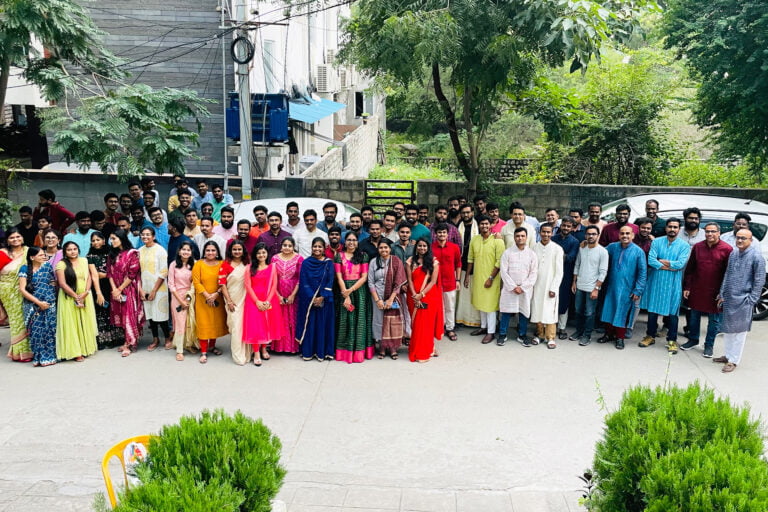
In November 2025, BizAcuity announced a TITAN Business Awards Gold result for a modern BI implementation. Its account of the winning work includes a holiday-calendar module for understanding seasonal demand. The detail fits: a calendar can be as consequential to a business decision as the technology presenting it.
BizAcuity occupies the space between platform vendors and the organizations trying to use their technology. Snowflake lists it as a Select partner; its own partner material also covers Microsoft, AWS, dbt and Vertica. Its stated vendor-agnostic approach means recommending technology around the client’s requirements. The proposition rests on implementation judgment, domain knowledge and continued support. For a prospective customer, a sensible starting point is one measurable leak: duplicate acquisition payments, slow reports or inaccessible data. Make that problem precise. Then ask what fixing it would change.
Keep exploring
BizAcuity website ↗ · GAMWIT ↗ · Maanav ↗
Company news · Blog · YouTube videos · Gaming analytics webinars