A child’s first baseball glove is a peculiar retail problem. Buy too much glove and you have paid for a commitment the child has not made. Buy too little and the first dropped catch becomes an equipment dispute. Somewhere between those outcomes sits Academy Sports + Outdoors, a retailer whose real specialty is selling people a reasonably priced way to begin.
- National brands and house labels share the basket.
- New stores lifted fiscal 2025 sales; comparable sales still declined.
- The next test: carry familiar-market economics into unfamiliar towns.
That makes Academy an interesting place to study ambition. The Katy, Texas, company reported $6.05 billion in fiscal 2025 sales. It sells fishing tackle, football cleats, camping tents, work boots and workout clothes. The assortment looks sprawling until you consider the customer: a household trying to equip several different versions of its weekend without making several different shopping trips.
The bargain that learned new tricks
The business began with something considerably less recreational. Max Gochman opened Academy Tire Shop in San Antonio in 1938 and added military surplus the following year. His son Arthur later bought a Houston surplus chain. The National Sporting Goods Association’s account describes Arthur’s calculation: former University of Texas students would recognize the Academy name from Austin and shop it in Houston.
Familiarity was useful merchandise. So was price. Arthur favored high sales volume and low prices, and introduced centralized distribution with daily shipments to stores. During the 1980s, the shelves gradually changed. Sporting goods displaced surplus; the company exited military surplus in 1991. A business organized around yesterday’s military equipment became one organized around next Saturday’s plans.
The distinction matters. Academy’s expertise grew around choosing, buying and moving an assortment that ordinary households would use. It did not require every shopper to identify as an athlete. Someone buying a cooler for a tailgate and someone buying fishing line could justify the same trip.
The customer’s hobby can change faster than the family budget.
One basket, several budgets
Walk through the commercial logic. Recognizable brands make the selection credible. Private labels make more of the price ladder available. Academy’s portfolio includes Magellan Outdoors, BCG, Game Winner and Outdoor Gourmet. In fiscal 2024, private brands accounted for approximately 23% of merchandise sales; about 52% of customers bought one. Those figures describe a substantial part of the shopping experience.
A retailer with its own labels can fill gaps that national suppliers leave. Academy says its private products generally sit below national-brand price points. A shopper can compare alternatives in the same visit. The company earns a merchandise margin either way, while its house brands give it more say over what a lower-priced option looks like.
There is a catch: beginners sometimes become enthusiasts. In September 2026, CEO Steve Lawrence described the opportunity Academy had missed when its assortment leaned too heavily toward entry-level products. Customers seeking more advanced equipment had reasons to shop elsewhere. Keeping their business meant adding products further up the price ladder.
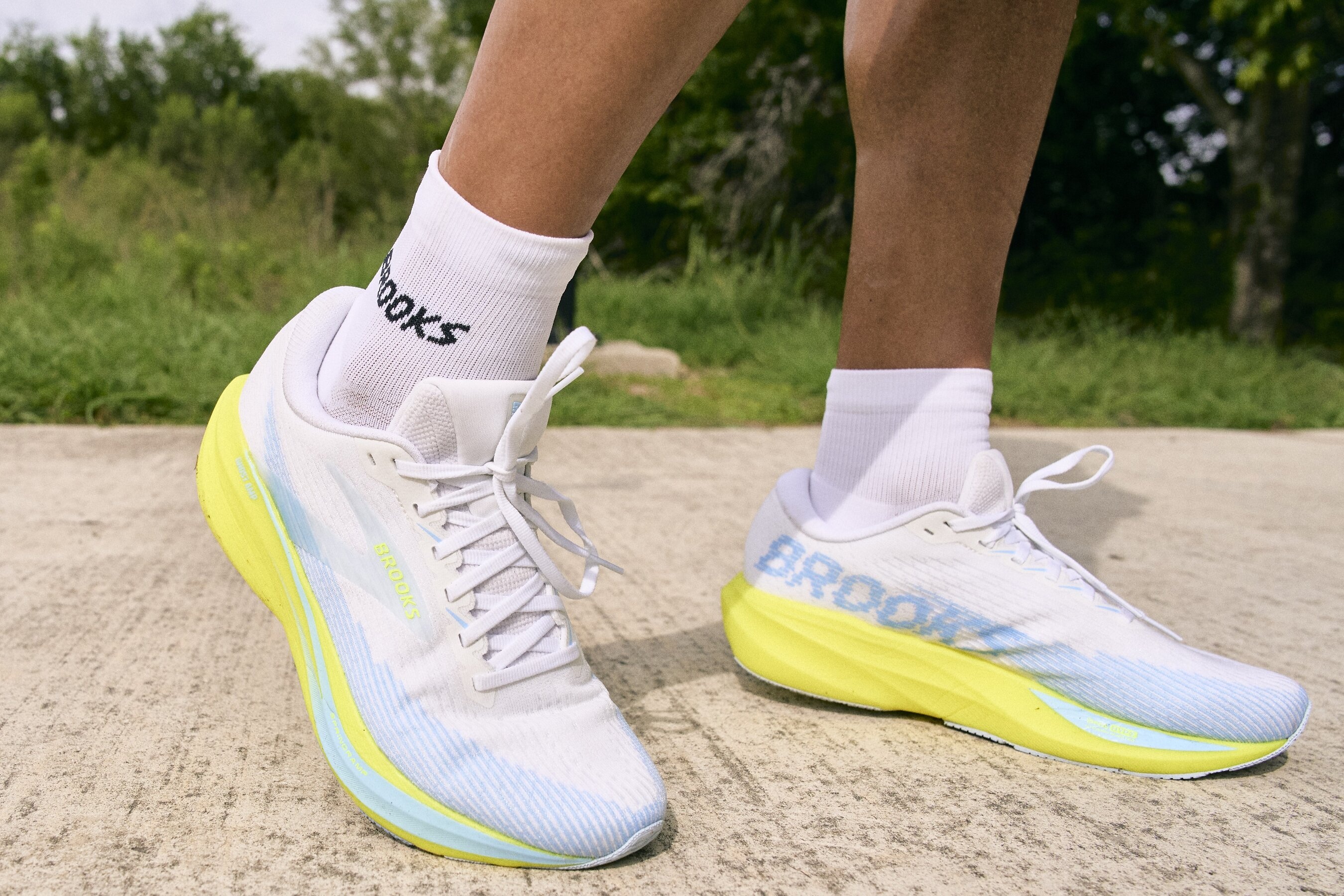
Hoka offers a concrete example. Academy announced a launch in 15 stores and online for early October 2026. That is a selective opening, rather than an assumption that every location needs identical shelves. The lesson for another merchant is practical: stock the next thing your customer will want, while keeping the affordable starting point that brought them through the door.
Academy consequently overlaps several markets. Dick’s Sporting Goods competes for athletic purchases. Bass Pro Shops and Cabela’s compete for outdoor spending. Walmart and Amazon compete on everyday merchandise and convenience. Academy’s particular proposition combines those trips, with local assortment decisions helping determine which activities get the space.
The price of another pin on the map
Convenience requires proximity, and proximity costs money. Academy’s fiscal 2025 investor materials set new-store targets of $12 million to $16 million in first-year sales against $4 million to $5 million in spending per store, including inventory. These are company targets. They are neither a guaranteed return nor a complete account of a location’s lifetime rent, payroll and replenishment bills.
including inventory
in year one
Investment and revenue measure different things. Neither figure is store profit.
Geography complicates the arithmetic. At its 2026 analyst event, management contrasted an Atlanta-area store’s roughly $10 million first year with more than $16 million at Searcy, Arkansas. The smaller city was a closer fit with Academy’s core customer. A bigger metropolitan address did not automatically deliver a better business.
Academy also moderated its expansion pace. Management’s earlier model contemplated 30 to 35 openings in 2025; the subsequent plan called for 20 to 25. It ultimately opened 24. The adjustment illustrates where the expansion assumptions met friction: customers in unfamiliar markets needed time to recognize the name, and opening more doors could not substitute for making each location productive.
Separate tracks show direction and magnitude, not a shared zero axis. New openings contribute to total sales before joining the comparable base.
Read the results accordingly. Fiscal 2025 revenue grew 2%, while comparable sales fell 1.5%. Expansion added business, but underlying demand remained harder work. By fiscal second-quarter 2026, Academy reported 327 stores and 3% sales growth, alongside a 0.4% comparable-sales decline. A chain can get bigger while still working to persuade existing customers to spend more.
The next sale starts outside
The company is also pursuing occasions, not merely addresses. Academy and Brooks supported a Houston community run in September 2026. On October 21, Academy announced a multiyear HYROX North America partnership, building on its Centr training-equipment relationship. Planned race-city activations connect the products on the shelf with people actually using them.
That connection offers a useful test for the whole business. The strategy needs customers with money to spend, stores close enough to matter and inventory suited to local activities. Weak household budgets or unfamiliar locations can upset the calculation. What another operator can copy is the discipline: give people an accessible beginning, notice when they outgrow it, and measure whether they return. The next glove should have a customer waiting.
Follow the next weekend
Shop Academy Explore Magellan Outdoors Company news Expert advice
Social & videoLinkedIn X Instagram Facebook YouTube Watch: Magellan Ice Box demo Watch: Magellan boot review