A repair begins with something ordinary: a dripping tap, a cold radiator, a resident trying to explain what has gone wrong. The administrative journey can be rather less ordinary. Someone must identify the home, check its history, decide what is urgent, find a contractor and keep the resident informed. Aareon UK sells the software behind that journey. Its most interesting promise is to make fewer people repeat the same work.
The company supplies housing management systems and digital services to housing associations, councils and property businesses. Its current website counts more than 250 social housing providers. These are organisational buyers with rent accounts, maintenance programmes and residents to look after. The software sits close to the daily business of being a landlord, where a missing update can matter more than a handsome dashboard.
One supplier, three ways forward
For years, Aareon UK’s name was closely associated with QL, its established housing management system. Acquisitions in 2025 brought HomeMaster, ActiveH, Housing Online and Help me Fix into the portfolio. In March 2026, UK managing director Rachael Baig explained the resulting choice: QL, HomeMaster and ActiveH Web would continue. Existing customers could modernise at a pace suited to their operations.
That creates an unusual sales conversation. A supplier can recommend retaining a familiar system, changing how it is hosted or moving to another product it owns. It also gives customers a question worth asking: which route solves their particular problem, and how much disruption comes with it?
HomeMaster combines rents, repairs, customer records and communications, with an optional finance module. It is delivered as SaaS, with hosting, maintenance and updates handled by the supplier. The product page reports more than 100 customers and says most implementations take eight months. Its satisfaction score, 4.6 out of five, comes from a 2025 survey of 49 customers. The sample matters; this is customer feedback, not a universal verdict.
Different products. Assess the fit before choosing the route.
The first thing to go wrong was the handoff
Warrington Housing Association’s account offers a useful explanation of the buying impulse. Its previous system mixed installed software with web modules that connected poorly. Staff dealt with duplicate data, delays and awkward upgrades. After considering six suppliers, Warrington selected HomeMaster even though the newer product had fewer features at the time. Integrated live information and ease of use helped justify the decision.
The association reports saving £22,000 annually by replacing RentSense with HomeMaster’s income management capability. Its asset coordination team also reported saving 20% of its time through automated inspection scheduling. Those are specific departmental results, not a claim that the whole organisation became 20% cheaper.
At Barrhead Housing Association, the trigger was more physical: ageing on-premise servers and the cost of keeping them going. In August 2024, it chose to move from QL to HomeMaster. The migration took seven months. Finance, housing and tenant engagement came together, while invoice approvals and payment uploads became simpler.

“HomeMaster is so intuitive. If you understand one part, you can apply the same logic across the system.”
Lauren Rice · Barrhead Housing Association
These decisions reveal what a feature checklist can miss. A function that technically exists may still be cumbersome to use. A process that works inside one department may become unreliable when another team takes over. The buyer’s job is to follow the work across those boundaries.
The price tag needs a second line
Aareon sells business software through licensing, SaaS, hosting and associated services. One public procurement record gives the scale of a real commitment: Together Housing’s March 2024 award for the QL and Versaa product suite carried a maximum value of £882,532 over as many as five years. The initial term was three years, with two optional one-year extensions. The ceiling covers that specific package and term; it is not a general price for Aareon’s products.
Savings require equally careful reading. Guernsey Housing Association moved its existing QL system to QL Hosted in 2025 after reviewing its wider IT arrangements. It expected £120,000-£150,000 in savings over a three-year contract. Aareon would handle infrastructure and upgrades, reducing the customer’s dependence on outsourced IT administration. Some searches and processing tasks reportedly became up to a third quicker.
Expected savings from the move to QL Hosted. A customer forecast, not a software purchase price.
Loreburn’s estimated £250,000 saving accompanied both HomeMaster and a move to its “hub, home and roam” working model. The organisation eliminated five other systems. It also cleaned and reformatted its data before implementation, going live in July 2021, well before Aareon bought HomeMaster. The useful lesson is the combination of software consolidation and changed working practices. Assigning every pound to the application would overstate what the example proves.
For a prospective buyer, the sensible comparison includes subscription fees, migration effort, systems that can actually be retired and the staff time needed to make the change. A low software quote with an exhausting implementation can still be expensive.
Before the van leaves
Aidenn Repairs moves Aareon closer to the moment a resident reports a problem. It combines AI diagnostics, video conversations and follow-on workflows. The tools can gather images, help identify an issue and pass information into the next stage of a job. There are resident-facing and internal uses, including assistance during a video call.
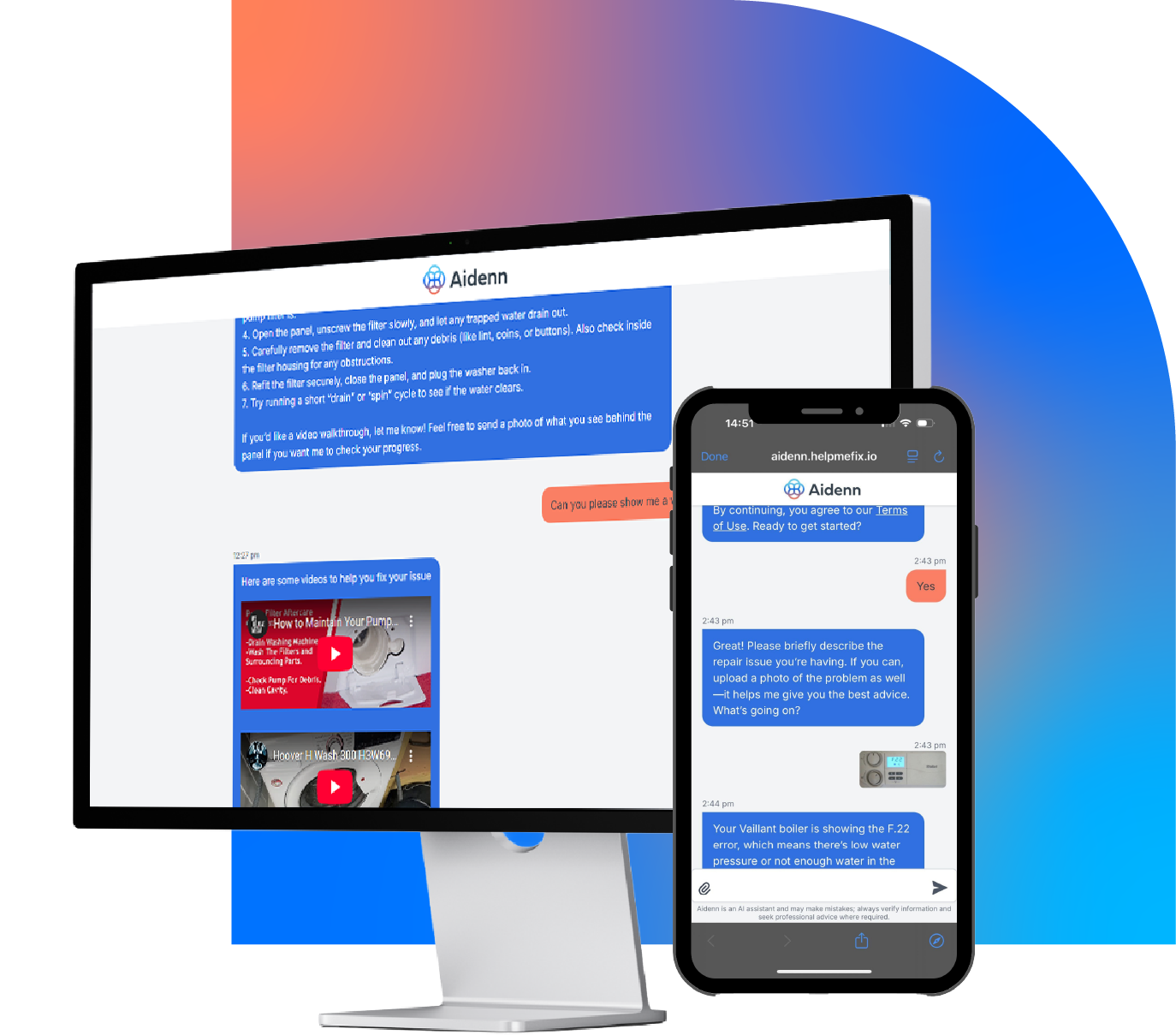
The historical evidence needs its own label. In October-December 2023, Help me Fix worked with Moat Homes and Morgan Sindall on a plumbing and electrical video triage pilot. The published account reports 18% of issues resolved permanently or temporarily remotely, and more than 85% of reported emergencies downgraded after triage. These are results from a video service, not proof that today’s AI independently achieved the same outcomes.
*Includes temporary and permanent resolution. The second measure concerns reported emergencies; the bars have different denominators.
The current product page puts Moat’s approximate net saving at £8,795 and models roughly £380,000 with full rollout and adoption across 22,000 homes. That projection assumes a £75 hourly physical delivery cost, including labour and vehicle overheads. A landlord with different costs or uptake needs its own calculation.
Connection quality also matters. One resident’s published feedback describes switching to chat after an internet problem interrupted the experience. Remote triage needs a workable next step when video fails, and a physical repair still needs someone capable of doing it. The technology can improve the decision before dispatch; it cannot make every job disappear.
A portal is only as useful as what it connects
My Home lets residents view rent information, make payments, report repairs and exchange tenancy documents. For the tenant, the attraction is practical: dealing with a routine question without waiting for an office to open. The landlord gains another way to communicate and collect information. Aareon’s mobile application takes records into the field and can hold information on the device when a mobile data signal is unavailable.
Other systems remain part of the picture. Aareon Connect provides standardised connections between QL and specialist software. Its FAQ makes an important commercial distinction: customers purchase partner applications from the respective vendors; Connect supplies the technical link. Where a connector already exists, Aareon quotes one to four weeks to connect. Building a new integration depends on its complexity.
Aareon operates in an established market alongside NEC Housing and Civica Cx. Both alternatives also promote connected housing information, cloud delivery and resident services. Those capabilities alone do not establish a unique advantage. Aareon’s case rests on its particular portfolio, housing expertise and ability to guide existing customers through change. Buyers should make each supplier demonstrate the same awkward, real-world tasks.
The migration that became a rethink
Hafod Housing supplies the counterpoint to a replacement story. When it planned to reimplement QL during a transformation programme, different teams struggled to agree on the objectives. The organisation began collecting smaller improvement requests and prioritising them by their effect on staff, customers and business value.
An Aareon-contributed account published in Housing Technology in 2021 reported that the resulting programme freed 951 hours during its first six months. The improvements made a full reimplementation potentially unnecessary. The failure at the start was agreement about the work. The response was a sequence of manageable changes.
Aareon’s more recent implementation guidance makes that organisational problem explicit. HomeMaster implementations load customer data early, typically by month two, so teams can see their decisions in a working environment. A rehearsal in month seven tests the transition. Scope, data reconciliation, training and senior sponsorship are part of the method. These are useful practices to copy even if another supplier wins the contract.
First Garden City Homes adds a resident-facing measure. Its case study reports satisfaction moving from the mid-60s to the high-70s within two quarters after implementation. The account credits the organisation’s collective service improvements as well as HomeMaster. That qualification makes the story more informative: installing software was one part of the job.
Big ownership, small daily tests

Behind the UK operation sits Aareon Group. The 2024 transaction announced by TPG valued the European business at approximately €3.9 billion in enterprise value, with CDPQ co-investing and Advent reinvesting for a minority interest. That figure describes the group transaction, not the UK subsidiary’s valuation or a pot of product-development funding.
Baig has described acquisitions as a way to bring technology and experienced teams together faster than building everything internally. The ambition fits Aareon’s stated mission of helping providers manage and sustain properties while improving residents’ lives. Delivering it means making a growing product collection feel coherent to the people using it.
In July 2026, Chief AI Officer Mo Alomari wrote about discussions with more than 20 housing providers. Trust, governance and accountability repeatedly surfaced alongside demand for help with repairs and reporting. His proposed approach keeps human decision-makers involved and starts with bounded, measurable tasks. That gives customers a concrete test for the next demonstration: show the information, show the decision and show who remains responsible when the work gets complicated.