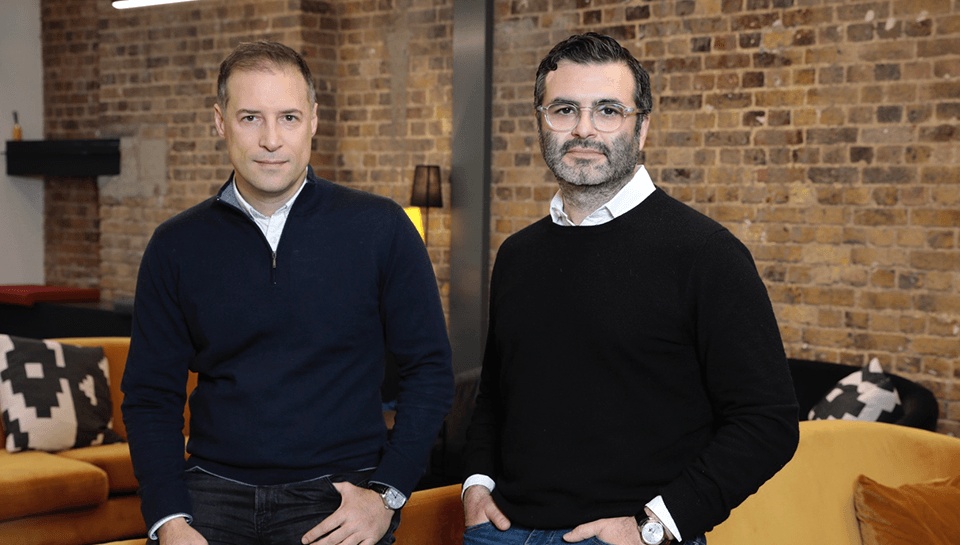
Thirty properties ought to teach you something about buildings. For Cem Savas and Emre Kazan, they also supplied an education in the effort required to find someone qualified to work on them. The pair had overseen 30 developments in London. Finding local professionals, checking their experience and arranging a transaction they could trust remained laborious. A business idea was accumulating among the jobs that needed doing.
There is a pleasing indignity in this origin. Savas had worked in finance, including at HSBC and Nomura. He could deal with the business of money. Yet property development kept bringing him back to a less glamorous problem: organising the people who would make a building work. A spreadsheet has many talents. Turning up with the right tools is beyond them.
He and Kazan launched Plentific in 2013. Over the following years, it would change shape several times, take on institutional customers and attract a $100 million investment round. The route between those events is the revealing part. Savas kept having to reconsider what the company should build, who it should serve and how much of it he could personally control.
Thirty properties, one recurring nuisance
Property was already part of the family story. Generations before Savas had worked in the industry, and he has described his own move into it as something he had long envisaged. His education included a B.S. at DePaul University and an MBA at WHU. After completing his studies in Germany in 2006, he moved to London and worked in finance.
At Nomura, his role included the Financial Institutions Group. His later founder profile also lists M&A work at HSBC and a property business, JOSS Property. These were overlapping preparations for entrepreneurship: financial transactions on one side, the work of buying and developing homes on the other.
Kazan became his partner in that work. They had been colleagues for several months at an M&A advisory firm. By 2021, the two co-founders were also near-neighbours, living a few hundred metres apart in London. Their partnership had acquired a geographical convenience that many co-founders might envy. A difficult discussion need not require a calendar invitation and an airport.
The idea that changed its address
The early product was called Plentify. Its ambition was broad: help people buy property. Feedback from Zoopla’s Alex Chesterman encouraged the founders to offer more services. They concentrated on helping customers find professionals and rebranded as Plentific. The business moved toward what happens after someone acquires a home.
This history makes the later company easier to understand. Plentific was shaped through adjustments to a product already in motion. The consumer-facing service connected people with trades. Partnerships with Zoopla and B&Q helped establish its early presence. Over time, larger property operators became central customers, bringing more complicated requirements with them.
Those operators had their own maintenance teams and established contractor relationships. A marketplace could help them find additional suppliers, but they also needed to organise the people they already worked with. The product expanded to accommodate internal teams and appointed contractors, with processes for verification, quotes and invoices.
For Savas, that meant following the work further into the customer’s organisation. The company’s role widened from arranging access to tradespeople toward coordinating property operations. A resident’s request might pass through a property manager, an internal team or an outside contractor. Each handover created another place where information had to travel.
- 01Resident reports
a repair - 02Manager assigns
the work - 03Team or contractor
completes the job - 04Records and payment
follow through
A test in Halle
In late December 2018, Savas and Kazan met investor Gregory Dewerpe. Their company was changing from a consumer business toward business customers. Dewerpe later recalled being struck by the founders’ maturity, humility and resilience. His own fund was still being assembled, which made the relationship a bet in both directions.
By early 2019, Dewerpe had arranged an investment through one of his fund’s investors. Then came a German pilot in Halle, covering 5,000 units. It was a deliberate test in a less obvious place than London or Berlin, in another language and a different market. A service marketplace has to work where the buildings are.
Dewerpe described the deployment as successful. By the time he recounted the story in 2021, that customer had about 70,000 units using Plentific. The pilot supplied a practical answer to an expansion question: could the model travel beyond its original surroundings?
In August 2021, Plentific announced a $100 million Series C led by Highland Europe and Brookfield Technology Partners, with other new and existing investors participating. The plans included US expansion and further product development. For the former banker, raising capital was now tied to a business whose daily purpose was organising property work.
Capital raised for expansion and product development.
Learning to leave things to other people
Growth also changed Savas’s own job. In the early company, he could know what everybody was working on. As it grew, that ceased to be a workable management method. He described building another layer of managers and learning to let other people take responsibility.
“The only way to scale is to give others more responsibility.”
Cem Savas, 2018
It is an appealingly awkward lesson for a founder. The company needs the initiative that got it started, then asks its founder to distribute that initiative. Savas’s later discussions of scaling returned to hiring capable people, adapting the CEO’s role and allowing the team to become more than an extension of its founders.
Remote recruitment added another adjustment. Plentific made 100 hires on a remote-first basis in 2020. Savas described moving away from a preference for people who lived near an office. Location became less decisive when considering a CV. The talent pool had widened; the management questions had multiplied.
His account of productivity was less tidy than the familiar argument about whether offices are good or bad. Engineering output had increased, he said, while some creative work around bringing products to market was harder. He also wondered how to assess whether junior colleagues were learning enough and encountering the senior people who could help them develop.
That admission gives the story some welcome texture. Savas could point to benefits without claiming the arrangement had solved every problem. A company can write more code today and still have questions about the people it is preparing for tomorrow.
Who gets to carry the toolbox?
There is another workforce in this business, beyond the people building the software. The Women’s Trade Network launched in 2021 with Plentific and partners including Peabody, L&Q, Notting Hill Genesis, Women’s Pioneer Housing, Direct Works, the Chartered Institute of Housing and Places for People.
The network’s purpose was concrete: training and employment opportunities for women entering trades, supported by organisations that could offer work and experience. It addressed a question that a platform’s interface alone cannot answer. Who gets the opportunity to become one of the professionals available for the next job?
In March 2023, Savas celebrated a course involving 13 women, through a partnership with Peabody, London Square and Learning Curve Group in Islington. The number is modest enough to keep its human proportions. Thirteen people on a route toward qualifications can be pictured more readily than a market-size estimate.
Relationships also helped shape the enterprise business. Savas recalled meeting housing executive Andy Belton at a conference, where Belton proposed trying a pilot together. Belton later joined Plentific’s Strategic Advisory Board in 2022. It is a small episode with a long tail: a conversation becomes a trial, then a working relationship.
The next repair, connected
By October 2023, Savas was describing a platform supporting more than 1.5 million properties across the UK, US and Germany. Customers included housing providers and property businesses such as L&Q, Peabody, Savills and Knight Frank. His ambition extended to using data and AI to automate property maintenance.
He also gave that ambition a useful condition.
“For us to succeed, we need to keep developing great products.”
Cem Savas, 2023
The product work kept extending into the routines around a repair. A planned-maintenance offering launched in December 2023, adding tools for scheduling recurring tasks and organising resources in advance. Rather than waiting for every job to arrive as a fresh request, operators could plan some of the work their buildings would need.
In his review of 2025, Savas reported more than one million repair journeys coordinated through Plentific, 700,000 automated actions and over 26 million API requests linking housing systems. These are company-reported figures for that year, each measuring a different kind of activity. Together they describe the amount of coordination happening behind an apparently ordinary service.
His public discussion of housing leadership that year also brought the focus back to residents, partnerships and the ability of teams to use connected information. The language of property technology can grow rather grand. Its practical examination remains stubbornly specific: can the people responsible for a home understand what needs doing and get the work organised?
Savas’s route has taken him from financial institutions to London developments, then through several versions of a software business. At each stage, an answer exposed another question. Finding a professional led to managing a workforce. Managing work led to connecting systems. Growth required him to change his own habits as well.
The unfinished business is still there, in the next request and the people responsible for completing it. For someone who entered property partly through family tradition, Savas has found a career in the work that ownership leaves behind.