The replacement boiler arrived by helicopter. In a downtown Los Angeles high-rise under Daniel Cunningham’s management, hot water had disappeared from 322 apartments. Rent credits followed. A piece of equipment that should have stayed unremarkable had become an expensive event, complete with an aerial delivery to the roof.
Cunningham’s account of the failure is unusually useful as an origin story because the culprit is so ordinary: maintenance knowledge had failed to reach the people who needed it. The lesson was larger than checking one boiler. Buildings depend on a procession of small, timely actions, and a procession is difficult to conduct when everyone is busy answering the telephone.
A memorable failure can produce a memorable instruction. It can also produce a company. Cunningham chose the latter, building Leonardo247 around the idea that property teams should receive practical guidance before a missed task turns into a rooftop spectacle. The building had supplied a rather forceful product brief.
The instructions were already there
Before he became a software founder, Cunningham served as director of asset management at AIMCO. He later ran his own property-management business. Those jobs placed him on different sides of the same arrangement: executives establish standards; people at the property must somehow carry them out while attending to everything else.
His background helps explain the particular business he built. A civil-engineering graduate of the University of Arizona, he had also co-founded the prefabricated homebuilder LivingHomes. Construction, asset management and property operations gave him several ways to examine a building. Leonardo247 would concern itself with the work that continues long after the construction crew leaves.
There is a quiet distinction between possessing instructions and acting on them. A policy can be complete, carefully written and entirely useless at the moment someone needs it. Cunningham’s career put him close to that distinction. His software would have to cross the distance between the office that writes a procedure and the person expected to remember it.
A book with a scheduling problem
Cunningham wrote 365 Days of Property Management out of his operating experience. The title carries the argument: looking after a property is continuous work. The important activity may be weekly, monthly or seasonal, yet it still needs a place in someone’s day. A book can collect that knowledge. It has more difficulty appearing at precisely the right moment.
The book’s principles became the foundation of Leonardo247’s software. This was a change in delivery with a practical consequence. Instead of asking a manager to absorb a body of advice and recall the applicable passage, a system could organize responsibilities and present the next piece of work. The instruction would travel to the user.
Consider the difference from the reader’s side. A manual rewards someone who already knows where to look. A daily task gives someone a starting point. Cunningham had written a reference work; the software made the reference useful on a working day. Property management has plenty of working days.
Give Tuesday its own instructions
The company’s 2014 NMHC Launch Pad application laid out its premise in plain terms. Community managers arrive with different experience. Their responsibilities span leasing, maintenance, marketing, legal matters and resident relations. Staff turnover continually introduces new people to unfamiliar buildings. Even capable managers cannot retain every detail across that range.
Leonardo247 proposed a database of property-management practices that tells managers what to do each day, week and month. The appeal rested on reducing the burden of recall. A building does not become less complicated when a manager changes jobs, and its equipment does not politely suspend its needs until the replacement finishes training.
That proposition is modest enough to be overlooked and consequential enough to build around. Daily guidance gives standards a route into execution. It also makes an operational question easier to ask: has the required work happened? A binder on a shelf can tell you what ought to happen. It cannot raise its hand when Tuesday’s task remains undone.
A pilot, then a prize
Leonardo247 launched its cloud-based solution in 2014 through pilot programs with both large and smaller property-management firms. That November, it won the National Multifamily Housing Council’s Launch Pad competition at the OpTech conference in Orlando. The event put young technology businesses in front of industry judges, giving Cunningham’s approach a public test.
The software used customizable lists and practices to tighten and track operational procedures. The prize mattered as recognition of that particular proposition: an apartment business needed help with the recurring work beneath its formal policies. Cunningham’s book had become a product that people could try, and the product had earned an industry audience.
There is a pleasing reversal here. The first dramatic event in the story was equipment failing to do its job. The next was an industry competition recognizing a way to help people do theirs. Between them lay the less theatrical work of putting a useful idea into a form customers could operate.
The instruction would travel to the user.THE BOOK-TO-SOFTWARE TURN
When remembering becomes a business
In 2020, Leonardo247 received a $9.5 million funding round led by Level Equity. Its subsequent annual review reported an estimated 40 percent increase in revenue and more than 4,000 properties and one million units installed on the platform. These were company-reported figures for that year, a snapshot of a business extending well beyond its initial pilots.
The same review recorded another kind of expansion: software and services donated to Caritas Communities, a nonprofit housing provider. It also named chief operating officer Suellen McFarling’s appointment to the board. Cunningham’s operational idea now required an organization of its own, with leaders, customers and a growing set of commitments.
By August 2021, when Cunningham received GlobeSt.’s Influencers in Multifamily recognition, Leonardo247 said its customers included half of the ten largest multifamily owners and operators in the United States. That is a useful measure of where the idea had landed. The people buying it were responsible for portfolios in which an overlooked routine could be repeated many times.
The conversation moves to risk
At RISKWORLD in San Francisco in 2022, Cunningham described Leonardo247 as operating across roughly two million apartment units and 5,000 properties. He was speaking at an insurance and risk-management gathering, a setting that suited his recurring concern with everyday execution. The work of maintaining buildings had an audience beyond the people maintaining them.
In 2022, he also co-founded Sertis, an insurance managing general agent. By RETCON 2024, he and Sertis chief executive Mark Gardella were leading a roundtable on multifamily risk exposure and insurance costs. Their discussion connected property practices to a different business question: how might evidence of responsible operations inform the assessment of risk?
The partnership developed a risk indicator using operational information and property attributes. Its stated aim was to support coverage priced with a more specific understanding of a property’s risk. This follows the original question into another office. Once work becomes visible, other people can make decisions with that visibility. The maintenance record acquires a second reader.
The founder takes the microphone
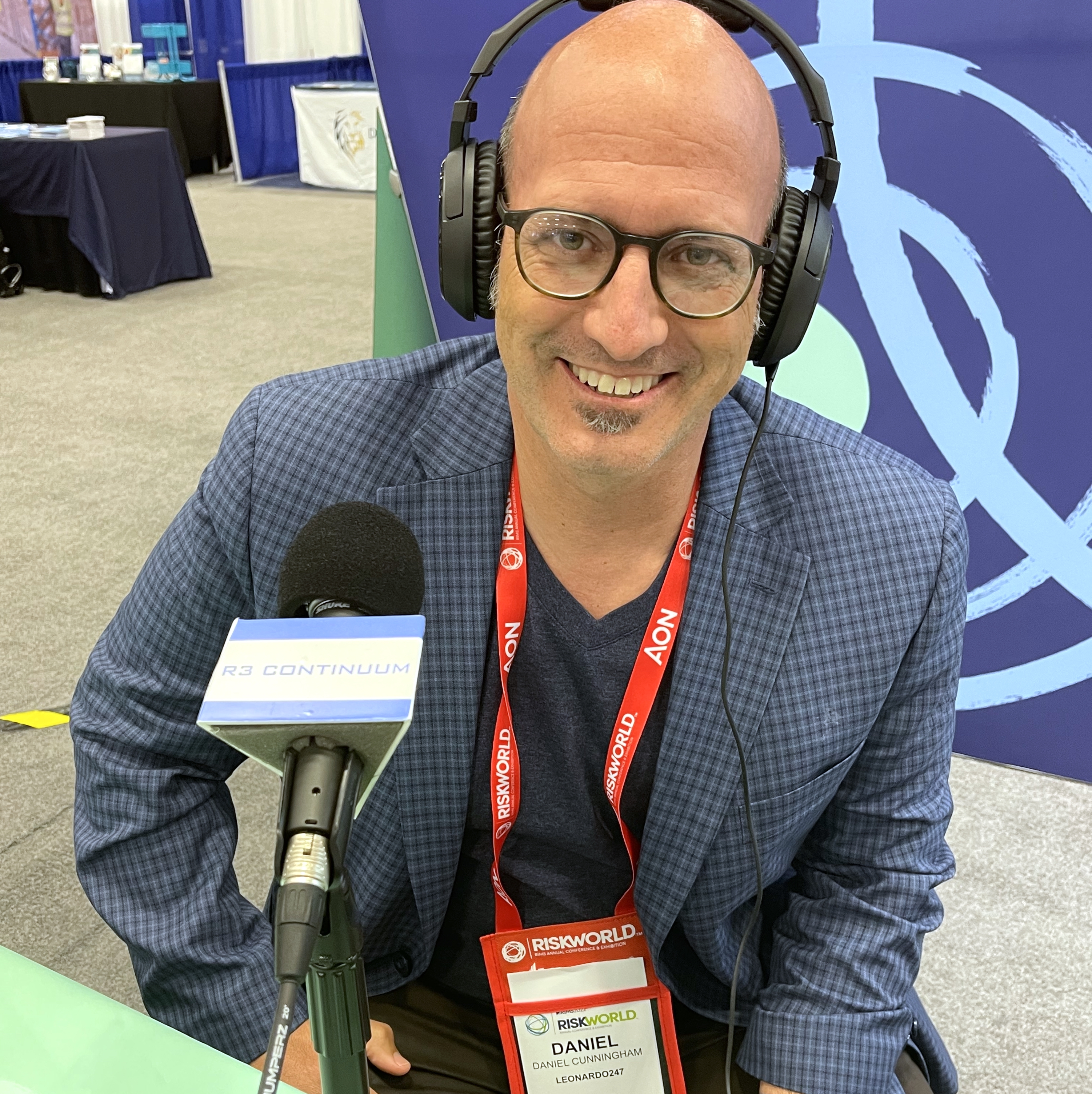
Cunningham also made conversation part of his work. He hosted the Apartment Academy podcast, bringing property executives, vendors and other industry participants into discussions about operations. The format was compact, usually 20 to 30 minutes. Its intended listeners included community managers, leasing agents, service managers, regional managers, owners and investors.
The subjects show his attention moving across the organization. A December 2022 office-hours episode addressed centralization, virtual leasing and AI. Episodes in 2024 tackled the realities of property management, centralization and retaining talent. The person building software to distribute expertise was also inviting people to explain their expertise aloud.
A 2023 conversation with Donald Davidoff of Real Estate Business Analytics explored empowering local teams through training and technology, the cost of inefficiency and using data to trigger the next action. The recurring interest is the handoff. How does what an organization knows become something its staff can use while doing the job?
Another job, the same unfinished work
In September 2025, Cunningham announced his move to Vendoroo. He subsequently identified his role as president of its multifamily group. Leonardo247 now lists Ken McDonald as chief executive. The shift puts Cunningham at a different company while keeping him close to the operational terrain that produced his earlier one.
His description of the new work concentrates on maintenance coordination: receiving requests, creating work orders, arranging technicians and vendors, handling invoices and following up with residents. Vendoroo uses AI agents to orchestrate that sequence. These are the company’s intended capabilities, rather than a reason to assume every property or every maintenance situation has already been solved.
The new proposition reaches further into execution. A manager receiving guidance still has to coordinate the next person, and the next. Cunningham’s interest has moved toward systems that can carry more of those exchanges themselves. It is easy to sell a picture of a frictionless future. The useful test remains what happens to an actual request once it enters the system.
The next request still needs an answer
In March 2026, Cunningham launched The Multi-Family Property Management AI Playbook. The opening episode, with Pablo Gonzalez, explored maintenance triage, the distinction between automation and AI, and the operational changes needed to adopt new tools. The format gives his next chapter a place for questions as well as demonstrations.
That matters because his work has always involved translation: from experience to a book, from a book to scheduled work, from operational records to an assessment of risk. His latest effort asks how much of the coordination between those steps a system can perform. The question keeps the focus on a property team’s working day.
Earlier in his career, an engineering solution that saved installation time helped turn his attention toward entrepreneurship. “That flipped a switch inside of me,” he recalled. The boiler failure supplied a different lesson about the value of making knowledge usable. Together, the stories suggest a founder drawn to the moment a procedure meets the world.
The helicopter is the detail everyone remembers. Cunningham has spent much of the intervening career on the details people forget: a recurring responsibility, a necessary follow-up, a task waiting for the right person. A building can look finished for decades while its work remains unfinished every morning. He keeps finding businesses in that discrepancy.