A hotel receptionist asks for a card. An apartment landlord asks for a small mountain of money. Both are preparing for the possibility that you will leave something unpaid or damaged. Yet one lets you keep your cash until trouble arrives, while the other takes custody of it before you have unpacked. Obligo began with the question hiding in that difference: could renting borrow the hotel’s approach?
- The offer: qualified renters can replace an upfront cash deposit with a billing authorization.
- The price: a personalized, non-refundable fee; damage and unpaid rent remain the renter’s responsibility.
- The strategy: put deposit choices inside the property software managers already use.
Brothers Roey and Omri Dor founded the company in 2017, according to its current history. Their inspiration was hotel check-in and check-out. The appealing part was not simply a smaller move-in bill. It was a different way to establish trust between strangers who were about to enter a long, financially consequential relationship.
A promise in place of a pile of cash
Obligo’s core mechanism is a billing authorization. A qualified renter supplies a payment method and permits collection of eligible charges up to an agreed security amount. If the property submits charges at move-out, Obligo bills the renter. Interest-free repayment installments can be available. If there are no charges, there is no damage bill to settle.
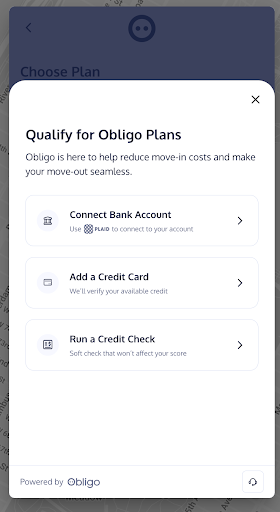
The company uses open banking and machine learning to assess qualification. A bank connection helps it check funds availability; the exact plans offered depend on the applicant and property. This is a financial qualification process layered onto the property’s own rental decision. A lease approval does not automatically entitle someone to every Obligo option.
Behind the interface sits older financial machinery: bank-issued letters of credit. Obligo’s earlier materials describe Wells Fargo. In September 2026, it announced an expanded program with HSBC issuing letters for eligible operators. The banking arrangement helps replace the landlord’s demand for cash in hand with a different form of security.

The cash stays. The fee does not.
For a renter, the attraction is liquidity. Money otherwise parked in a deposit can remain available for a move, furniture or an emergency. The bargain has a price: Obligo charges a non-refundable service fee. Its help center says pricing depends on the security requirement and individual factors, including geography, property type and bank balance.
The initial fee is typically paid upfront for a lease term of up to 12 months. Renewal can bring another fee, with monthly payment options in some circumstances. Property managers can pay the fee, renters can pay it, or the cost can be shared. That flexibility makes deposit-free living something an operator can offer as an amenity.
“Obligo is not an insurance product.”Obligo renter help center
That sentence deserves more attention than the marketing slogan. The fee does not purchase forgiveness for damage or missed rent. Renters remain accountable and can dispute charges with their property manager. Nor does the authorization limit necessarily erase obligations beyond it under the lease. Keeping the deposit money means keeping the possibility of a later bill.
The sensible comparison is the quoted fee over the expected tenancy against the value of retaining that cash. A refundable deposit and a non-refundable fee do different jobs in a household budget. For someone who can comfortably fund a deposit and expects a clean refund, recurring fees deserve scrutiny. For someone facing a tight move-in budget, immediate access to cash may matter more.
The button belongs inside the lease
Obligo sells through property owners and managers, serving their renters rather than operating a marketplace where anyone can buy access. It says it is trusted in over one million homes. That is a company-reported measure of reach, not a disclosed count of paying renters or completed deposit replacements.
Its distribution increasingly runs through property-management software. Yardi’s RentCafe Living, AppFolio and Buildium feature in its partnerships. A July 2026 announcement describes RealPage integration in LOFT and OneSite. The advantage is practical: deposit choices appear within a familiar leasing process, reducing the need for another disconnected system.
Sharp Management makes the logic concrete. The operator manages more than 9,000 residential units across 14 states. Its deposit options had varied between properties. It adopted Obligo within Yardi to standardize the experience. The September 2026 case study says regional teams saw better occupancy at participating properties during the proof of concept, giving Sharp a reason to expand.
Those savings come from an Obligo-published case study, without a published measurement method or evaluation period. They are useful evidence of the outcome the customer sought, rather than a forecast for every landlord. The lesson a reader can copy is more modest: pilot a process inside existing tools, compare results, then decide whether to extend it.
A deposit alternative learns to handle deposits
The business has grown beyond an either-or proposition. Its current choices include No Deposit, Reduced Deposit, Deposits-in-Installments and Full Deposit. Reduced deposits mix cash with a lower service fee. Installments build the full deposit over time. The full-deposit plan carries no service fee; the website advertises up to 2% APY on secured funds, subject to terms.
Electronic move-in payments and refunds broaden the proposition further. An operator can use the platform even when cash deposits remain part of the transaction. Against alternatives such as Rhino, Jetty and LeaseLock, the distinction is Obligo’s billing authorization and credit-based structure. The simplest competitor remains the traditional refundable deposit.
The awkward conversation comes last
In June 2026, Obligo announced its Deposit Agent, an AI tool intended to help with requirements, charges, refunds, compliance and disputes. The announcement invited early-access requests and said availability would follow in coming months. Its proposed work addresses the sensitive end of a tenancy: evidence, deductions and explanations.

The company announced $35 million in growth financing in October 2024, with equity and debt participants, and says total funding then exceeded $90 million. That capital supports a substantial ambition. Success still depends on eligible renters, participating properties, understandable fees and fair handling of charges. Software can shorten the paperwork. Trust will depend on what happens when someone disagrees with the bill.