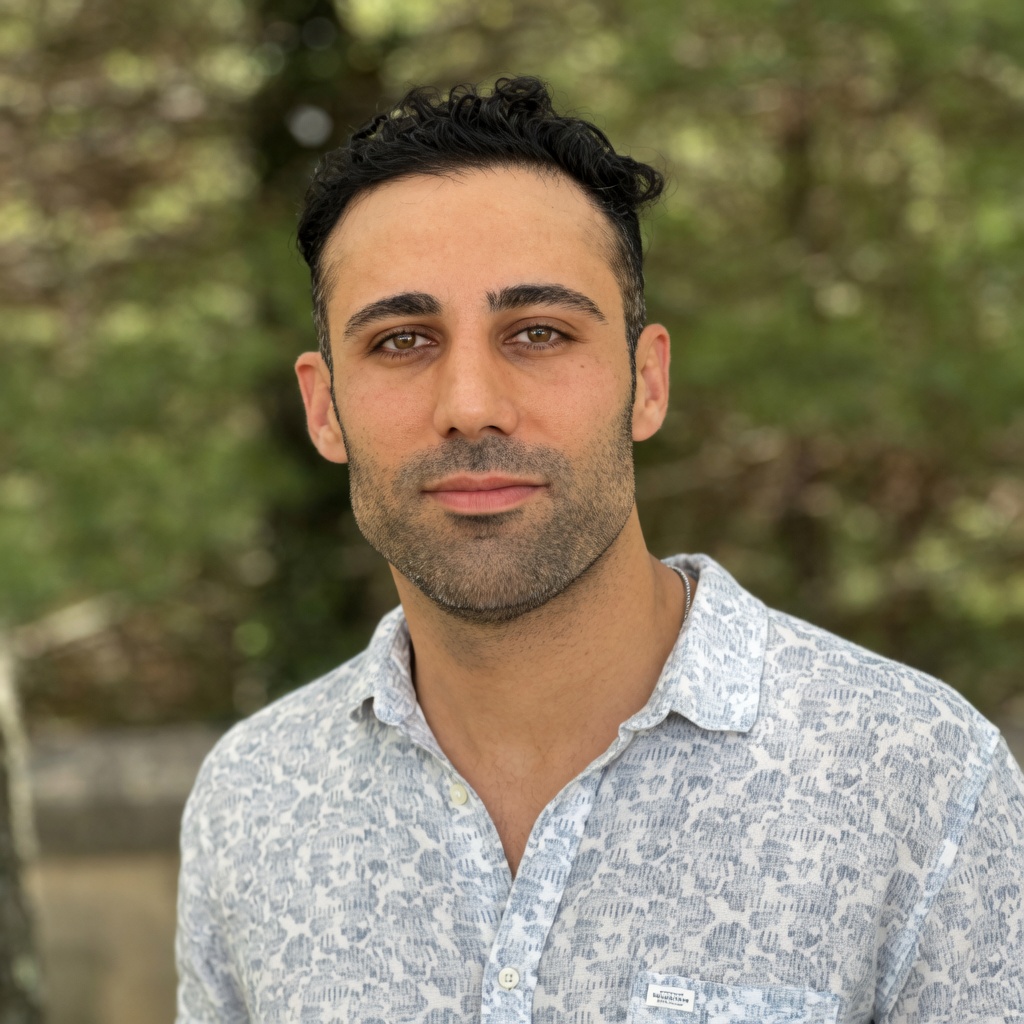
Property maintenance is everyone's second problem. It's not the crisis that makes the news. It's the dripping faucet at 11pm, the vendor who never calls back, the work order that sat open for nineteen days. Reza Keshavarzi - who goes by Reza Kesh in most rooms - spent years watching his father navigate exactly this. And then, with a PhD in engineering from Harvard, a master's from UNSW, and several companies already under his belt, he decided to fix it permanently. Not with a helpdesk. With AI that owns the whole problem.
Vendoroo, the San Francisco-based startup he founded, doesn't pitch itself as a tool. It calls itself a maintenance coordinator - one that works 24/7, never forgets to follow up, and has processed over two million maintenance audits without a sick day. For property managers running 70-unit portfolios, a thousand-door empires, or anything between, that's not a productivity upgrade. That's a category shift.
Before any of this, there was WipeHero. Not AI, not property tech - car washing. Specifically, waterless car washing. Working with his father over four years, Reza developed a patented polymer-based cream that lifts dirt off a car without a single drop of water, leaving a UV-protective coating behind. He ran the numbers on Australia's car washing culture - 20 million cars, 100 liters each, every month - and saw a billion liters of waste disappearing into drains laced with detergent. WipeHero was his answer: a booking platform for certified "washers" who'd arrive at your door, bucket-free. He pitched it at a startup competition in China. He won a $100,000 grant from the New South Wales government. He took it international.
AI isn't about replacing jobs - it's about replacing problems.- Reza Keshavarzi, Founder & CEO, Vendoroo
There's a pattern here, and it's not luck. Reza doesn't find markets - he finds friction. In Australia, it was the friction of water waste and unreliable mobile car care. In workforce management, it was the friction of supervising cleaning crews remotely. In property management, it was the friction of maintenance chaos that costs managers more time, more money, and more emotional energy than almost anything else in their business. Each company he's built has been an attack on a system that everyone else accepted as "just how it works."
Three Companies, One Thread
Patented waterless car wash platform. Developed polymer technology with his father. $100K NSW government grant. Finalist at The World Pitch in China.
Co-founded with Farid Mirmohseni. Workforce management platform for remote supervision of cleaning and essential workers. Built the team and tech that became Vendoroo.
AI maintenance coordinator for property managers. 90 employees. 2M+ audits. 500+ AI workflows. Integrates with AppFolio, Rent Manager, Rentvine, and more.
Tulu, the company he co-founded in 2020 with Farid Mirmohseni, was the connective tissue between the WipeHero era and what would become Vendoroo. It addressed the problem of managing essential workers - cleaners, maintenance crews, field operators - without being in the same room. Remote supervision at scale. The lessons from that chapter - how to build workflows, how to create accountability without physical presence, how to make dispersed operations feel managed - fed directly into what Vendoroo became.
Vendoroo's architecture reflects Reza's engineering background in a specific way. Most property management software is passive: it gives managers a place to log things and look things up. Vendoroo is active. It triages incoming maintenance requests against custom policies, assigns vendors based on performance data and availability, follows up on open work orders, sends automated updates to residents and owners, and flags anything it can't handle for human review. Reza calls this "agentic AI" - systems that own outcomes rather than merely answer questions.
The results are specific enough to be useful and strange enough to be attention-grabbing. One property management firm, running 1,200 doors on Vendoroo's Direct plan, cut their maintenance task volume by 80% and avoided hiring two new coordinators. Another broker managed half a million dollars in annual maintenance across 70 units with no staff except the AI. These aren't edge cases - they're the pitch.
Reza's philosophy on AI employment is not the anxious one. In a podcast interview on Property Management Frame Breakers - the first episode ever recorded, which says something about his profile in this industry - he made the distinction that matters most to him: AI should empower the A-players, not replace them. The people who adapt, who learn to direct AI toward outcomes, will thrive. The ones who wait for proof will be outpaced. It's less a prediction than an observation from someone already running the experiment at scale.
PhD in Engineering & Applied Sciences from Harvard University - the academic foundation behind the engineering instinct.
Won $100K NSW government grant for WipeHero - polymer waterless car wash, four years R&D with his father.
Finalist at Demo's "The World Pitch" competition in China - early proof that a niche product can scale globally.
Built a $100M+ business before Vendoroo - serial entrepreneurship across three companies and two continents.
500+ AI workflow implementations on Vendoroo - each one a custom blueprint for a different property management operation.
Scaled Vendoroo to 90 employees in San Francisco - Seed-funded, growing, with deep integrations into the major property management stacks.
What makes Reza's story worth paying attention to is the continuity. He didn't pivot from cars to cleaning to property by chasing hot sectors. He followed the same instinct: find a place where operational chaos is accepted as a given, build something that removes it systematically, and do it with enough technical depth that the solution actually sticks. Three businesses across three continents - and in each one, the fingerprint is the same.
We've developed a waterless technology which allows us to wash cars anywhere, anytime.- Reza Keshavarzi, on WipeHero (Medium, 2019)
There's an irony in the fact that his most personally-motivated company - Vendoroo, built directly from watching his father's pain - is also his most technically ambitious. He didn't soften the problem into a CRM. He went straight at it: AI that triages, assigns, schedules, follows up, reports, and escalates. The human-in-the-loop is there for edge cases, not for routine. That's not an incremental product decision. That's a statement about what AI should be allowed to own.
From Shiraz University to UNSW to Harvard. From Sydney to San Francisco. From waterless polymer cream to agentic maintenance AI. The degrees change, the product changes, the geography changes. The obsession doesn't.