A bank can know the rule and still lose an afternoon proving that it followed it. One file holds the policy. Another holds the loan decision. A third holds the test results. By the time someone asks for an explanation, the work has become an archaeological dig through spreadsheets, inboxes and old approvals. Austin-based 360factors sells software for the unromantic moment when a financial institution must connect the rule to the record.
- Predict360 links obligations, risks, controls, audits and policies in a cloud platform.
- Lumify360 brings performance and risk data together for analysis.
- Ask Kaia handles banking regulation questions and guided reviews, including HMDA and fair lending.
- The company says more than 190 financial organizations use its offerings.
That last number is the company’s own count, and its more interesting achievement is the shape of the product. In a market crowded with broad governance, risk and compliance systems, 360factors has kept returning to one buyer: the person at a bank or credit union who has to make a defensible decision under a deadline. The answer cannot merely look clever on a dashboard. It must survive a colleague, an auditor and, sometimes, an examiner asking, “How did you get there?”
The problem was never the rule alone
Predict360 is the original center of gravity. It gives an institution a common place for regulatory obligations, risk and control assessments, issues, audits, policies and training. A regulatory change can be tied to a responsible team and a control; a finding can be tracked toward resolution. That may sound like ordinary recordkeeping. In compliance, the distance between a rule and the person assigned to act on it is where expensive mistakes grow.
360factors was founded in 2012 by Ed Sattar, who had also worked in regulated training. Its early argument was that this work should be bought and used by smaller institutions, too. When the American Bankers Association endorsed its compliance management solution in 2017, the association’s banker advisory council singled out its fit for community and regional banks as well as larger ones. The company was competing with systems that could demand months and substantial staff time to deploy.
“360factors stood out in the evaluation based on their capabilities to serve the needs of smaller community and regional banks.”Bryan Luke / ABA Endorsed Solutions Banker Advisory Council, 2017
A year later, a $2 million Series A from Sattar Ventures funded sales, expansion and product development. A company release at the time described a 30-day trial, no upfront cost and month-to-month terms for a compliance management offering. Those were 2018 terms, not a current price list. Still, the idea was pointed: a bank should be able to try a complex workflow without first making a complex purchasing commitment. Current Predict360 prices are discussed with sales after modules, migration and implementation are scoped.
Three products, three different questions
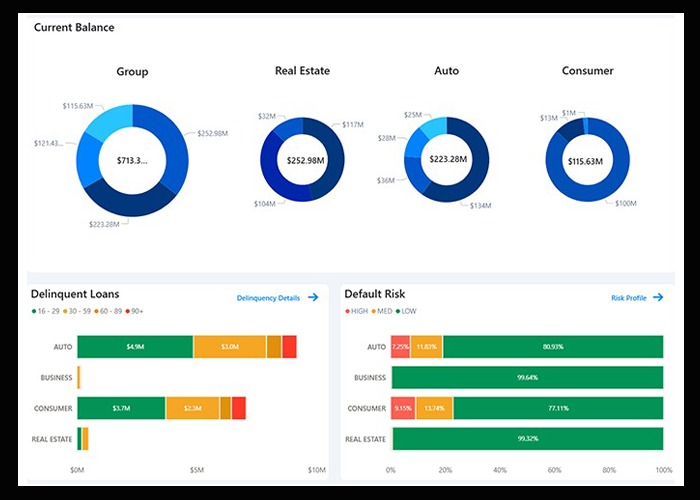
A risk platform can collect a great deal of information without making it easier to use. 360factors’ expansion suggests it saw that problem clearly. In 2024 it launched Lumify360, designed to pull key performance and key risk indicators from different systems and compare them with goals and risk appetite. It can connect to internal data and public sources, including Federal Reserve economic data and bank performance reports. For an executive, the question shifts from “Where is the data?” to “What does this change in the numbers mean?”
Ask Kaia changes the unit of work again. It is a browser-based application that can stand alone or sit inside Predict360. Staff can ask about U.S. banking rules, examine policies against regulatory material, draft revisions and review marketing content. The company presents answers with links to regulatory citations. Its newer agents go beyond answering questions: they accept defined inputs, run a guided task and return a document or a finding a person can inspect.
This is a meaningful distinction from a general chat tool. The compliance officer does not need prose for its own sake. The officer needs a trail: what material was used, what was flagged, what was reviewed and who made the call. 360factors says its AI workflows keep approvals and audit records alongside the output. That is the product claim a bank should test with its own files, not accept from a demo slide.
The spreadsheet is where the story gets interesting
Consider fair lending. A questionable outcome may be invisible in one loan file and obvious across a thousand. In August 2026, 360factors introduced an Ask Kaia agent that takes a loan application register, optional supporting documents and selected peer institutions. It produces views of geographic, underwriting and pricing patterns, document coverage and workpapers for review. Chief technology officer Chris Duden described the ambition plainly: reviews should no longer “begin with a blank spreadsheet.”
The HMDA testing agent is even more mechanical. It checks a loan register and supporting documents, flags potential discrepancies at the loan and field level, and produces Word and Excel reports. The bank’s reviewers decide which findings are real and make any corrections in their source system. The software can widen the first pass; it cannot sign the institution’s name under a conclusion.
There is a useful lesson here for anyone building software in a heavily regulated market. Start with a task that already has a clear input, a recurring deadline and a document someone must sign off. Reduce the clerical pass. Preserve the evidence. Make it easy to inspect the machine’s work. An open-ended promise to “transform compliance” is harder to buy than a shorter path from a loan register to a reviewable workpaper.
A narrow advantage, with a narrow edge
360factors’ position is shaped by its partners as well as its code. Its ABA relationship gave it standing in banking; a 2021 collaboration with Crowe brought financial services risk, control and testing scripts into Predict360. This is expertise packaged as workflow content. It may matter more to a community bank than another feature on a long checklist, because a small team cannot write every test script from scratch.
There are limits. A bank with poor source data will get a better-organized version of poor source data. A lending pattern can be a signal without being a violation. The fair lending agent is available as a paid add-on for Ask Kaia Enterprise customers, so the cost of the full process depends on a quote. And a U.S. banking focus is less useful to an organization whose obligations sit elsewhere. Those constraints do not spoil the story; they tell a buyer where to begin the evaluation.
Ask the vendor to run one real change through the chain: regulation, affected policy, assigned owner, test, finding and final evidence. Ask which steps require configuration, what imports from old systems, how the output is corrected and what the examiner would actually see. If the handoffs stay legible, the software has done something valuable. It has made a bank’s rulebook less like a library and more like a working memory.