A temperature reading is a tiny piece of information with an unusually busy social life. Somebody takes it. Somebody records it. Somebody else checks whether it falls within the kitchen’s limits. If it does not, another person has to act. The thermometer finishes its job early. The restaurant still has several handoffs to go.
Zip HACCP lives in those handoffs. Its software combines food-safety checklists, temperature capture, alerts, and corrective actions. The interesting proposition is that a measurement becomes more useful when it arrives with a task and a next step. For a manager responsible for several kitchens, that connection can matter as much as the reading itself.
- Recurring digital checklists for restaurant teams.
- Bluetooth temperature capture and follow-up records.
- Published price: $59.99 per location monthly.
The space after the measurement
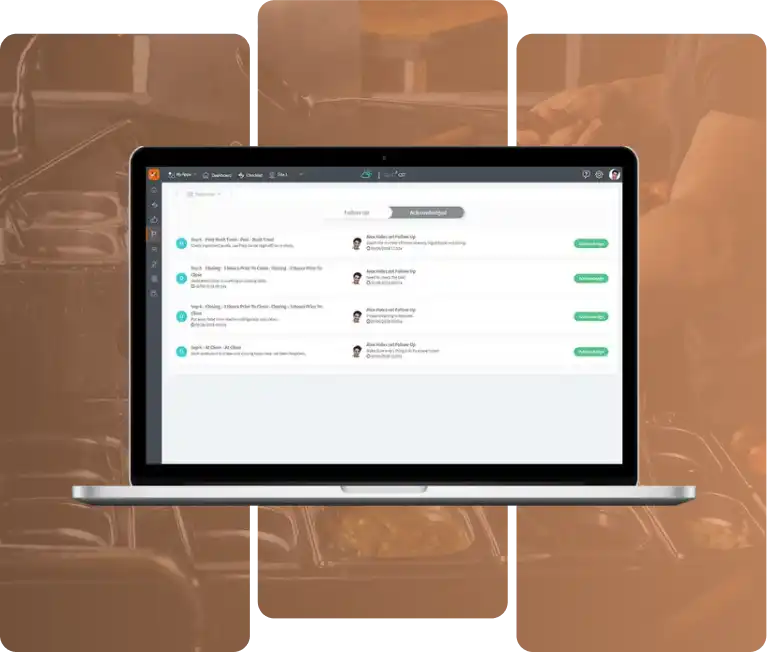
The product lets owners create checklists and delegate them to specific business locations. Supervisors and managers can review task histories, see outstanding work, and mark tasks complete. Daily, weekly, and monthly routines become something a manager can inspect without standing beside the clipboard.
Its food-safety workflow adds another layer: task explanations, acceptable criteria, follow-ups, and corrective actions. A failed task can produce an escalation. A recurring problem can be tracked. That is a more consequential ambition than making a paper form look tidy on a screen.
Consider a hypothetical line check. An employee measures an item, records the result, and discovers it falls outside the configured limit. The useful question is now what happens next. A record of the original reading matters, but so does a record that the exception reached someone who could respond.
A thermometer with somewhere to send the answer
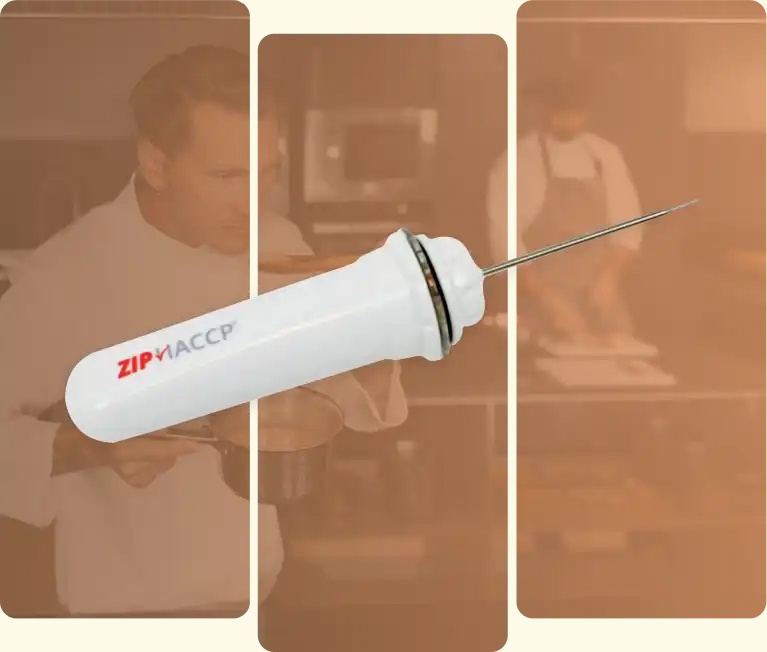
The optional Zip HACCP Probe puts hardware into this routine. The Hubworks store identifies its integrated model as the Cooper-Atkins Blu 2, using Bluetooth Low Energy to transmit readings into the application. Removing a transcription step is a concrete benefit: the person holding the instrument does not have to copy every number into a separate record.
The hardware story also has a dated development. In July 2024, the iOS release history added native support for ThermoWorks thermometers. That gives operators a specific integration to investigate. Compatibility still deserves a model-by-model check before purchase; a Bluetooth label alone does not describe an entire working setup.
The distinction matters because automation can introduce its own interruptions. A recent App Store reviewer, posting as Mr Bojangles1242, praised task tracking and temperature checks but said the app repeatedly searched for a Bluetooth thermometer when none was available. Selecting manual entry added friction. It is one user’s experience, rather than a measured failure rate, but a useful purchasing question follows: how quickly can staff finish a check when the preferred equipment is missing?
A simplified reading of the product’s task and corrective-action workflow.
What $59.99 actually buys
The published Standard subscription costs $59.99 per location each month. Listed functions include customized checklists, critical and non-critical task types, temperature monitoring, corrective actions, real-time logs, device synchronization, and multi-location support. Support is included. The optional probe is listed separately at $200.
At that monthly rate, one location costs $719.88 over twelve months. Add one listed probe and the illustrative first-year total becomes $919.88 before taxes and shipping. Ten locations would mean $599.90 in monthly software charges at the same rate. These are calculations from list prices, not a negotiated quote or a promise about implementation costs.
There is an intriguing earlier chapter. In 2020, as restaurants faced pandemic disruption, Hubworks, powered by Altametrics, announced a free-for-life Zip HACCP offer. A contemporaneous restaurant trade report described checklists, assigned deadlines, photographic evidence, training documents, and incomplete-task notifications. That historical offer and today’s published subscription belong to different moments. Buyers need the terms of the offer available to them now.
The customer is the person chasing the checklist
Zip HACCP’s audience is recognizable: restaurant owners, supervisors, and managers trying to keep daily work consistent. Its customer page publishes testimonials attributed to Fresh Griller in Fullerton, Famous Dave’s in Costa Mesa, and Mooyah in Dallas. These are vendor-selected accounts, useful for understanding the pitch rather than establishing an independent performance benchmark.
“I can easily set up corrective actions to resolve any issues quickly.”
John Evard, Fresh Griller
Vendor-published customer testimonial
That emphasis on the next action explains the product’s position. FoodDocs markets HACCP planning, monitoring, and traceability together. Zip HACCP’s clearest documented case centers on executing recurring kitchen tasks and preserving the results. An operator choosing between them should compare the work that needs organizing: constructing the plan, running the checks, tracing products, or some combination.
The useful part you can borrow
Zip HACCP sits inside the Hubworks and Altametrics restaurant-software ecosystem. Apple names Hubworks Interactive, LLC as seller. The iOS release notes document inclusion in the Altametrics Growth suite in May 2024. More recently, October 2026’s version 12.2 introduced Support Meet alongside maintenance updates. The product’s public trail is largely about connections, access, and everyday operation.
The lesson an operator can copy is practical. Give each check an owner. Make the measurement easy to record. Decide what an unacceptable result requires. Keep the follow-up where the next manager can find it. Those choices remain useful even in a business that keeps its paper forms.
There is also a useful distinction between remote visibility and remote measurement. Zip HACCP’s mobile offering lets managers access records and receive alerts away from a location. Somebody still has to carry out the physical check. The manager gains a way to see the work; the employee retains the responsibility to do it. For a regional operator, that division is the point: less dependence on being in every room, with an explicit record of what happened there.
The HACCP framework also gives recordkeeping a purpose beyond producing a reassuring screen. Monitoring identifies whether a process stays within its critical limits. Corrective actions address deviations. Verification checks whether the system works as intended. A completed checklist can support that structure, but it cannot establish by itself that the underlying procedure was appropriate or performed correctly.
Software cannot rescue an inappropriate limit, an ignored alert, or a procedure nobody understands. HACCP depends on monitoring, corrective action, verification, and records working together. Zip HACCP offers tools for that routine. Its value depends on whether a restaurant can make the handoffs reliable during an ordinary, distracted shift. That is where the check begins to count.