Consider the journey of a restaurant order. At the counter, it is a sale. In the kitchen, it is a set of instructions. In the stockroom, it is a small disappearance. Later, someone must explain what happened to the money. The meal takes one trip to the table. Its information can take several trips through several pieces of software, with a manager carrying the gaps.
AIO, a San Jose restaurant technology company, has built its proposition around that manager. Put the operational tools together, give them shared data, then automate the repetitive work between them. The attraction is easy to understand: fewer moments when somebody becomes the restaurant’s unofficial integration department.
- One platform covers the till, kitchen, marketing, staffing, inventory and office.
- AI features tackle invoices, recipes, scheduling and questions about business data.
- The offer pairs software and hardware with dedicated human support.
First, make the pieces talk
Co-founder and CEO Alex Hult came to the problem through restaurants. Before that, he played professional ice hockey. His co-founder and CTO, Zia Hasnain, brought technology experience that included Motorola and Nvidia. It is a useful pairing for this particular undertaking: somebody who knows the operating frustrations, alongside somebody who knows how much machinery sits behind a simple screen.

The early test was less tidy than the proposition. In a public LinkedIn post, Hult recalled rolling the system out in his own restaurants and struggling to get the modules working together. “So many bugs,” he wrote. That admission matters. A platform claiming to remove handoffs has to make every internal handoff dependable. Breadth creates its own work.
“So many bugs.”
Alex Hult, recalling AIO’s early restaurant rollout
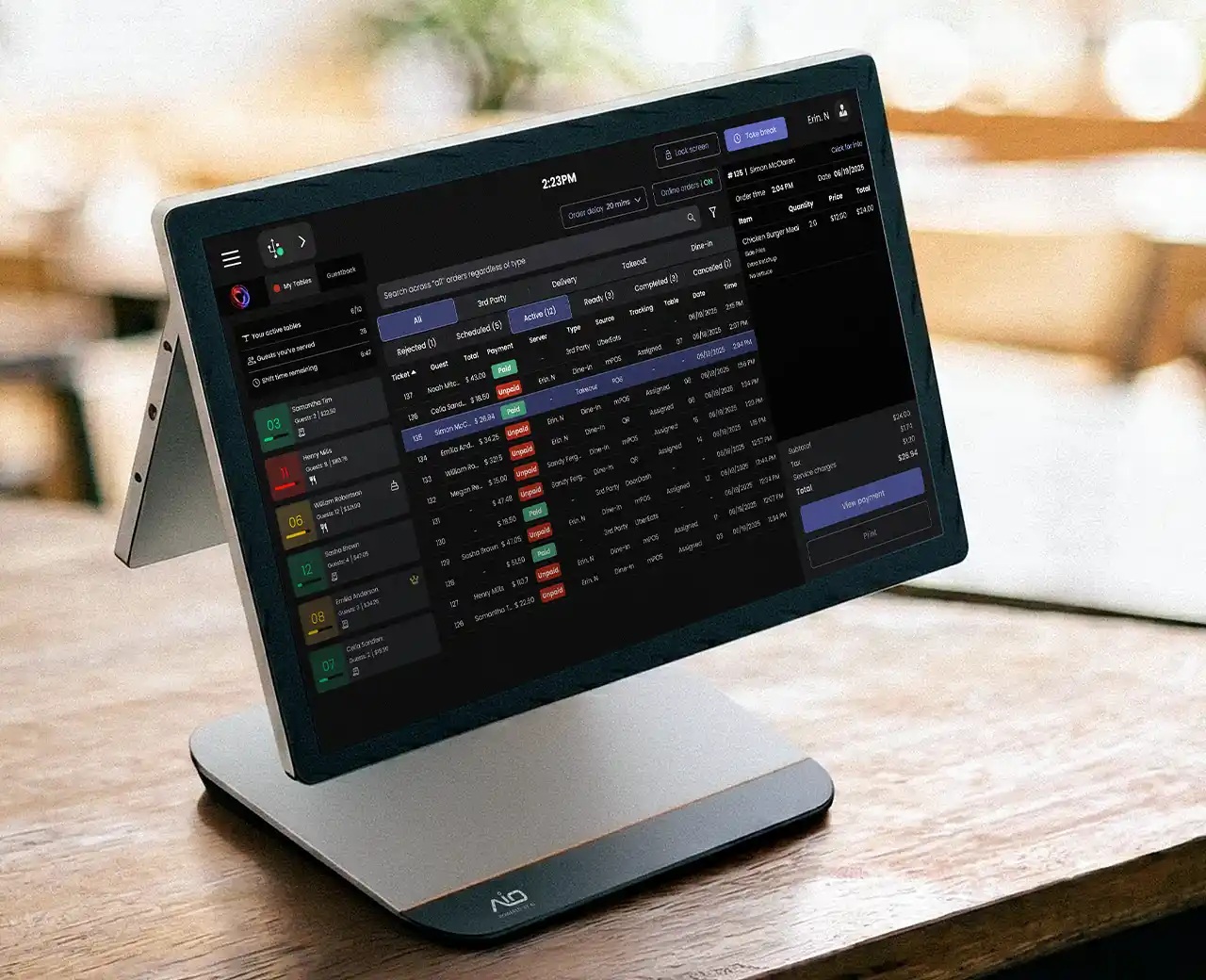
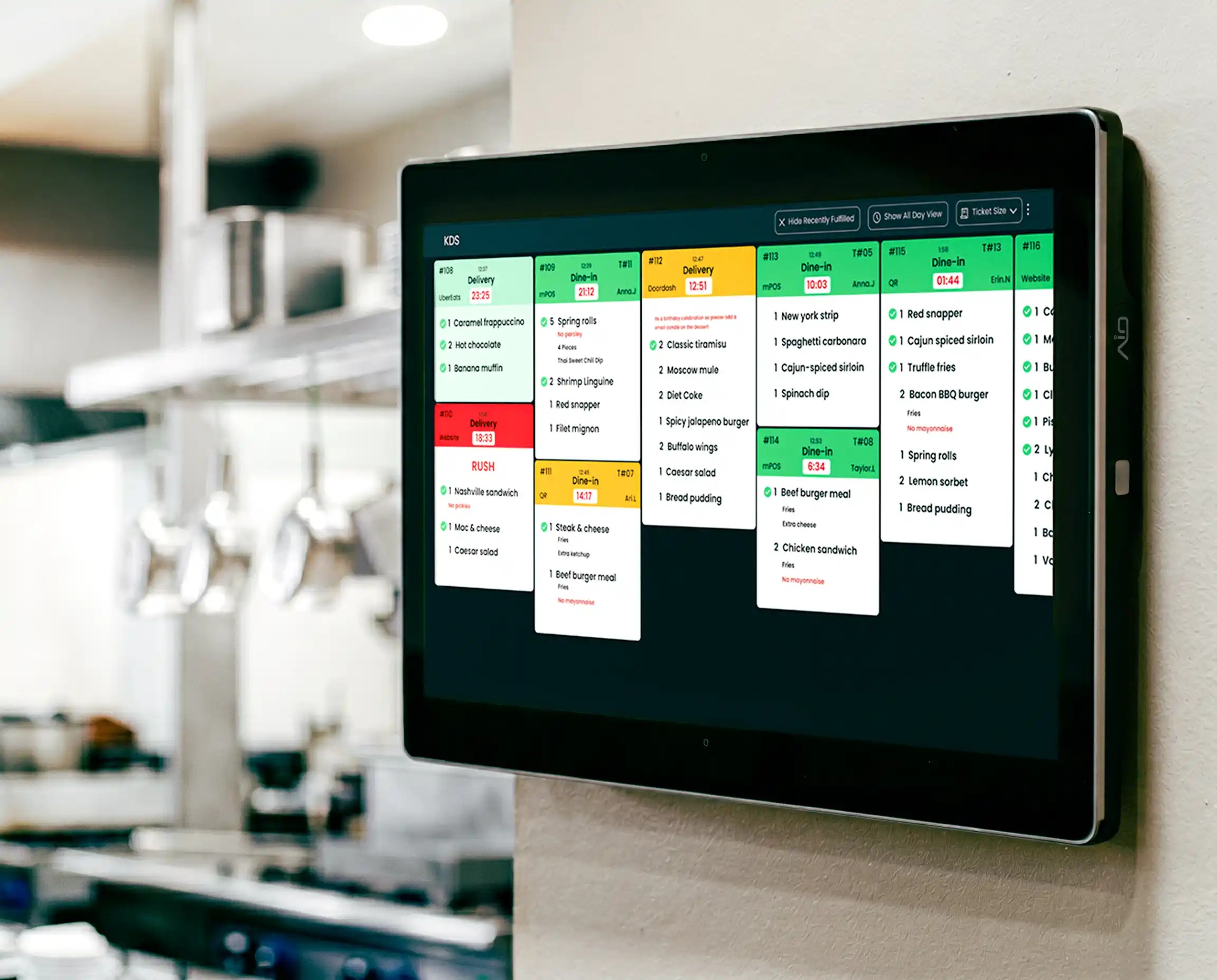
Today, AIO divides the product into ordering and payments, marketing, staff, inventory, office and analytics. A counter order, a kiosk purchase, a QR order and an online order can feed the same workflow. Kitchen displays route tickets to the relevant station. A menu change is intended to travel across channels rather than become a small publishing project.
The invoice is where it gets interesting
Take a supplier invoice. AIO’s inventory product reads it with optical character recognition, categorizes the items and updates costs. Its recipe tools connect those ingredient prices to dishes. When the supplier’s price changes, the recipe cost changes too. A dish can keep selling beautifully while becoming less attractive to the person paying for the ingredients.
That is the practical appeal of connected records. AIO also describes stock adjustments tied to orders, waste tracking and forecasts based on historical sales. The information has somewhere to go after it is captured. For an operator, the useful question becomes whether the next purchase, portion or menu price should change.
- 01Scan invoice
- 02Update recipes
- 03Track stock
- 04Forecast demand
Product workflow, not a measured savings result.
The same idea appears in staffing. Availability, labor budgets and forecast demand inform a proposed schedule that a manager reviews. Timecards, tips and payroll sit nearby. Analytics covers sales, labor, inventory, menu performance and marketing, with plain-English questions as another route into the records. These are connected management tasks; their usefulness depends on the quality of what goes in.
Office work gets a similarly broad treatment. AIO describes reconciliation across bank, card and POS records, bill approvals, profit-and-loss reporting and a document vault that watches renewal dates. It even includes lost and found. A misplaced jacket seems far removed from accounting until you consider the person behind the counter who ends up responsible for both. The product’s scope follows the operator’s list of interruptions.
The price of fewer handoffs
AIO’s advertised All in One plan is $399 a month, reduced from $599 when checked in October 2026. Specified hardware, installation and training are included with no upfront hardware charge. Selected services carry usage-based charges, including payroll, SMS, physical gift cards and the AI receptionist. Its comparison models payroll at $8 per employee monthly. Ten employees would bring that example to $479 before other usage or payment costs. A sensible buyer asks for the complete written quote.
Base subscription · selected usage charges extra
Pricing checked October 23, 2026
The alternatives include Toast, Square, Clover and SpotOn, plus separate specialist tools. AIO is competing for the surrounding work as well as the transaction at the till. That makes the comparison larger than a terminal price: it includes which jobs move into the subscription and which people still have to do them.
An AI company with a human on call
The revealing product name is AIO Buddy. The company advertises dedicated, round-the-clock human support, alongside help moving menus, employees, sales, taxes and payroll into the platform. Automation is easier to buy when there is somebody to call about the awkward exception.
Araujo’s Mexican Grill supplies a named testimonial on AIO’s website. Other displayed brands include Flights, Boloco and Crazy Pita. The visible customer picture is restaurant operators buying operating help. AIO’s marketing tools extend that work into guest records, campaigns, loyalty and review management; its mobile app lets managers and staff handle tasks away from the desk.
There is a second loop here: bringing the guest back. AIO’s marketing product combines a customer database with email and SMS campaigns, a website builder, loyalty and reputation management. Its review tools organize feedback across platforms and generate summaries and responses. The sensible use is to turn recurring complaints into something a manager can investigate, while keeping offers connected to the guests who receive them.
Order the awkward demo
The lesson an operator can copy is to count handoffs before counting features. Ask a vendor to change an ingredient price, refund an order and revise a shift. Watch which records update and where somebody has to intervene. Ask what happens when connectivity drops, and how records leave the system if the relationship ends.
These tests matter most when a restaurant has unusual workflows, established specialist software or inconsistent recipes and stock records. Consolidation only helps if the new system fits the work. A tidy dashboard cannot repair an invoice nobody captured or a portion nobody measured. AIO’s proposition earns its keep in those ordinary details, long after the screen has finished looking impressive.