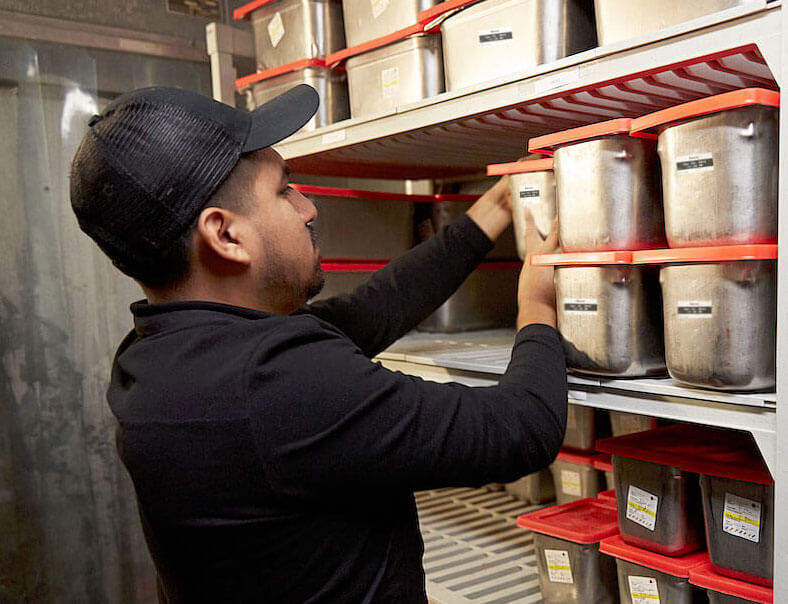
The recipe says one thing. The walk-in says another. Somewhere between buying ingredients and handing over dinner, a restaurant has used more food than its sales can explain. The dining room might be busy. The burger might be excellent. Neither observation tells the manager where the money went.
- Crunchtime connects restaurant inventory, staffing, tasks, training, and kitchen workflows.
- Its customers are multi-unit operators managing the same routines across many locations.
- The useful test: less food-cost variance, less administrative work, more consistent execution.
Crunchtime has built a business around that disagreement. Founded in 1995 by former restaurant operator Bill Bellissimo, it sells software for the work behind the meal. The company reports serving more than 850 brands across 150,000-plus locations in over 100 countries. Its mission is wonderfully specific: help brands operate every location like their best location.
The recipe and the receipt disagree
Consider a deliberately simplified example. A restaurant sells 100 burgers, each requiring one patty. Its theoretical usage is 100 patties. A physical count shows that 108 disappeared. Eight patties need explaining: waste, overportioning, spoilage, or a counting mistake. Crunchtime calls the financial comparison actual versus theoretical food cost, or AvT.
The software brings together recipes, ingredient prices, sales, inventory counts, and waste records. Managers can investigate discrepancies rather than merely stare at a food-cost percentage. Receiving tools also let staff record damaged goods and price differences while the delivery is present. That is a more useful moment to challenge an invoice than several weeks later.
Five Guys offers a concrete example. In a published Crunchtime customer story, the chain reported bringing food-cost variance below 1% across more than 1,700 locations within a year. That figure describes the gap between expected and actual costs. It does not mean ingredients cost less than 1% of sales. Small distinction. Very different restaurant.
Three hours to write a week
Food is only half the problem. People must be scheduled around demand, skills, availability, and local requirements. Sweetgreen’s 2024 customer case study describes managers spending about three hours each week writing schedules. Fair Workweek jurisdictions added complexity. The first thing straining was the manager’s time.
Using Crunchtime’s forecasting and scheduling tools, Sweetgreen reported cutting that work by almost half. The labor product uses sales forecasts and staffing templates to help build schedules, with configurable rules and employee access through Teamworx. The practical attraction is easy to understand: fewer hours arranging the shift, more hours available to run it.
At City Barbeque, the complication was partly brisket. Smoking it takes 17 to 24 hours, according to its customer story. Multi-day preparation makes the relationship between raw ingredients and finished meals less tidy. The company reported halving inventory-taking time after adopting Crunchtime and described moving from static spreadsheets toward dashboards.
“Our managers are just doing a lot; we ask them to do a lot.”
City Barbeque customer case study
Buying the missing pieces
A dashboard can reveal a problem. It cannot, by itself, teach a new hire or confirm that someone checked a refrigerator. Crunchtime expanded into those adjacent jobs through acquisitions. DiscoverLink, acquired in January 2021, brought restaurant-focused e-learning and talent development. Zenput, acquired in June 2022, added operational tasks, audits, food safety, and brand-standard checks.
The Zenput announcement explicitly cited labor shortages, supply-chain disruption, and rising food costs after the pandemic. Those pressures explain the strategic change: restaurant operators needed help executing routines as well as planning them. Zenput is now branded Crunchtime Ops Execution.
Teach the routine
Check the routine
Connect the kitchen
The 2025 merger with QSR Automations added kitchen display and guest-management technology. Battery Ventures, an investor in Crunchtime since 2015, backed both businesses. Current CEO John Raguin was named to lead the combination. The deal extended the company’s attention from ingredients and schedules to the timing and routing of orders on the line.
The screen beside the stove
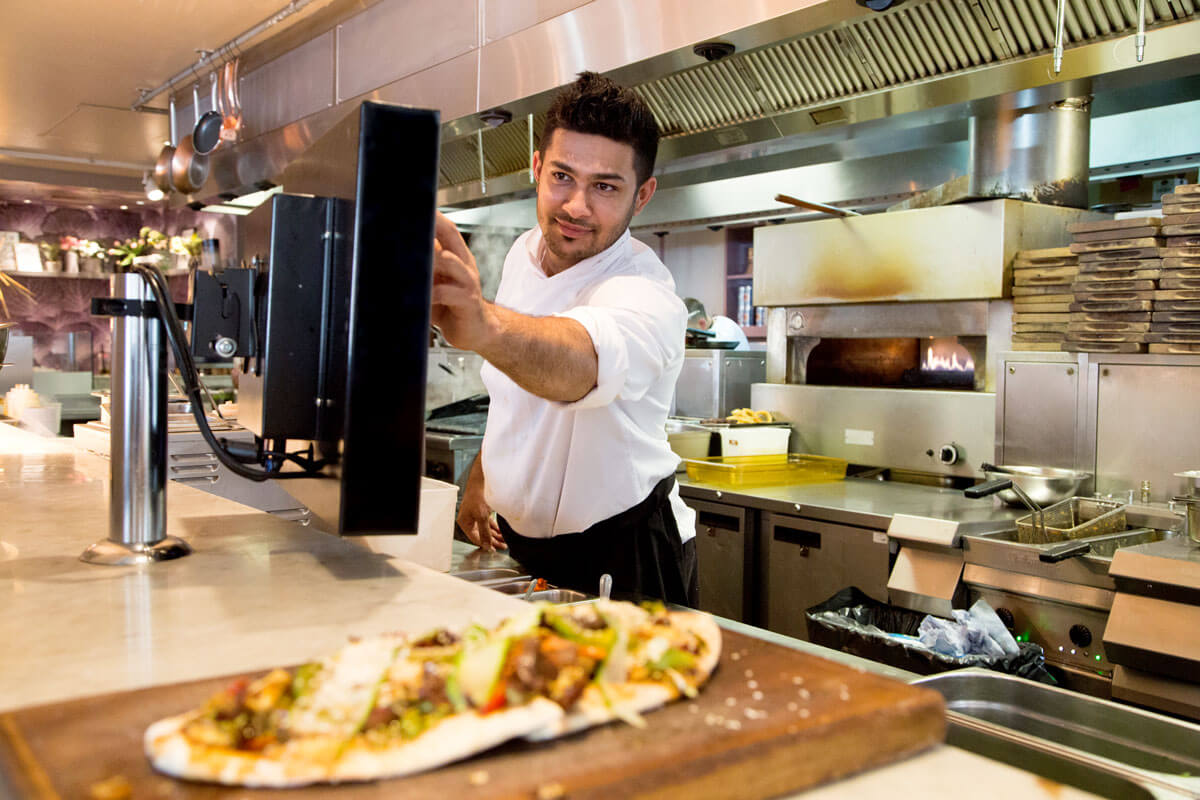
In September 2026, Crunchtime announced connections that put prep instructions, operational tasks, and waste logging directly on kitchen display screens. A waste entry updates inventory. A task can appear alongside incoming orders. The design addresses an ordinary source of bad information: recording work requires leaving the place where the work happens.
The company is also adding AI. Its April 2026 announcement covered voice-based inventory, photo review, task-pattern analysis, and natural-language analytics. Three of those tools invited early-access participation at announcement. The appealing idea is modest enough: let someone count shelves aloud or ask a reporting question without constructing another spreadsheet.
These additions position Crunchtime as a broad restaurant operations supplier. Restaurant365 offers an alternative with accounting central to its pitch; specialist scheduling and inventory vendors address narrower jobs. Crunchtime’s case rests on connecting those jobs across locations. Customers can buy individual solutions, so the purchase need not begin with the whole suite.
Inside the company, the culture page describes a remote-first hybrid workforce and says customer experience accounts for a third of employees. That staffing emphasis fits a product whose usefulness depends on how restaurants put it to work.
Start with the count
Crunchtime sells subscriptions through a sales-led process. Buyers should ask for a quote covering selected modules, implementation, integrations, training, and any kitchen hardware. Its February 2024 announcement reported more than $100 million in annual recurring revenue, a measure of recurring business rather than audited annual sales.
The company’s own AvT explanation specifies accurate recipes, prices, sales records, counts, and waste tracking. If those inputs are wrong, the comparison loses meaning. A small operation needing only a roster may also have little reason to take on a broad suite. Operational discipline still belongs to the operator.
There is a useful method here to copy: pick one recurring headache, measure it, test a change, and measure again. Sweetgreen used scheduling time. Five Guys tracked variance. Before ordering another dashboard, decide what the next shift should do differently. Start with those eight patties.