Zack Holland bought an old laptop for $100 and gave it a very short job description: WordPad and Spotify. That was the setup. A founder whose career had taken him through online marketplaces, consumer goods and AI marketing software wanted a machine that would let him write. The computer was allowed to play music. It was otherwise expected to mind its business.
He described the purchase in April 2026, alongside an admission that his first newsletter had sat on his desktop for a month before he sent it. The second proved difficult too. He had even started other startup projects while avoiding the writing. For someone who makes things for a living, there are surprisingly inventive ways to avoid making the thing in front of you.
Holland’s public work keeps returning to that gap between intention and execution. At SelectFew, he organized the people and tools a company needed to market itself. At Averi, he helped bring AI into that arrangement. His next chapter includes Talvi, which connects small donations to a digital world. The products differ. Each asks a practical question: how do you help someone move from wanting to do something to actually doing it?
A neighborhood, before the network
Holland’s childhood included the Amazon rainforest. His interests include philosophy, books, anime and an enthusiasm for ramen. It is an unusually crowded little biography: a jungle, a reading list and dinner all competing for space. He is now based in Brooklyn, where his professional interests have settled around startups, writing and helping businesses find customers.
His first company was Neighborhood Knowledge, started at fourteen. It put a neighborhood directory online, connecting people who needed services with neighbors who could provide them. The proposition was local and concrete. Somebody had a lawn to mow. Somebody else could mow it. The internet could help the two parties meet.
His later work widened the circle considerably. He lists consulting clients including Nike, Superhuman, The Honest Co. and Tesla. But the neighborhood directory belongs in the story because it makes the starting point intelligible. Long before his name appeared beside an AI company, he was working on a familiar difficulty: useful people can be close at hand and still be hard to find.
Holland studied philosophy at the University of Southern California and graduated in 2013. Philosophy is a pleasing background for someone who would spend years dealing with marketing budgets. Both occupations eventually require a person to explain why they believe what they believe. Marketing adds the inconvenience of an invoice.
Original art, ordinary apartment walls
After university, Holland worked on connecting artists with buyers. In 2014, he was among the founders of Angeleno Artistry, a Los Angeles venture that selected five artists each month and sold limited runs of their prints. Buyers could also connect with an artist about commissioning something of their own. The aim was to give underrepresented artists a route to a younger audience.
His work portfolio also includes ArtLifted, described as local art supporting art education. The artist mattered here as much as the transaction. A website could help someone discover a print, but it could also open a relationship with the person who made it. That distinction would remain relevant when his later companies began matching businesses with creative specialists.
His career then moved into a decidedly different object: bedding. From September 2016 to November 2019, he was co-founder and chief marketing officer of cloudten. Art, sheets and software make an untidy set of shelves. They also give a marketer experience with products that require quite different explanations before anybody is willing to buy.
FOUR CHAPTERS, DIFFERENT JOBS
- 2013ArtLiftedArt and art education
- 2016cloudtenCo-founder & CMO
- 2020SelectFewMarketing teams
- 2024AveriAI + human expertise
The trouble with finding the right people
By August 2020, Holland was building SelectFew. His explanation for the company began with an objection to the way marketing was purchased and managed. A founder had to choose a strategy, find specialists, compare tools, onboard a changing team and decide whether the whole arrangement was working. Each task came with another set of options.
A referral might produce an agency introduction. A marketplace might produce five-star reviews. A dashboard might produce a very attractive chart. Holland wanted those pieces to add up to an actionable system that understood the customer’s business. His complaint was specific: selecting an expert made little sense without understanding the company’s positioning, data and plan.
SelectFew paired clients with an experienced strategist, then assembled freelancers and boutique agencies around the work required. Holland described an arrangement in which clients could see who was doing what, with needs changing from month to month. A company might need creative work at one stage and a smaller group handling advertising at another. Flexibility was part of the design.
In explaining his marketing process, he put brand foundations first, community development second and scaled interactions third. That ordering matters. Advertising comes after decisions about the brand and its audience. Buying attention is easy to describe and easy to invoice; deciding what deserves that attention demands more thought.
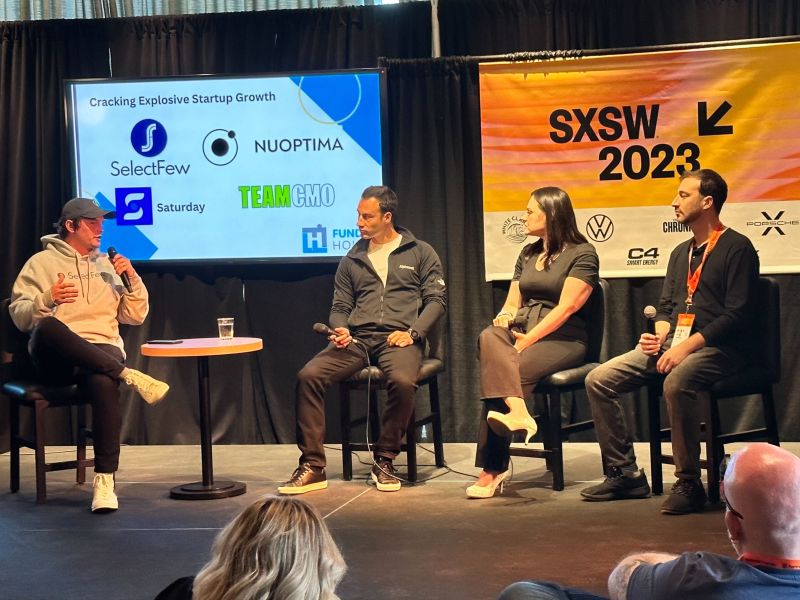
An AI colleague with introductions to make
On October 22, 2024, Holland announced that Averi was live on Product Hunt. The SelectFew team had worked on the project in stealth for nearly a year. A $2 million pre-seed round helped fund the effort. The new platform combined marketing strategy and content creation with a network of vetted, U.S.-based experts.
He presented AI and human collaboration as a joint proposition. A user could make a plan and draft material, then bring in a specialist for work requiring a person. Averi’s launch announcement also described onboarding and training the selected expert. The idea extended past generating a useful paragraph into the awkward logistics of getting people ready to work together.
By May 27, 2025, Grit Capital Partners had announced that it was leading a $3 million seed round. Its investment explanation emphasized the combination of AI, an expert marketplace, billing and project management. Money was one milestone. The more revealing detail was what the investors were funding: the connections between parts of a marketing department that otherwise needed to be managed separately.
THE AVERI CHAPTER / ANNOUNCED ROUNDS
Company financing, rather than personal wealth. Bar lengths compare the two announced rounds.
Holland’s ambitions for the team were also unusually specific. He spoke about building a billion-dollar business with 25 or 30 people, an aspiration rather than an achieved valuation. His hiring priorities included people who learned continuously, worked without micromanagement and helped across job boundaries. That picture of a company depends on capable colleagues being willing to do more than defend their own patch of floor.
The marketer who worried about identical marketing
In September 2025, Holland published an argument about what happens when creative work becomes a sequence of prompts. He remembered starting his marketing career in 2013 with Photoshop, Facebook Business Manager, agency meetings and a blank document. AI had changed the activity, but he questioned whether the resulting work was becoming too alike.
His concern was recognizable: if everyone copies the same advertisements and asks similar models to write similar posts, originality becomes harder to see. He argued for taste developed through experience, and for people to keep exercising invention. An AI marketing founder was asking marketers to remain demanding about what they made with AI.
“AI can be incredible, but its outputs all start to look the same.”
Zack Holland, 2025
The argument belongs beside his product work. Averi was designed to make execution easier. His writing asked what that ease should be used for. Producing more material offers one answer; producing material somebody can distinguish from the rest requires another kind of effort. A faster draft still leaves the author with decisions to make.
Spare change, and another beginning
In February 2026, Holland publicly described his departure from the AI business he had spent six years building. He said the business continued to grow under new leadership. His personal portfolio now brings together several projects under Daydreamer Ventures, alongside the newsletter where he writes about startups, growth and creative work.
Talvi lists him as co-founder and CEO. Its proposition connects purchase round-ups with donations to selected nonprofits, represented through a game world. The site gives a simple example: a $4.73 coffee becomes a $5 transaction, with 27 cents donated. Small amounts are given a visible destination, rather than disappearing into an abstract total.
Talvi says 92 percent of donations go to the chosen cause, 3 percent to processing and 5 percent to supporting the application. It describes itself as self-funded. For Holland, the project puts a different kind of connection on the screen: everyday spending, a cause somebody cares about and a digital representation of participation.
Outside those ventures, his public biography allows for black coffee, dumplings and a cat named Noodle. These details do useful work of their own. A career can be described through roles and rounds, but a person still has a reading habit and a preferred dinner. Holland has given those ordinary pleasures room in the introduction.
The $100 laptop fits comfortably among them. His writing setup asks very little of technology: hold the document, play the music, leave enough room for a sentence. After years of bringing tools and people together, he also has a use for a computer with fewer invitations. There is work to do, and he would like to get to it.