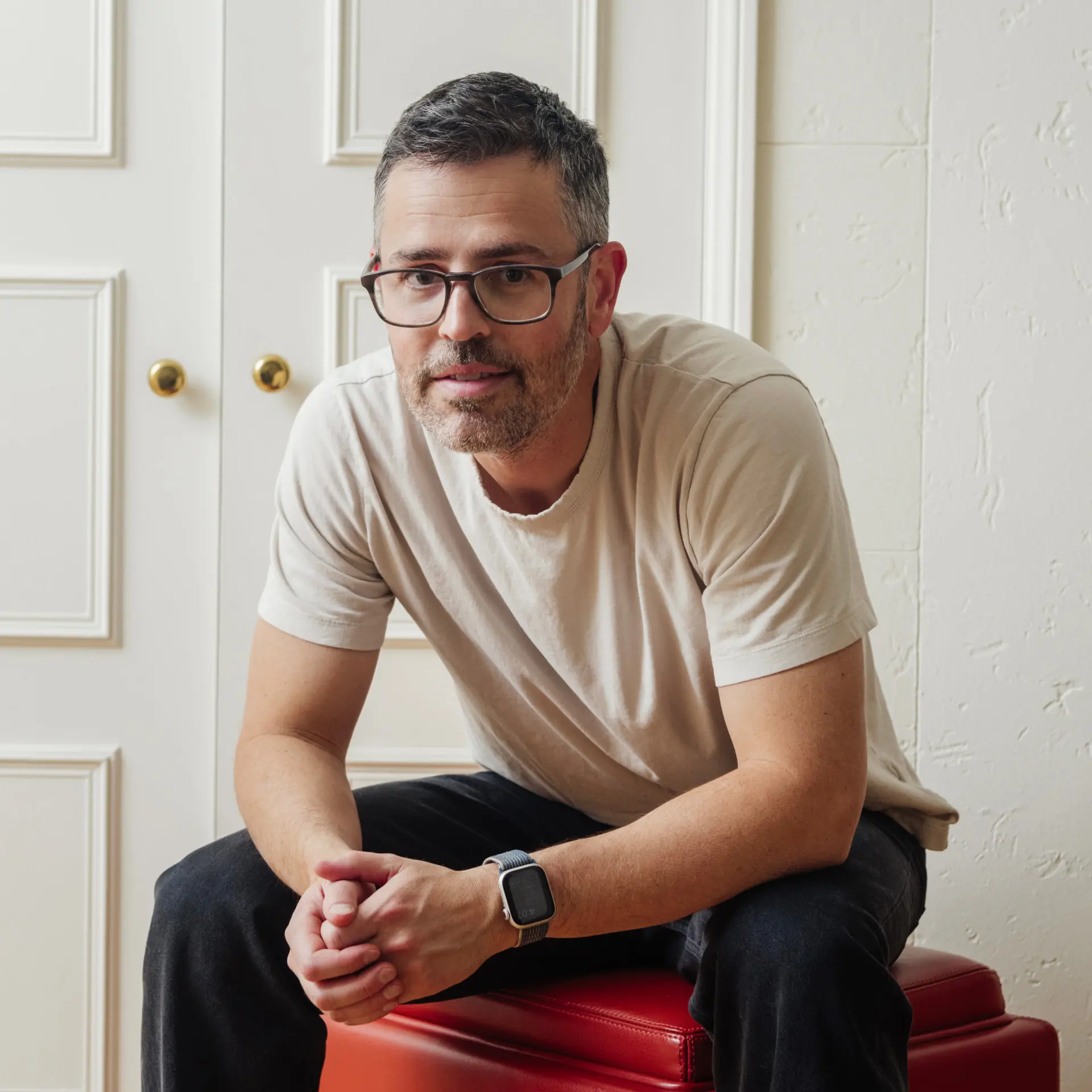
Zach Lloyd codes by prompt now. He types what he wants, hits enter, and an agent inside a window that still looks like a terminal goes off and does the work. The file editor, the thing he spent two decades mastering, is no longer his primary interface. For the man who once led Google Docs, that is either heresy or the whole point.
The company is Warp, and the short version is that it started as a faster, prettier command line and grew up into something its own founder calls an agent platform. The long version starts with a cursor that nobody had touched since the 1980s.
Of all the tools a programmer uses, only two are truly universal: the editor and the terminal. The editor got Eclipse, then IntelliJ, then VS Code, decades of reinvention. The terminal got a darker background. Lloyd looked at that gap and did not see tradition. He saw a 40-year-old bug nobody had filed.
"The terminal is a tool that's kind of stuck 40 years ago from a usability perspective."
It started with a Boggle board
The origin is smaller than the company. In college, the thing that hooked him was watching software turn a slow, fiddly task into something instant. His first all-nighter was spent writing a program that could find every word on a Boggle board, the kind of problem that is tedious for a human and trivial for a machine that has been told the rules clearly. Find the elegant shortcut, let the computer grind. He has been chasing that feeling ever since, which turns out to be a decent one-line summary of why he builds developer tools at all.
He studied Symbolic Systems at Stanford, the program that sits where computer science, linguistics, philosophy and psychology overlap, and later took a master's in philosophy of science at the London School of Economics. It is an unusual on-ramp to a Rust terminal. It is also a good explanation for why his pitch is less about features and more about how developers think and express what they want.
Google Docs, and the TODOs he left behind
At Google he spent seven-plus years as a principal engineer, leading the Google Sheets team and acting as a tech lead across the Docs suite, the spreadsheets and documents that hundreds of millions of people open without thinking. The work was enormous in scope and invisible by design, which is the highest compliment you can pay infrastructure.
There is a small artifact of that era worth keeping. Long after he left, a colleague named Aloke went digging through the Google Docs codebase and found TODO comments Zach had written years earlier, little notes-to-self frozen in production code. It is the most relatable thing a famous engineer can do: leave a mess for future-you, then become someone else's archaeology.
After Google came the harder chapters. He co-founded and ran engineering as CTO of SelfMade, a venture-backed New York startup, and served a stretch as interim CTO at TIME. The SelfMade startup did not work out. He talks about it plainly, which is the only useful way to talk about a first company that fails: it is the tuition you pay for the second one.
The second company
Warp launched off a simple, almost stubborn premise: rebuild the terminal from first principles. Make it fast. Make text behave like blocks you can select and share instead of an endless scroll. Make it collaborative. GV backed that vision in April 2020, betting on the idea that a 40-year-old interface had room left in it. Sequoia later led a $50M Series B in 2023, joined over time by the likes of Figma's Dylan Field and investor Elad Gil, pushing total funding to roughly $73 to 75 million.
Lloyd is allergic to building from personal taste alone. The team works from explicit product principles, the kind of written-down constraints that let a group of opinionated engineers disagree out loud and still ship one coherent thing. He invites the dissent and then drives toward consensus, which is a particular kind of management discipline: loud rooms, single decisions.
"It wasn't until we started really embracing agentic development that our revenue took off."
The turn: from terminal to agent
Then the ground shifted under everyone building developer tools, and Warp shifted with it. The product that looked and felt like a terminal quietly became something stranger underneath: a place where you describe a problem in plain language, hand the agent the context that matters, and watch it build the feature, fix the bug, or chase down the failure itself. In 2025 the company shipped Warp 2.0 and stopped hedging about what it was. The Agentic Development Environment, they called it.
The numbers followed the bet. The first $1M of annual recurring revenue took more than 300 days to assemble. After the agentic turn, Warp started adding $1M roughly every five or six days, with revenue up around 19x in a year. Warp 2.0 also went and topped the leaderboards it was being graded on: number one on Terminal-Bench at 52 percent, top-five on SWE-bench Verified at 71 percent. A terminal does not usually win coding benchmarks. This one does.
What he thinks happens next
Lloyd's view of the future is unsentimental about typing. If models keep improving, he argues, the scarce skill stops being writing code and becomes expressing intent: saying precisely what you want built, clearly enough that an agent can deliver it. The keyboard does not disappear, but its job changes from authoring syntax to authoring instructions.
He practices what he preaches, which in a CEO is rarer than it sounds. He still writes code. He dogfoods his own product, prompts his own agents, and runs his day inside the thing his team ships. The dog, Blue, occasionally wanders into the team video calls, which is the correct amount of chaos for a company arguing about the future of the command line.
He has talked publicly about coding moving through phases: first the editor with autocomplete, then suggestions that finished your line for you, and now a more agentic style where the file editor stops being the primary interface at all. You write a prompt, you attach the context that matters, you hit enter, and the agent starts solving. Lloyd is clear that this is recent, even for him, and that the transition happened over a span of months rather than years. That speed is the whole story of the current moment, and he is building for the version of it that has not arrived yet.
A different spot in the stack
Ask Lloyd where Warp sits among the wave of AI coding tools and he does not reach for the obvious comparisons. The editor-based assistants live inside the IDE. The chat tools live in a browser tab. Warp, by his telling, occupies a stranger position: a surface that still looks and feels like a terminal but functions as an agent platform, with little else built quite like it. The terminal already had a special property that turned out to matter for AI. It is where code actually runs. Tests, builds, servers, deploys, the moment of truth where software either works or does not. That makes it a natural workbench for an agent that needs to do something and then check whether it worked.
Warp Drive, shipped around the Series B, leaned into the other half of the thesis: that the command line had always been lonely. Workflows, commands and notebooks could be saved and shared across a team instead of living in one person's shell history and dying there. It was the collaborative move that editors made years ago and terminals never did, and it fit the pattern Lloyd keeps returning to. Take the tool everyone uses alone and quietly make it social, fast and legible.
The unfashionable bet
There is a reason most founders did not pick the terminal. It is unglamorous, deeply entrenched, and beloved by exactly the users least likely to tolerate change. Developers have strong opinions about their shells and will happily tell you all of them. Rebuilding that surface meant convincing the most skeptical audience on earth that the thing they had used for their entire careers could be better. Lloyd's wager was that the resistance was itself the signal: a tool that important, left untouched for that long, had to be hiding a large opportunity underneath the muscle memory.
The payoff has been a community north of half a million active developers and a benchmark-topping coding agent that lives where the work already happens. Warp's GitHub presence climbed past 100,000 stars, the kind of number that signals a tool has crossed from curiosity into habit. None of it was guaranteed. The first startup failed. The first million of revenue crawled. The terminal thesis sounded, to plenty of people in 2020, like a solution in search of a problem.
"Rather than doing anything by hand from the outset, you're going to work by prompt."
There is a tidy irony in all of it. The engineer who spent his career making invisible infrastructure, spreadsheets, documents, the plumbing of the modern office, ended up pointing at the most visible, most ignored tool on the developer's screen and saying: this one, the blinking cursor, is where the next decade of software gets built. Whether he is right is still being settled $1M at a time. But the question he asked was the unfashionable one, and the unfashionable questions are usually where the room is.