The first business plan had a poultry problem. As a little girl on San Antonio’s South Side, Yvonne “Bonnie” Garcia planted feathers, hoping chickens would grow. There was a product, a market and an enterprising child. The agricultural science required some attention. Decades later, she put that childhood experiment into Dale Ganas, her book of personal stories and advice. It is a useful place to begin with Garcia: an idea, an attempt, and enough good humor to tell people how the attempt went.
The adult Garcia founded MarketVision in 1998. Before that came radio, Stroh Brewing Company and Coca-Cola. Along the way she helped bring Selena into a corporate advertising campaign, ran marketing for Coca-Cola’s Midwest Division, and returned to her hometown to start an agency. In 2025, she entered the Southwest Advertising Hall of Fame. The career is substantial. Its more interesting feature is how often it turns on the same question: who gets heard?
A microphone before a boardroom
Garcia studied radio, television and film at the University of Texas at Austin. During college, she worked as a disc jockey. Radio offered an education beyond choosing records: production, promotion, events, the relationship between a sponsor and the people it hoped to reach. An audience could turn the dial. Earning its attention was part of the job.
Her work in Austin and later San Antonio put her close to the practical business of bringing people together. In a 2021 television conversation, she recalled introducing Michael Jackson at a concert early in her career. Backstage, she was nervous. Onstage, she had thousands of people to address. The experience stayed with her as evidence of what she could manage when she pushed through the nerves.
Her mother’s example was less theatrical and just as enduring. A seamstress, she worked long days and still returned home to care for her family. Her father worked at Kelly Air Force Base. Garcia credits both parents with the work ethic she carried into business. Their influence eventually became material for her writing: advice from home, tested in places her parents had never worked.
Broadcasting also gave her experience she could carry into another profession. A promotion needs logistics and timing. A live event needs someone willing to face an audience. Corporate marketing gave those skills a different scale, while the central problem remained familiar: making people care enough to participate.
Taking culture into the brief
At Stroh, Garcia’s responsibilities developed from college promotions into Hispanic marketing. She later spent ten years at Coca-Cola, working in Atlanta on Hispanic marketing and in Chicago on the Midwest Division. Her career crossed the boundary between work aimed at a particular consumer community and responsibility for a broader regional business.
The Selena connection remains one of its most recognizable chapters. Garcia was the first corporate marketer to sign the Tejano singer to a contract. Her work at Coca-Cola also brought performers including Luis Miguel, Tito Puente and John Leguizamo into campaigns. Music gave a brand access to audiences whose loyalties already existed, with their own history and meaning.
Celebrity names can crowd out the less glamorous labor of marketing. Garcia’s Coca-Cola responsibilities included television and radio advertising, national consumer promotions and signing talent. Choosing a performer was one decision inside a larger effort to connect a company with a community. The appeal had to survive beyond the photograph.
That thinking continued in her later business. In 2020, Garcia explained that marketing gains its power from connecting with consumers’ cultural beliefs. The word “core” in her description does some work here. It asks a marketer to understand what an audience values before deciding what to say to it.
“If you can connect to consumers’ core cultural beliefs, that’s where the magic happens.”
Yvonne “Bonnie” Garcia, 2020
Starting over with her own name
MarketVision began in San Antonio after Garcia left corporate life. Its initial focus was the gap she saw in shopper, promotional and grassroots marketing for multicultural consumers. Those are places where a campaign meets ordinary life: the store, the event, the community gathering. They reward attention to how people actually behave.
She started with her sister and her best friend. The shorthand became “three Latinas and a telephone.” Garcia financed the launch with a loan against her Coca-Cola stock. Her colleagues accepted pay cuts; she went without a salary during the early period. Years of experience had supplied a business idea, but the new agency still had to earn its first opportunities.
She found that calls were received differently when they came from an independent founder rather than a familiar corporation. A Corn Nuts assignment aimed at Hispanic youth provided an early opening. It is an instructive detail: the account that helps a young business get moving need not carry the grandeur of the employer its founder has just left.
Garcia also chose a name with room to grow. MarketVision could serve Hispanic consumers while developing into a multicultural agency. The choice suggested a business built around observing a changing marketplace, rather than confining itself to one audience forever. A company name is a small piece of strategy that has to fit on the door.
in San Antonio
the minority stake
Hall of Fame
Buying back time
Ownership became another decision about how she wanted to work. After entering a partnership with CoActive Marketing Group in 2001, Garcia repurchased its 49 percent share in 2006. Market Vision was again entirely female- and minority-owned. Her explanation was practical: “Buying back my company will give me more time with clients.”
The agency had reported growth of 214 percent over the preceding three years. It had added advertising, media planning and buying, and public relations to its promotions and events foundation. Expansion had brought a wider set of capabilities. Garcia wanted an ownership structure that supported the speed and flexibility she promised clients.
She left open the possibility of another partnership, provided it suited her strategy and the team’s culture. That qualification matters. A founder can want scale and still care about the daily conditions under which the company works. In Garcia’s account, the point of the repurchase was more room for the business she knew how to run.
Five owners, more open doors
In 2007, Garcia helped establish the Latina Agency Alliance. The founding group included Gabriela Neves, Pat Pulido-Sanchez, Coco Corona and Zully Gonzalez. Each ran an independent business. Together, they could exchange capabilities, make referrals, collaborate on business problems and mentor younger Latina entrepreneurs.
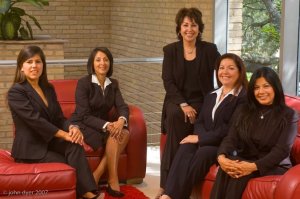
“It’s almost like a comadres network,” Garcia said. The phrase gives the arrangement a human shape. An alliance needs skills and reach; it also needs people willing to help one another. Its ambitions included new business opportunities and support for the ordinary problems of running a firm. Independence and cooperation could occupy the same room.
That commitment extended beyond agency owners. In 2016, she joined a Latinas & Power Symposium panel about financial readiness with political and business leaders. She also appeared in a Startup Grind fireside conversation in San Antonio. These were settings where experience could travel from an executive’s working life to people considering their own next move.
The advice gets a binding
In 2019, Burbank High School arranged for Garcia to meet 75 female students from several school programs. A member of its class of 1975, she was returning to a place that had helped shape her. That year she received an INSPIRE Award from the San Antonio ISD Foundation. The audience was smaller than a concert crowd, with a different kind of consequence.
Her 2020 book, Dale Ganas: How to Make Your Mark in Life, brought the same impulse into print. It combines short personal stories with consejos, words of advice. Garcia has described the project as mentoring more women than she could reach individually. A book can sit beside a reader long after a school visit or a speech has ended.
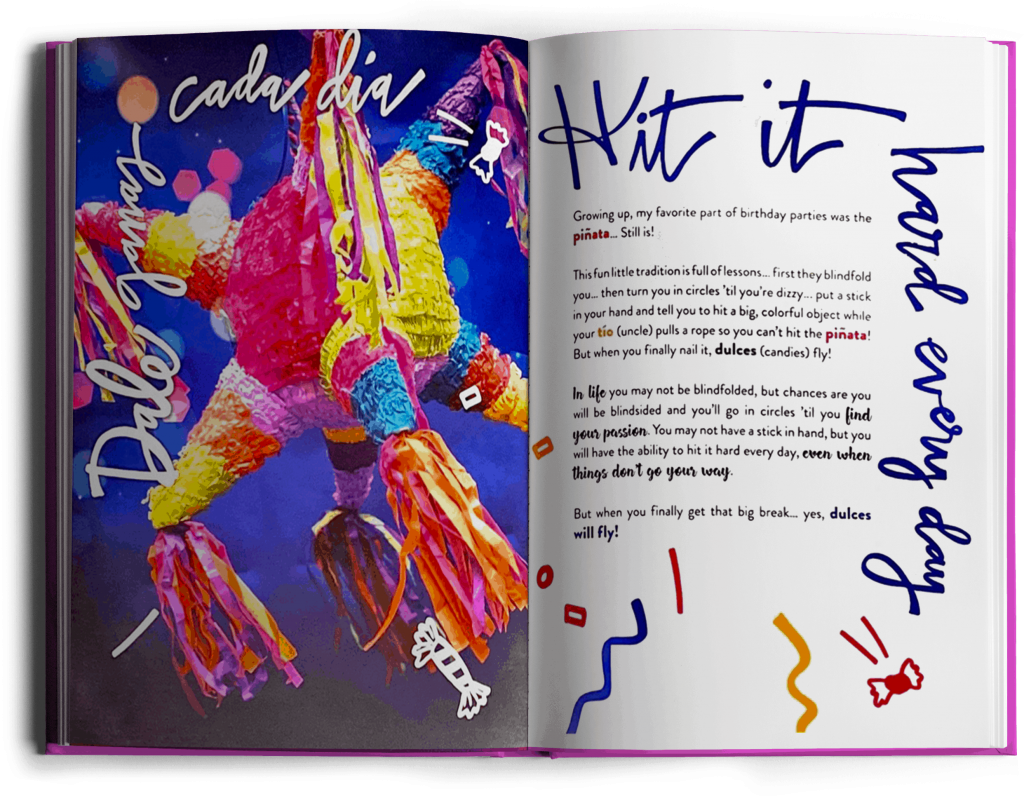
The intended readers include girls in middle and high school, women beginning their careers, and the relatives and educators who encourage them. Its roots are Mexican American, but Garcia opens the invitation more widely. The feather-planting child belongs in that story because ambition begins before anyone has a suitable vocabulary for it.
She has made other kinds of space, too: founding JFAYE Properties in 2005 and launching INOV8, a creative meeting and event venue, in 2020. The latter occupied the building housing MarketVision. An agency, a gathering place and a book each offer a different way to put people and ideas together.
A voice that can be passed on
MarketVision’s work has grown to include research, cultural insight and people-centered design. Its client history spans companies including Coca-Cola, Fisher-Price, General Mills and Hershey’s. The agency describes a process of learning from people, developing experiences around their needs, then improving the work through results. Garcia’s early interest in participation still fits.
Her 2025 Hall of Fame induction placed her among nine honorees in that year’s Southwest class. It recognized a career that had moved through broadcasts, national brands, entrepreneurship and community work. The dates make a tidy timeline. The people around those dates make the story worth reading.
Garcia’s recurring advice is to be fearless. Her own examples give the word something sturdier than a slogan: taking a microphone, pursuing a corporate role, borrowing to begin again, making connections for other owners. She built a business where her judgment could be heard. Then she found ways to help other people develop theirs.